An expanding number of cities across the U.S. are looking to attract urban casinos, with the hope that further development and money (tax revenues to fill drained city coffers) will follow.


Chicago may soon become the next large city in the United States to legalize gambling within its limits. Across the U.S., a substantial number of states and cities have legalized gambling in recent years, despite an ongoing debate over the pros and cons of their effect on crime rates, surrounding property values, and municipal coffers. "The debate is just the latest in a decades-long controversy over what role, if any, casinos can play in the revival of America's cities," says Next American City's Ryan Briggs.
"The economic downturn has given states an impetus to open up new sources of revenue, with gambling often viewed as low-hanging fruit," states Briggs. "Twelve states have expanded gambling options in the last three years, 22 now permit commercial casinos (up from two in 1974)..." Yet concerns remain. Many urban casinos have had their fair share of issues, such as Philadelphia's Sugarhouse, which has underperformed since its opening.
Read the full story: Urban Roulette

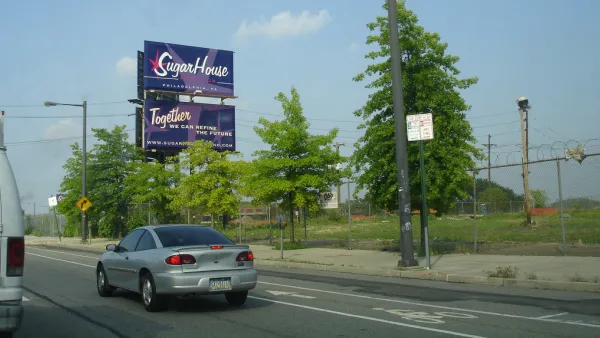
State Supreme Court Deals Setback for Philly Casino Proposal
Regulatory issues have delayed a proposed casino mega-development in South Philadelphia.
New Philly Slots Site May Help Gambling Fit Better
Philadelphia is still trying to figure out where to put its two approved casinos as it prepares to become the nation's biggest city to host gambling. In this piece, Inga Saffron says a new proposed site could make gambling work for Philly.
Learning loss and urban schools, part 2
Did test scores in progressive cities drop more post-COVID than test scores in moderate ones?

Planetizen Federal Action Tracker
A weekly monitor of how Trump’s orders and actions are impacting planners and planning in America.

Chicago breaks ground on $3 billion megadevelopment
The new neighborhood, titled Foundry Park, will one day host 3,700 residences.

This MA town is drowning in its own sewage — and residents like it that way
Susan Murcott, a waste water expert, said if Carlisle didn't address their leaking sewage, the problem could turn “deadly.”

Iowa taxpayers are paying thousands to clean manure out of their water
While the Clean Water Act makes states responsible for regulating factory farms that discharge pollutants, Iowa has turned a blind eye to the polluting farms.

Amtrak cuts ribbon on Seattle Airo maintenance facility
The $250 million, nearly 100,000-square-foot building can house an entire Cascades Airo trainset.

To power data centers, Google seeks autonomous control of thousands of homes’ electricity
The tech company has signed a deal to indirectly pay Mid-Atlantic residents to reduce their power demand when the grid is strained.

FREE Course: Walkable City 1: Why Walkability?
After describing his path towards focusing on walkability as the essence of good planning, Jeff Speck marches through his five principal reasons for making more walkable places.
Reinventing Malls: Planning Alchemy—Turning Gray Fields Into Gold
The course focuses on the opportunities and imperatives that shape reinvention of mall sites.

City of Rosemead
Rutgers University, Edward J. Bloustein School of Planning and Public Policy
One Hundred Miles
The Architects Foundation
University of Cincinnati Online
Montrose County
The Pocatello Development Authority
The Urban Renewal Agency of the City of Pocatello