For the second day in a row, massive blackouts have brought India's cities to a standstill as trains, traffic lights, and ATMs failed in New Delhi and throughout 14 states across the north and east of the country.


Today's blackout, double the size of yesterday's failure, has reportedly cut power to 600 million Indians - half of the country, and 1/10 of the global population. Reporting from New Delhi, Simon Denyer and Rama Lakshmi indicated that, "More than 500 trains came to a halt, and thousands of passengers were
briefly trapped inside the capital's Metro line. There was gridlock on
many streets of the capital as traffic lights stopped working. Bank ATMs
also failed."
However, in a country used to power outages, airports, major industries, and those with means were able to switch to backup generators. A whopping 300 million Indians have no access to power to begin with.
According to Denyer and Lakshmi, "Indian industry leaders blamed the incident on a large and growing gap
between electricity demand and supply, something that the government has
failed to tackle despite repeated pledges to do so. Some senior
government officials say reform of the power sector is the greatest
challenge facing Asia's third-largest economy in the next few years."
Read the full story: India blackout, on second day, leaves 600 million without power

How to Keep a City Running During a Blackout
Dr. Jay Apt offers four cost-effective steps for cities to maintain essential services when the next big blackout hits.
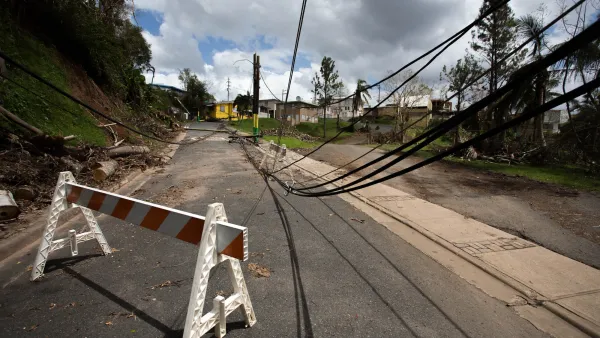
Bad Bunny's Iconic Electrical Pole Moment Highlights Puerto Rico’s Devastating Power Outages
The Reggaeton star’s halftime show included countless nods to his homeland, including a reference to the island’s ongoing power crisis.
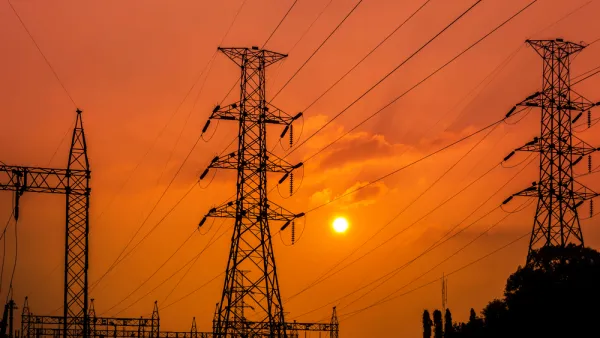
Disaster Averted!
The California power grid withstood its biggest test ever on Tuesday and passed—barely. The only rolling blackouts that occurred during the Stage Three Energy Emergency alert were results of miscommunication.

Planetizen Federal Action Tracker
A weekly monitor of how Trump’s orders and actions are impacting planners and planning in America.

Amtrak, CN end decades-long dispute with eight-year agreement
The new operating agreement establishes an updated framework for the companies to work together, including processes to resolve disputes.

Judges permit Denver to divert 77,000 acre feet from the Colorado River for reservoir expansion
Overuse and climate change have caused the Colorado River’s water levels to plummet.

NYC DOT wants faster, more permanent street upgrades
The city is examining ways to build more concrete infrastructure without getting entangled in 'decades-long' projects.

'Something we’ve never seen before:' rising utility rates could strain city finances nationwide
Data centers, climate change and other factors have caused utility rates in the United States to increase by 38% since 2020.

Trump to overrule local leaders, lease millions of acres of America’s Pacific Island territories’ seafloors to mining companies
International law says that the Indigenous people of America’s territories have a right to prior and informed consent regarding projects that impact their countries.

FREE Course: Walkable City 1: Why Walkability?
After describing his path towards focusing on walkability as the essence of good planning, Jeff Speck marches through his five principal reasons for making more walkable places.
Reinventing Malls: Planning Alchemy—Turning Gray Fields Into Gold
The course focuses on the opportunities and imperatives that shape reinvention of mall sites.

Harvard University Graduate School of Design
KFH Group Inc.
Greater Baltimore Committee
The Architects Foundation
University of Cincinnati Online
The Pocatello Development Authority
The Urban Renewal Agency of the City of Pocatello