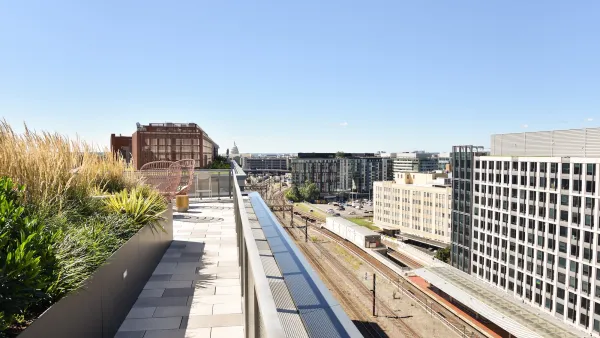
Upending the adage that nothing gets done in D.C. these days, last week the National Capital Planning Commission (NCPC) released their long range plans for remaking the Southwest area of the capital, capping two years of intense debate.


"Designed to undo the worst damage of the massive 'urban renewal'
projects inflicted on L'Enfant neighborhood over the past decades," the long range Southwest Eco-District plan intends to, "transform the spooky, almost pedestrian-free area just south
of the Mall into a highly sustainable, people-friendly cultural and
business destination," reports the ASLA's The Dirt blog. Guided by landscape architect Elizabeth Miller, ASLA, the "110-acre,
15-square block project is meant to showcase 'high performance buildings
and landscapes' while creating space for 19,000 new federal workers and
solving some of the worst pedestrian access problems."
"Miller outlined a vision for an Eco-District that provokes the
imagination, at least among sustainable designers. She said the new
District will 'capture, manage, and reuse water, energy, and waste' and
work beyond a single building, leveraging clusters of buildings to
create a new system. At the same time, the plan will take aim at the
incredible lack of public access - the barriers, the highways, and grade
changes - that keep people away, except for the federal workers that
have to go there for work."
The plan's green goals are ambitious, aiming for a "zero-net energy district as measured in carbon," reducing potable water use by 70%, managing all stormwater on site, reusing 75% of construction materials for the new buildings, and diverting 80% everyday waste from landfills.
Read the full story: In D.C., New Eco-District Plans Unveiled


Swapping your gas car for an EV is greener than keeping it, research shows
An EV repays the 'carbon debt' caused by building it after 4,400 miles.

Climate change could double household water costs in some cities, study finds
New research suggests that climate change-related stressors are straining municipal water systems.
DC energy efficiency rule requires buildings to upgrade their infrastructure or face millions in fines
Building owners and condo co-op members say the upgrades are often prohibitively expensive.

Planetizen Federal Action Tracker
A weekly monitor of how Trump’s orders and actions are impacting planners and planning in America.

‘Going backwards:’ Baltimore mayor, students rally against state's transit funding plan
Maryland's proposed six-year plan provides no funding for Baltimore’s BMORE bus program and reduces its road maintenance funding.

Detroit to transform waterfront with $2.2 billion investment
Developers will convert about 18 acres of unused parking lot space into civic spaces.

Data center developers are using lawsuits, cash offers to ‘overwhelm’ rural America
Newsrooms in five states worked together to uncover the tactics big tech developers use to buy land from reluctant communities.

U.S.-Iran war may have ‘devastating’ impact on cost to warm homes
Vermont and Maine residents may see a 76% increase in the cost of warming their homes this winter.

Senate bill would ‘overhaul’ environmental permitting laws
Under the proposed act, government agencies would also not be able to suspend or rescind permits after granting them.

FREE Course: Walkable City 1: Why Walkability?
After describing his path towards focusing on walkability as the essence of good planning, Jeff Speck marches through his five principal reasons for making more walkable places.
Reinventing Malls: Planning Alchemy—Turning Gray Fields Into Gold
The course focuses on the opportunities and imperatives that shape reinvention of mall sites.

One Hundred Miles
County of Mendocino
planning NEXT
The Architects Foundation
University of Cincinnati Online
Montrose County
Northern Illinois Transit Authority (NITA)
The Pocatello Development Authority