With the highest obesity rate and poorest population of America’s big cities, Philadelphia is launching an ambitious plan to increase residents' access to healthy food, reports Sarah Kliff.


The cornerstone of Philly's plan is the corner store, where city officials are focusing their efforts to increase access to healthy foods by supplying some owners with new fridges to store produce and connecting them with wholesalers from whom they can buy at lower prices.
The plan is being funded by the federal government as part of the Obama administration's goal of eradicating food deserts by 2017.
However, as Kliff points out, "even as the White House has scaled up such efforts, a growing body of research has questioned its basic assumption: that people will eat better if given better options...To date, no study has found a causal relationship between improving access to healthy foods and improving health outcomes."
"That's where Philadelphia comes in," says Kliff. "Along with building the country's largest network of healthy corner stores, the city is conducting the largest study to date of what happens when nutritious options are introduced into neighborhoods that have traditionally gone without. It's measuring what people bought before, what they're eating now and whether that improves."
FULL STORY: Will Philadelphia’s experiment in eradicating ‘food deserts’ work?

Minneapolis Scales Back Healthy Food Program
Minneapolis’ Healthy Corner Store Program launched with lofty ambitions in 2009—to help corner stores market and sell fresh food—but lackluster performance has required the city to reduce the scale of the program.
Making economic sense of city-owned grocery stores
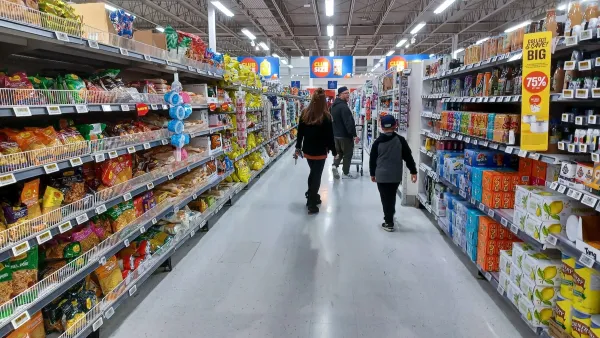
Several cities are moving to create municipal stores, but do they actually save low-income households money?
How Does Air Quality in a Philly Subway Station Compare to the Outdoors?
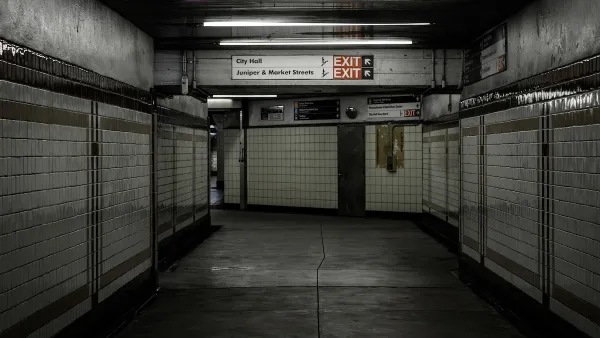
A team of researchers found much higher levels of particulate matter inside the City Hall subway station than on the street-level sidewalks directly above the station.

The state-sanctioned urbicide of Austin
People don’t kill cities. Freeways do.

US to reduce Colorado River water deliveries to Mexico
A new Colorado Treaty amendment reduces Mexico’s Colorado River water allocation by 250,000 acre feet.

New Jersey’s second-largest city bans standalone data centers
Jersey City will continue to allow co-location facilities, such as those meant for research institutions that store their own data.

Amtrak not solely to blame for New Jersey commuter rail's unreliability, report finds
A new study from the Garden State Initiative found that NJ Transit’s budget grew 20% across a 4 year period, but reliability declined significantly over the same period.

EPA erases limits on planet-warming pollution from power plants
Under Monday’s plan, power plants would still have some limits on how much mercury, arsenic and other contaminants they can emit.

Phoenix announces new on-demand transit service, more frequent RAPID buses
Both new services will launch in October, and are part of Phoenix's Project Effective Access Solutions for Easing Congestion.

FREE Course: Walkable City 1: Why Walkability?
After describing his path towards focusing on walkability as the essence of good planning, Jeff Speck marches through his five principal reasons for making more walkable places.
Reinventing Malls: Planning Alchemy—Turning Gray Fields Into Gold
The course focuses on the opportunities and imperatives that shape reinvention of mall sites.

Eagle County Government
Harvard University Graduate School of Design
Nashville Planning Department
The Architects Foundation
University of Cincinnati Online
The Pocatello Development Authority
The Urban Renewal Agency of the City of Pocatello
Journal of the American Planning Association