Curious about a legislator's offhand remark that light rail is "a total waste of money," Marlys Harris investigates the extent to which motorized transportation modes in the Twin Cities are subsidized. It turns out light rail is a heavy bargain.


Comparing the subsidy per passenger per trip for urban buses, suburban buses, express buses and light rail, Marlys learns that light rail is the least subsidized of the four. According to Marlys, "Another report, this one from the Office of the Legislative Auditor, compared the efficiency of the Twin Cities LRT to systems in other cities. And, you'll be happy to know that we ranked fourth on subsidy per passenger. That is to say, only three other cities, Denver (98 cents), Portland ($1.35) and San Diego (82 cents) spent less than our $1.44. Pittsburgh paid the highest subsidy, $5.22. Fares provided 38 percent of the cost in the Twin Cities. Only Denver and San Diego did better, and fares in Seattle covered only 5 percent of outlays."
What about compared to driving you ask? After some pained calculations, Marlys estimates that $2.56 in tax money goes to subsidize the average car trip.
"With all that, you have to come to the conclusion that light rail isn't such a bad deal after all."
Read the full story: When it comes to public subsidies, Twin Cities light rail seems a bargain

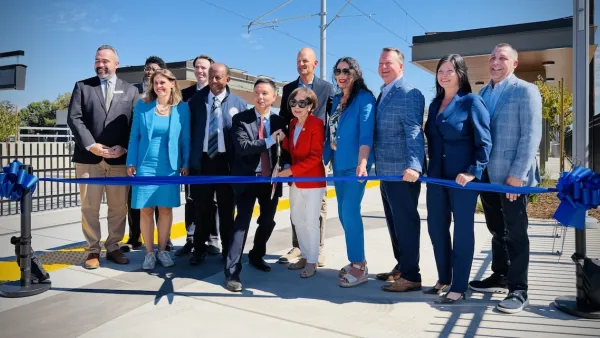
After decades of planning, Sacramento gains new light rail station
Trains will arrive every 15 minutes during peak hours and every 30 minutes during non-peak hours.
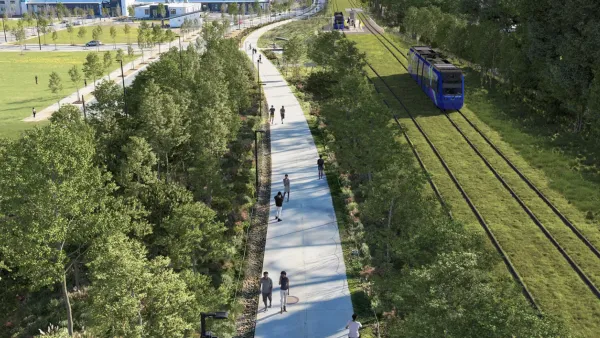
Atlanta City Council unanimously backs $3.5 billion Beltline light rail project
The resolution was drafted after Atlanta Mayor Andre Dickens pulled support for the Atlanta Streetcar extension last year.
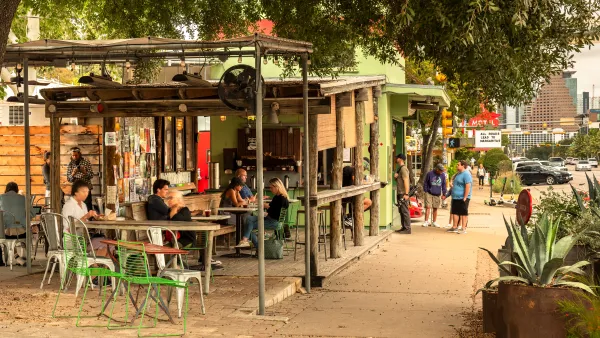
Large projects near Austin's light rail must include affordable housing
Elsewhere in the city, developers can pay into a city bank account for affordable housing rather than providing the required affordable units within their projects.

Planetizen Federal Action Tracker
A weekly monitor of how Trump’s orders and actions are impacting planners and planning in America.

‘Going backwards:’ Baltimore mayor, students rally against state's transit funding plan
Maryland's proposed six-year plan provides no funding for Baltimore’s BMORE bus program and reduces its road maintenance funding.

Detroit to transform waterfront with $2.2 billion investment
Developers will convert about 18 acres of unused parking lot space into civic spaces.

Battered from federal attacks, Louisiana's offshore wind industry refuses to give up
State Representative Joe Orgeron expressed hope that the state could revitalize its wind industry once President Trump leaves office.

Data center developers are using lawsuits, cash offers to ‘overwhelm’ rural America
Newsrooms in five states worked together to uncover the tactics big tech developers use to buy land from reluctant communities.

U.S.-Iran war may have ‘devastating’ impact on cost to warm homes
Vermont and Maine residents may see a 76% increase in the cost of warming their homes this winter.

FREE Course: Walkable City 1: Why Walkability?
After describing his path towards focusing on walkability as the essence of good planning, Jeff Speck marches through his five principal reasons for making more walkable places.
Reinventing Malls: Planning Alchemy—Turning Gray Fields Into Gold
The course focuses on the opportunities and imperatives that shape reinvention of mall sites.

One Hundred Miles
County of Mendocino
planning NEXT
The Architects Foundation
University of Cincinnati Online
Montrose County
Northern Illinois Transit Authority (NITA)
The Pocatello Development Authority