Adie Tomer looks at how Vienna contributes to Europe's smart city movement through innovations in sustainability, place-making, and data utilization.


European cities are often turned to as models for their innovative and inspiring efforts to create more sustainable, livable, and efficient cities. While Copenhagen and Barcelona are among the first cities to come to mind as precedents, Tomer believes Vienna should be added to the list of models for building a smart and sustainable metropolis.
"Vienna's energy consumption includes renewable and waste-to-energy generators reducing annual carbon emissions by 3.8 million tons. The transportation network supports more sustainable commuting, with over 70 percent of Viennese residents traveling by bicycle, transit, or walking. The data investments created a 3-D mapping database, enabling officials to measure exactly how many solar panels city roofs could support. These sorts of results and others help explain why Vienna is one of the top places to live on the planet."
U.S. metropolitan areas can follow in Vienna's footsteps through implementing carbon reduction goals, creating sustainable urban developments and using data as a gateway for better decision-making, explains Tomer.
Read the full story: Vienna Offers a Glimpse of the ‘Next Metropolis’


Why a Failed ‘Smart City’ Is Still Relevant
A Google-backed proposal to turn an underused section of Toronto waterfront into a tech hub holds relevant lessons about privacy and data.
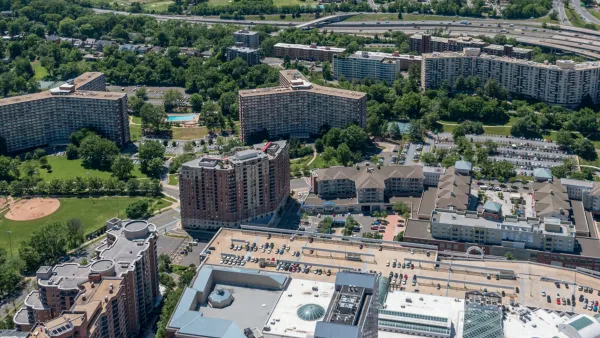
How one Arlington YIMBY used 'homebrew econometrics' to lobby for density
An upzoning proposal for Pentagon City could bring in an additional $8 million to $11 million in tax revenue.
New Maine Database Will Track Housing Growth
A new state law requires municipalities to submit records comparing housing permits and completed units for each year since 2010.

Planetizen Federal Action Tracker
A weekly monitor of how Trump’s orders and actions are impacting planners and planning in America.

Amtrak, CN end decades-long dispute with eight-year agreement
The new operating agreement establishes an updated framework for the companies to work together, including processes to resolve disputes.

Judges permit Denver to divert 77,000 acre feet from the Colorado River for reservoir expansion
Overuse and climate change have caused the Colorado River’s water levels to plummet.

NYC DOT wants faster, more permanent street upgrades
The city is examining ways to build more concrete infrastructure without getting entangled in 'decades-long' projects.

'Something we’ve never seen before:' rising utility rates could strain city finances nationwide
Data centers, climate change and other factors have caused utility rates in the United States to increase by 38% since 2020.

Trump to overrule local leaders, lease millions of acres of America’s Pacific Island territories’ seafloors to mining companies
International law says that the Indigenous people of America’s territories have a right to prior and informed consent regarding projects that impact their countries.

FREE Course: Walkable City 1: Why Walkability?
After describing his path towards focusing on walkability as the essence of good planning, Jeff Speck marches through his five principal reasons for making more walkable places.
Reinventing Malls: Planning Alchemy—Turning Gray Fields Into Gold
The course focuses on the opportunities and imperatives that shape reinvention of mall sites.

Harvard University Graduate School of Design
KFH Group Inc.
Greater Baltimore Committee
The Architects Foundation
University of Cincinnati Online
The Pocatello Development Authority
The Urban Renewal Agency of the City of Pocatello