Michael M. Grynbaum reports on NYC Mayor Michael Bloomberg's dubious relationship with social media, and his unease with its tendency to shift the public discourse away from long-term thinking.


Grynbaum reports on the paradox of the Mayor's embrace of social media and comments made in a recent speech in Singapore, where he expressed a concern that "'Social media is going to make it even more difficult to make long-term investments' in cities."
"At City Hall, Mr. Bloomberg, who made his fortune in information technology, has avidly embraced social media. He hired the city's first full-time chief digital officer and persuaded Cornell to open an engineering campus on Roosevelt Island...His administration has not been hesitant to use Facebook and Twitter as potent political tools," writes Grynbaum.
Despite his administration's use of social media, the Mayor sees the short-term focus of the medium and its propensity to encourage "a referendum on every single thing that we do every day," as a potential obstacle to long-term urban planning.
"'The immediacy of social media, he has found, creates both opportunities - for information-sharing and for citizen empowerment - and challenges, for governments, for businesses, for media, to see beyond the next tweet, or the next blog post,'" Howard Wolfson, a deputy mayor, said in an interview."
Read the full story: Mayor Warns of the Pitfalls in Social Media
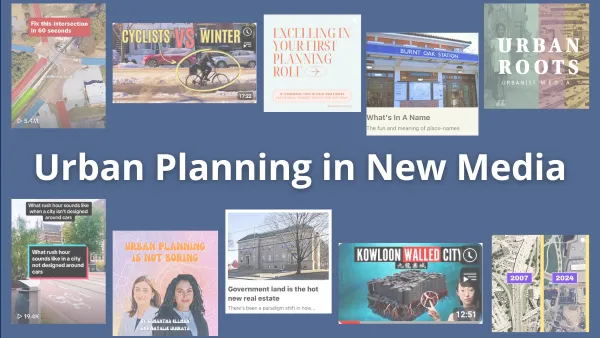
Urban Planning Creators You Should Know in 2024
Whether you’re a TikTok enthusiast or a Substack reader, you can find plenty of valuable and engaging urban planning content in the new media landscape.

Leveraging Social Media for Citizen Engagement in Urban Planning
Discover how urban planners can use social media to enhance citizen engagement, featuring strategies for interactive communication and community involvement in urban development projects.

Building Bridges to the Future: Preparing the Next Generation of Planners
Discover the importance of preparing the next generation of urban planners to build a sustainable and thriving future.

Planetizen Federal Action Tracker
A weekly monitor of how Trump’s orders and actions are impacting planners and planning in America.

California plans to bury El Niño’s downpour
If the state plays its cards right, it may be able to store a billion acre-feet of El Niño’s water in aquifers.

Desperate measures: Advocates weigh draining Lake Powell to fill Colorado River
Draining the reservoir could reduce evaporation losses by a couple hundred thousand acre-feet.

Los Angeles just elected an urban planner as its mayor
Transportation analysts are optimistic that Raman will be more aggressive in addressing transit issues than Bass.

Mamdani’s pied-à-terre tax survives legal challenge
A panel of judges found that the plaintiffs failed to demonstrate injury as a result of New York City's implementation of the tax.

Eastern Nebraska is running out of electricity
Data centers and electrification are straining eastern Nebraska’s grid, throttling economic development.

FREE Course: Walkable City 1: Why Walkability?
After describing his path towards focusing on walkability as the essence of good planning, Jeff Speck marches through his five principal reasons for making more walkable places.
Reinventing Malls: Planning Alchemy—Turning Gray Fields Into Gold
The course focuses on the opportunities and imperatives that shape reinvention of mall sites.

City of Rosemead
Rutgers University, Edward J. Bloustein School of Planning and Public Policy
One Hundred Miles
University of Michigan School for Environment and Sustainability (SEAS)
Hunter College, City University of New York (CUNY)
The Architects Foundation
City of Cambridge
Montrose County
The Pocatello Development Authority