Richard Florida ranks the U.S. cities with the highest job growth in 2011 and finds some surprises, based on an analysis of the latest data from the Bureau of Labor Statistics by Aaron Renn.


Florida digs into Renn's analysis, which covers the 51 U.S. metros with populations of one million people or more and covers the year 2010-2011, and finds that Austin and San Jose led the United States in job growth last year. These top performers are unlikely to surprise many, based on their knowledge-driven and creative economies. Making the top ten were some surprises, however, including legacy cities Detroit and Pittsburgh.
Also of interest, Florida found that "For all the talk of their resilience, greater Washington, D.C., ranked just 29th while greater New York ranked 25th. Sacramento, Birmingham, Cleveland, Virginia Beach, and Providence had the slowest rates of job creation. Las Vegas, Los Angeles, Boston, and San Francisco also had relatively low rates of job creation last year."
Is searching for causes behind the growth figures, Florida and colleague Charlotta Mellander found only a few with high levels of correlation. Among those, the strongest was the level of unionization.
"Despite the rebound in jobs in Detroit and Pittsburgh, overall, job growth appears to be occurring in metros with lower levels of unionization. The correlation between job growth and unionization was the highest of any in out [sic] analysis (-.49)."
Read the full story: The U.S. Cities With the Fastest Growing Job Markets
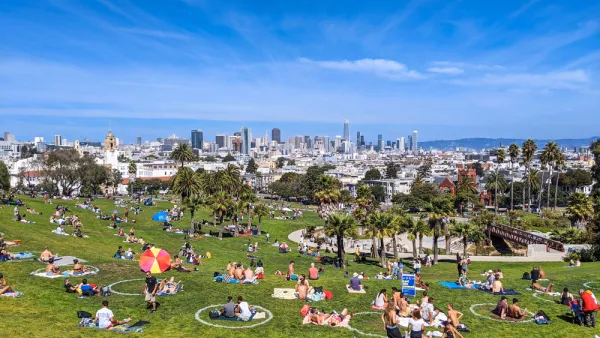
Austin Scores Highest on Pandemic Recovery; Bay Area and Baltimore Lowest
The Bay Area Council and CBRE created an economic tracker to measure how well the nation's 25 largest metropolitan areas have recovered from the public health restrictions imposed on their regions at the onset of the pandemic.
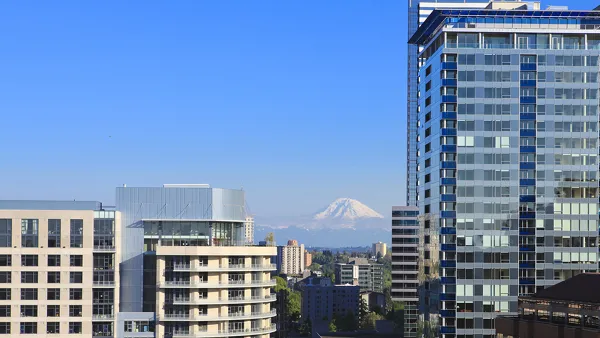
2020 Population Growth Rates for the 50 Biggest U.S. Cities
The Census Bureau released new data on May 27 that includes the first four months of the pandemic. Seattle tops the growth rate at 2.2% from July 1, 2019, to July 1, 2020, while Baltimore and San Francisco land at the bottom with -1.4%.
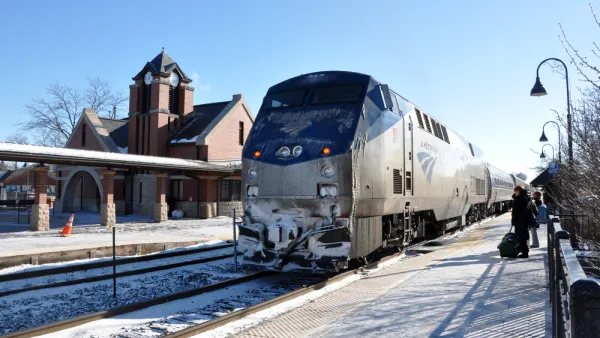
Study: Good Access to Transit Attracts Startups
Startups are increasingly abandoning the suburban office park to try their luck in denser urban cores. According to this study, good transit is one factor behind that trend. But it's not the only one.

Planetizen Federal Action Tracker
A weekly monitor of how Trump’s orders and actions are impacting planners and planning in America.

Eastern Nebraska is running out of electricity
Data centers and electrification are straining eastern Nebraska’s grid, throttling economic development.

Study reveals best places in the U.S. for cycling, walking
New research from Streetlight Data examines bicycle and pedestrian miles per capita in the 100 largest U.S. cities by population.

DSA members accuse Mamdani of 'abandoning values' over housing redevelopment
New York City's mayor plans to replace about 2,000 units of public housing with private, mixed-income housing.

All sides of BRT debate unhappy with CDOT’s most recent move
The Colorado Department of Transportation is no longer considering center-running bus lanes for Colorado Boulevard.

Massachusetts bogs generate both power, and cranberries
Putting solar panels above farmland is one way Massachusetts is advancing toward its goal of net-zero carbon emissions by 2050.

FREE Course: Walkable City 1: Why Walkability?
After describing his path towards focusing on walkability as the essence of good planning, Jeff Speck marches through his five principal reasons for making more walkable places.
Reinventing Malls: Planning Alchemy—Turning Gray Fields Into Gold
The course focuses on the opportunities and imperatives that shape reinvention of mall sites.

City of Rosemead
Rutgers University, Edward J. Bloustein School of Planning and Public Policy
One Hundred Miles
University of Michigan School for Environment and Sustainability (SEAS)
Hunter College, City University of New York (CUNY)
The Architects Foundation
City of Cambridge
The Pocatello Development Authority
The Urban Renewal Agency of the City of Pocatello