Peter Day visits Ordos, a largely empty new city in Inner Mongolia, and sees evidence that the great Chinese building boom, which did so much to fuel the country's astonishing economic growth, is over.


Conceived of 20 years ago, as a new town for the hundreds of thousands of residents that the "great Mongolian coal rush" would bring to the region, and virtually empty today, Ordos is believed to be the largest ghost town in China.
For Day, and other financial experts, Ordos is "merely the most spectacular example of a new Chinese phenomenon, in many cities - unsold flats, unlet shops, empty office blocks," which together form the warning signs of an impending economic collapse.
"Western financial experts who fear a bursting of the Chinese real estate bubble point out that the Chinese economy is more dependent on house building than the United States economy was, before the sub-prime lending bubble burst in 2007," notes Day.
Read the full story: Ordos: The biggest ghost town in China


Experts Express Pessimism Over Housing Costs
Although the current housing crisis has been compared with the housing crash of the late 2000s, experts caution that affordability issues could plague the U.S. housing market for years to come.
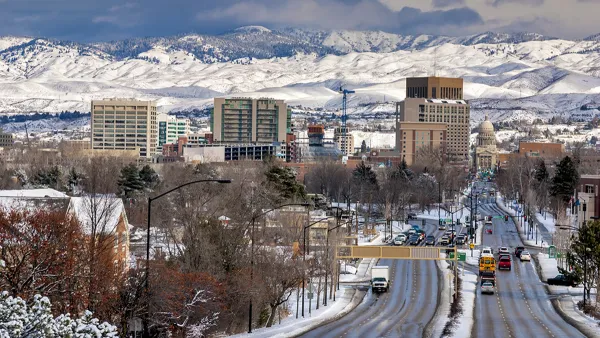
The Most Overvalued U.S. Housing Markets
A new study examines how far out of control some housing markets have gotten as a result of pandemic trends in real estate.

Are We in a Housing Bubble?
As the pandemic shifts housing priorities and costs continue to soar, experts assess the potential for a crash similar to 2008's Great Recession.

Planetizen Federal Action Tracker
A weekly monitor of how Trump’s orders and actions are impacting planners and planning in America.

Amtrak, CN end decades-long dispute with eight-year agreement
The new operating agreement establishes an updated framework for the companies to work together, including processes to resolve disputes.

Judges permit Denver to divert 77,000 acre feet from the Colorado River for reservoir expansion
Overuse and climate change have caused the Colorado River’s water levels to plummet.

'Something we’ve never seen before:' rising utility rates could strain city finances nationwide
Data centers, climate change and other factors have caused utility rates in the United States to increase by 38% since 2020.

Trump to overrule local leaders, lease millions of acres of America’s Pacific Island territories’ seafloors to mining companies
International law says that the Indigenous people of America’s territories have a right to prior and informed consent regarding projects that impact their countries.

A ‘shady’ deal: Chicagoans rally against planned Amtrak maintenance facility
The $900 million facility would allow Amtrak to maintain entire trains in one building, which the company says will reduce delays.

FREE Course: Walkable City 1: Why Walkability?
After describing his path towards focusing on walkability as the essence of good planning, Jeff Speck marches through his five principal reasons for making more walkable places.
Reinventing Malls: Planning Alchemy—Turning Gray Fields Into Gold
The course focuses on the opportunities and imperatives that shape reinvention of mall sites.

KFH Group Inc.
Greater Baltimore Committee
Eagle County Government
The Architects Foundation
University of Cincinnati Online
The Pocatello Development Authority
The Urban Renewal Agency of the City of Pocatello