Sam Lubell looks at the growth of Southern California as an architectural manufacturing center, reflecting larger trends in manufacturing that require higher-skilled labor to produce more sophisticated products.


It might surprise you to read that, "the U.S. is still the largest manufacturing economy in the world, making up 21 percent of all globally manufactured products," or that California is the top manufacturing state in the country with more than 10% of all manufacturing jobs in the country located there.
However, the state's long history of industrial design and manufacturing leadership, along with its, "higher-skilled labor, lower shipping costs, and quicker turnarounds," are beginning to lead an acceleration of investment in U.S. manufacturing, writes Lubell. And a lot of this manufacturing growth is centered around the customized products demanded by architecture and construction clients.
In this article, Lubell speaks with manufacturers who make Southern California home about the specialized products they make and equipment they employ, and the reasons why they haven't located their operations in China or India.
Read the full story: Industrial Revolution

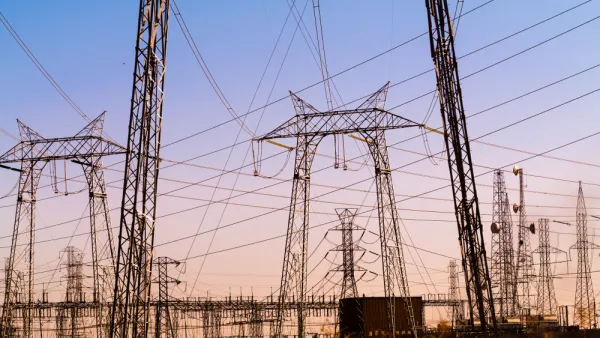
Power Demand is Surging in US
The U.S. has entered a new power paradigm according to a new energy analysis that warns of unprecedented new demands for power, largely from “new manufacturing, industrial, and data center facilities,” and the grid is not prepared for the surge.
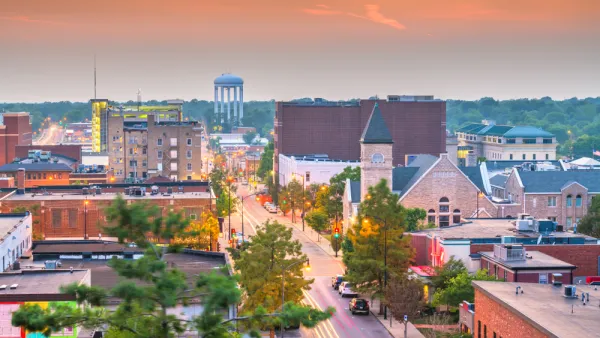
Small-Scale Manufacturing Can Maximize the Potential of America's Small Cities
Artisans and small-scale manufacturers offer tremendous economic opportunities for cities prepared to harness that creative and entrepreneurial energy.

An Overlooked Economic Powerhouse for Small Cities
Attracting a major employer or a tech company is not the only economic development strategy that deserves attention and investment.

Planetizen Federal Action Tracker
A weekly monitor of how Trump’s orders and actions are impacting planners and planning in America.

California plans to bury El Niño’s downpour
If the state plays its cards right, it may be able to store a billion acre-feet of El Niño’s water in aquifers.

Chicago breaks ground on $3 billion megadevelopment
The new neighborhood, titled Foundry Park, will one day host 3,700 residences.

California High-Speed Rail Authority CEO resigns after $600,000 scandal
Under Ian Choudri, the authority used taxpayer dollars to fund first class flights and trips to nightclubs.

Want to study the Missouri River? Soon, you may need unanimous approval from 10 states
Legislation would require 10 governors’ permission to study or build projects moving water outside the basin.

Desperate measures: Advocates weigh draining Lake Powell to fill Colorado River
Draining the reservoir could reduce evaporation losses by a couple hundred thousand acre-feet.

FREE Course: Walkable City 1: Why Walkability?
After describing his path towards focusing on walkability as the essence of good planning, Jeff Speck marches through his five principal reasons for making more walkable places.
Reinventing Malls: Planning Alchemy—Turning Gray Fields Into Gold
The course focuses on the opportunities and imperatives that shape reinvention of mall sites.

City of Rosemead
Rutgers University, Edward J. Bloustein School of Planning and Public Policy
One Hundred Miles
Hunter College, City University of New York (CUNY)
The Architects Foundation
University of Cincinnati Online
City of Cambridge
Montrose County
The Pocatello Development Authority