Eric Jaffe reports on a new study that aims to conclusively answer the question of whether bike paths and bike lanes actually promote more bike riders.


While recent studies in Seattle and Minneapolis reached opposite conclusions on the subject, Jaffe looks to a new study published in the March 2012 issue of the journal Transportation that attempts to clarify the confusion, and the results are positive for bicycle proponents
"Even after controlling for a number of factors - including land use, climate, socioeconomic status, gas prices, public transport and bike safety - they still get a clear result: 'cities with a greater supply of bike paths and lanes have significantly higher bike commute rates,'" writes Jaffe.
Of course, in the end Jaffe cannot leave the question settled, as he references another recent study in Stafford, England, scheduled for publication in Transport Policy that shows a more nuanced outcome on rates of recreational biking and bicycle commuting. "The important lesson for policy makers is that bike paths and bike lanes may both increase ridership, but in different ways. While the former may encourage recreational riding, that doesn't necessarily translate into everyday cycling."
In the end, Jaffe reconciles the divergent results: "with each study of this kind that's completed, it seems more clear that in many cities, for many different purposes, there does appear to be some fundamental demand for sustainable transportation just waiting for a share of the urban landscape."
Read the full story: Do Bike Paths Promote Bike Riding?
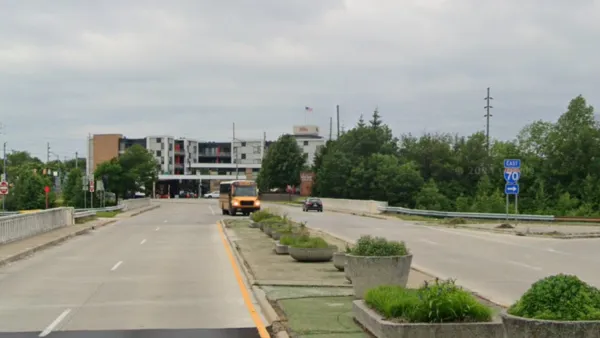
Indy Neighborhood Group Builds Temporary Multi-Use Path
Community members, aided in part by funding from the city, repurposed a vehicle lane to create a protected bike and pedestrian path for the summer season.
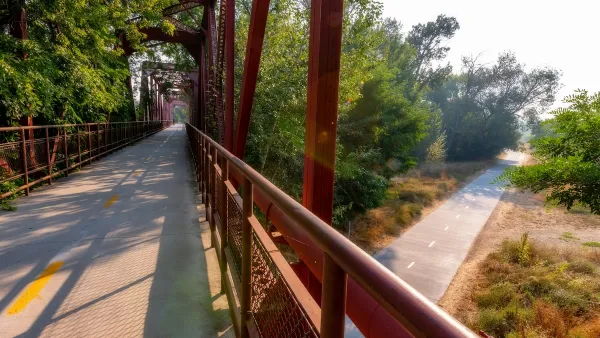
‘Data Bikes’ Help Governments Understand Bike Path Conditions
Sensors on specially equipped bikes can collect information on trail accessibility and pavement conditions to prioritize maintenance projects.
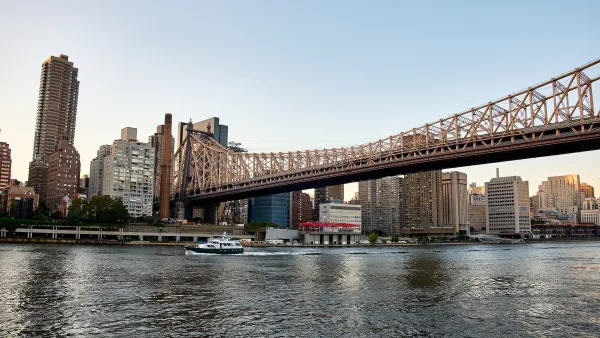
Queensboro Bridge Bike Lane Delayed Again
A project that would give pedestrians their own dedicated path on the crowded bridge has been pushed back to at least the summer of 2024.

Desperate measures: Advocates weigh draining Lake Powell to fill Colorado River
Draining the reservoir could reduce evaporation losses by a couple hundred thousand acre-feet.

Eastern Nebraska is running out of electricity
Data centers and electrification are straining eastern Nebraska’s grid, throttling economic development.

Move over, LA: St. Louis gears up for Olympics, invests millions in downtown redevelopment
The Missouri city will host the 2028 Olympic soccer group stage and knockout matches.

Mass. votes against statewide minimum lot size for single-family homes
Over 2 million residents voted on Question 7; it was decided by just over 30,000 votes.

Maryland’s $15 billion bridge project gains key approval
The Maryland Transit Authority said the project will create over 60,000 jobs and add $23 billion to the local economy.

‘No clear next steps’ for Chicago's permanent festival grounds
Eleventh Ward Ald. Nicole Lee has suggested Soldier Field as a possible location for the permanent event space.

FREE Course: Walkable City 1: Why Walkability?
After describing his path towards focusing on walkability as the essence of good planning, Jeff Speck marches through his five principal reasons for making more walkable places.
Reinventing Malls: Planning Alchemy—Turning Gray Fields Into Gold
The course focuses on the opportunities and imperatives that shape reinvention of mall sites.

City of Rosemead
Rutgers University, Edward J. Bloustein School of Planning and Public Policy
One Hundred Miles
University of Michigan School for Environment and Sustainability (SEAS)
Hunter College, City University of New York (CUNY)
The Architects Foundation
City of Cambridge
Montrose County
The Pocatello Development Authority