John King authors an article examining the types of privately owned public spaces that have been created in San Francisco under the city's 1985 downtown plan and sees room for improvement.


King finds the public spaces created in such recent downtown projects as One Kearney to be commendable additions to the city's supply of open space; when the public can actually locate and gain access to them.
As the affects of the program's guidelines (requiring 1 square foot of public space per 50 square feet of office space or hotels) grows along with the downtown development market, King finds that, "Simple remedies to the current rules would increase awareness of good spaces and focus resources more effectively."
According to King, "There are other challenges to tackle before San Francisco's semipublic spaces reach their full potential. But the first challenge is simply for people to know they exist. Once a constituency exists, issues like maintenance and openness will fall into line."
Read the full story: Privately owned public spaces: Guidance needed

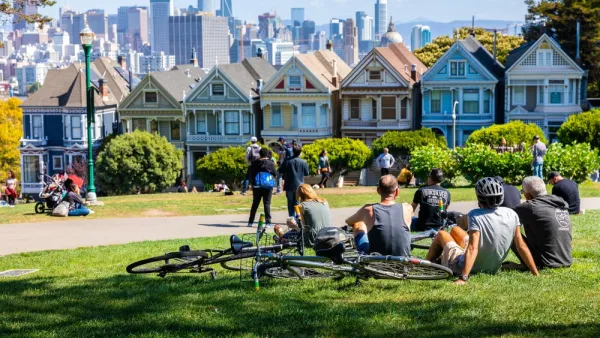
Predictions for San Francisco’s Public Spaces
In 2023, will the city’s public spaces be reclaimed by cars, or will pandemic-era interventions lead to permanent change?

The Return of San Francisco’s Privately Owned Public Spaces
In San Francisco, you can find respite from city life in some unexpected places—if you know where to look.
San Francisco Exposes Privately Owned Public Spaces
San Francisco's 1985 downtown plan required large new office and hotel developments to incorporate public spaces, but the city is only now updating the requirements and reinforcing the initial goal of opening up privately owned public spaces (POPOS).

Planetizen Federal Action Tracker
A weekly monitor of how Trump’s orders and actions are impacting planners and planning in America.

‘Going backwards:’ Baltimore mayor, students rally against state's transit funding plan
Maryland's proposed six-year plan provides no funding for Baltimore’s BMORE bus program and reduces its road maintenance funding.

Detroit to transform waterfront with $2.2 billion investment
Developers will convert about 18 acres of unused parking lot space into civic spaces.

NYC’s landfills will soon overflow — expanding them invites health risks
In as little as 16 years, New York City will have to find new places to dump its trash.

This Boston neighborhood is filling its roads with obstacles — intentionally
Somerville is embracing ‘extreme street makeovers’ to make its roads safer for pedestrians and cyclists.

Planned $2 billion courthouse in MA sparks tension with local government
Springfield owns an essential piece of the land developers intend to build on, and some city officials do not want to see the project come to fruition.

FREE Course: Walkable City 1: Why Walkability?
After describing his path towards focusing on walkability as the essence of good planning, Jeff Speck marches through his five principal reasons for making more walkable places.
Reinventing Malls: Planning Alchemy—Turning Gray Fields Into Gold
The course focuses on the opportunities and imperatives that shape reinvention of mall sites.

City of Thousand Oaks
City of Wisconsin Rapids
Harvard University Graduate School of Design
The Architects Foundation
University of Cincinnati Online
Northern Illinois Transit Authority (NITA)
The Pocatello Development Authority
The Urban Renewal Agency of the City of Pocatello