Apparently the payroll tax agreement reached on Friday in congress did not extend all tax provisions being considered. The deal allowed a number of tax breaks, including those for wind and solar energy producers, to expire, reports Brad Plumer.


Despite efforts to include them in the final payroll tax deal, the clean energy tax credits, and a tax break for commuters who take mass transit that had already lapsed, were left out of the final deal.
According to Plumer, the end of the credits will have a huge effect on the wind power industry. "Projects that finish up by the end of 2012 will still qualify - which is why there's likely to be a huge boom in construction this year. But that leaves a vast number of additional projects that weren't slated for completion until 2013 or later. The tax credit will have expired by then, so those projects are likely to be shelved, which, according to the consulting company Navigant, will lead to 37,000 layoffs."
FULL STORY: One casualty of the payroll tax deal: clean energy

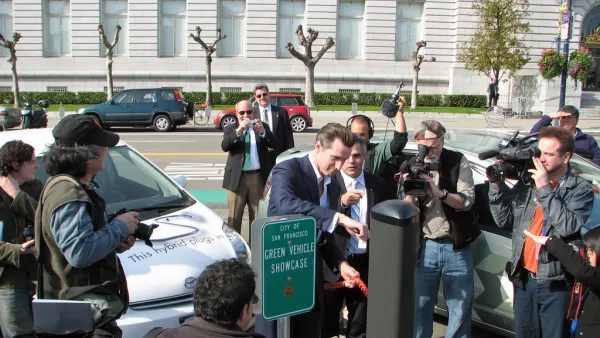
California Backtracks on Pledge to Save EV Subsidy
Despite a November promise to replace the federal EV subsidy with a state incentive, Governor Newsom now says the state cannot make up for the “federal vandalism” of EV tax credits.

One Federal Low-Income Housing Program is Actually Being Expanded
Recent changes to the Low-Income Housing Tax Credit program could lead to over a million new housing units, but cuts to adjacent and complementary programs could limit its impact.
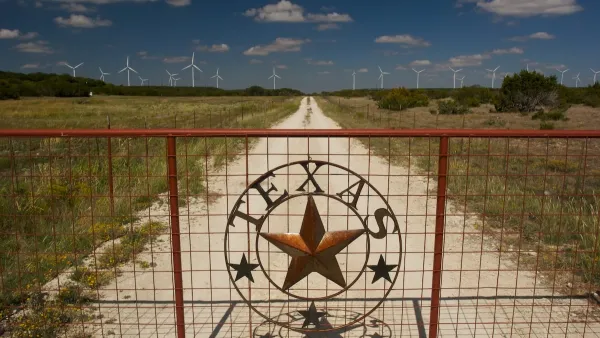
Texas Rural Communities Could Lose Billions From Renewable Energy Tax Credit Cuts
Texas produces more solar and wind energy than anywhere in America — and the tax revenue from it pays for rural schools, hospitals, law enforcement and more. The One Big Beautiful Bill threatens that.

Planetizen Federal Action Tracker
A weekly monitor of how Trump’s orders and actions are impacting planners and planning in America.

The state-sanctioned urbicide of Austin
People don’t kill cities. Freeways do.

US to reduce Colorado River water deliveries to Mexico
A new Colorado Treaty amendment reduces Mexico’s Colorado River water allocation by 250,000 acre feet.

Guerilla urbanists are building DIY bus stop benches in Chicago
A before-and-after of one of the bus stops with a new bench. The new benches are not officially sanctioned or permitted, but the residents who placed them hope they will be the start of a network of DIY benches across the city.

Mamdani overhauls NYC's Vision Zero plan with 100 new policy goals
The overhaul aims to reduce traffic deaths and make streets safer for pedestrians, cyclists and drivers through lower speed limits, new safety infrastructure and more.

Amtrak not solely to blame for New Jersey commuter rail's unreliability, report finds
A new study from the Garden State Initiative found that NJ Transit’s budget grew 20% across a 4 year period, but reliability declined significantly over the same period.

FREE Course: Walkable City 1: Why Walkability?
After describing his path towards focusing on walkability as the essence of good planning, Jeff Speck marches through his five principal reasons for making more walkable places.
Reinventing Malls: Planning Alchemy—Turning Gray Fields Into Gold
The course focuses on the opportunities and imperatives that shape reinvention of mall sites.

Eagle County Government
Harvard University Graduate School of Design
Nashville Planning Department
The Architects Foundation
University of Cincinnati Online
The Pocatello Development Authority
The Urban Renewal Agency of the City of Pocatello
Journal of the American Planning Association