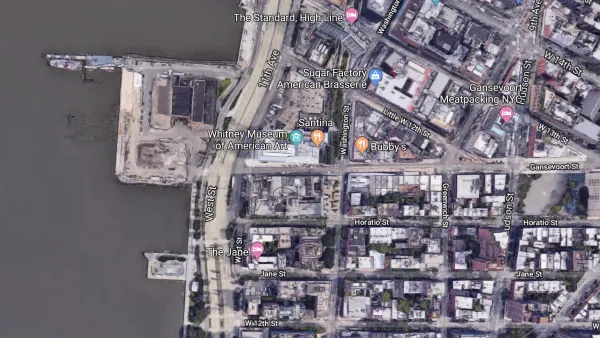
Charles V. Bagli and Lisa W. Foderaro report on the successes and challenges facing Hudson River Park, which is now running short on money for routine maintenance, and was supposed to be the model for New York City parks to come.


For anyone that has visited the elegant park that stretches five miles along the Hudson River on Manhattan's west side from Battery Place to 59th street, the successes are evident in the crowds of daily visitors and the string of luxury condominiums and Class A office space that have been drawn to the waterfront by its development.
What's less apparent are the challenges that the park now faces due to declining capital funds and stalled commercial development on its piers.
"'Part of the challenge is how to put together a plan for successful private investment and appropriate redevelopment when you're basing that thinking on quicksand,' said Vin Cipolla, president of the Municipal Art Society. 'There has to be public investment, and the leadership will have to come from the governor. Otherwise we'll just see more deterioration.'"
Read the full story: Times and Tides Weigh on Hudson River Park


'Little Island' Opens as a Photogenic Addition to the Hudson River
Little Island came into the world as Pier 55 and even managed to come back from the dead before opening last week.

Meet Some of New York City's Newest Parks
In a city where density is everything, these park projects make creative use of existing public spaces—and, in some cases, create their own.
Designs Revealed for Manhattan's First Public Beach
A designer was chosen in January, and conceptual rendering were released in July. Project boosters are also pushing an ambitious timeline that would start construction in late 2020.

Planetizen Federal Action Tracker
A weekly monitor of how Trump’s orders and actions are impacting planners and planning in America.

‘Going backwards:’ Baltimore mayor, students rally against state's transit funding plan
Maryland's proposed six-year plan provides no funding for Baltimore’s BMORE bus program and reduces its road maintenance funding.

Detroit to transform waterfront with $2.2 billion investment
Developers will convert about 18 acres of unused parking lot space into civic spaces.

Data center developers are using lawsuits, cash offers to ‘overwhelm’ rural America
Newsrooms in five states worked together to uncover the tactics big tech developers use to buy land from reluctant communities.

U.S.-Iran war may have ‘devastating’ impact on cost to warm homes
Vermont and Maine residents may see a 76% increase in the cost of warming their homes this winter.

Senate bill would ‘overhaul’ environmental permitting laws
Under the proposed act, government agencies would also not be able to suspend or rescind permits after granting them.

FREE Course: Walkable City 1: Why Walkability?
After describing his path towards focusing on walkability as the essence of good planning, Jeff Speck marches through his five principal reasons for making more walkable places.
Reinventing Malls: Planning Alchemy—Turning Gray Fields Into Gold
The course focuses on the opportunities and imperatives that shape reinvention of mall sites.

One Hundred Miles
County of Mendocino
planning NEXT
The Architects Foundation
University of Cincinnati Online
Montrose County
Northern Illinois Transit Authority (NITA)
The Pocatello Development Authority