Little Island came into the world as Pier 55 and even managed to come back from the dead before opening last week.



Little Island, the splashy park referred to as Pier 55 when originally conceived in 2014, has opened in New York City. The park concept weathered controversy and managed to come back from the dead.
The park, located on a pier in the Hudson River near 13th Street in Hudson River park, is the brainchild of Barry Diller, who first proposed the project in 2014 as a replacement for Pier 54. The $260 million, 2.4-acre park overcame several lawsuits, and was declared dead by the New York Times even after being granted final approval. Eventually, New York Governor Andrew Cuomo helped rescue the project. Thomas Heatherwick designed the park, adding to a Manhattan-based oeuvre that includes the Vessel in Hudson Yards.
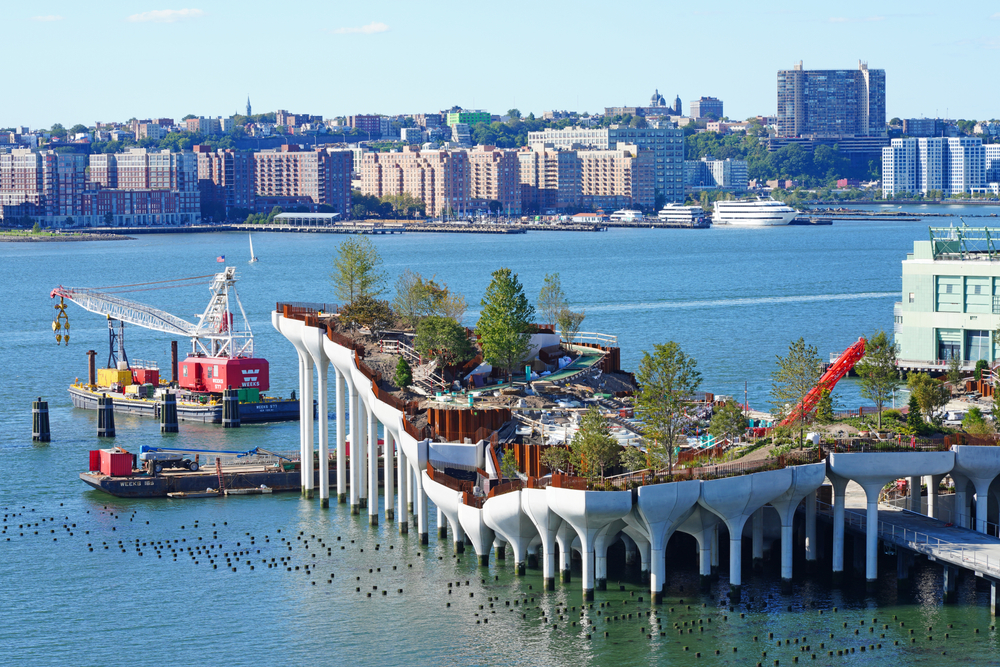
Michael Kimmelman, architecture critic for the same New York Times, provides a feature-style write up of the new park on the day of its opening, describing it as the "architectural equivalent of a kitchen sink sundae, with a little bit of everything." The article includes a ton of photos—including images of the park from outside and above as well as images of the park from the park, with views of Manhattan in the background.
Kimmelman digs into the design and engineering details of the park, which have mostly remained intact since the original conception. Kimmelman notes, however, that the final project includes additional protections for wildlife habitats and other improvements wrought from the earlier lawsuits and controversies. The result, declares Kimmelman, is a win-win for the city.
An additional article by Diane Pham for Urbanize New York includes more development and design details about the project.
FULL STORY: A New $260 Million Park Floats on the Hudson. It’s a Charmer.


The state-sanctioned urbicide of Austin
People don’t kill cities. Freeways do.

US to reduce Colorado River water deliveries to Mexico
A new Colorado Treaty amendment reduces Mexico’s Colorado River water allocation by 250,000 acre feet.

New Jersey’s second-largest city bans standalone data centers
Jersey City will continue to allow co-location facilities, such as those meant for research institutions that store their own data.

Amtrak not solely to blame for New Jersey commuter rail's unreliability, report finds
A new study from the Garden State Initiative found that NJ Transit’s budget grew 20% across a 4 year period, but reliability declined significantly over the same period.

EPA erases limits on planet-warming pollution from power plants
Under Monday’s plan, power plants would still have some limits on how much mercury, arsenic and other contaminants they can emit.

Phoenix announces new on-demand transit service, more frequent RAPID buses
Both new services will launch in October, and are part of Phoenix's Project Effective Access Solutions for Easing Congestion.

FREE Course: Walkable City 1: Why Walkability?
After describing his path towards focusing on walkability as the essence of good planning, Jeff Speck marches through his five principal reasons for making more walkable places.
Reinventing Malls: Planning Alchemy—Turning Gray Fields Into Gold
The course focuses on the opportunities and imperatives that shape reinvention of mall sites.

Eagle County Government
Harvard University Graduate School of Design
Nashville Planning Department
The Architects Foundation
University of Cincinnati Online
The Pocatello Development Authority
The Urban Renewal Agency of the City of Pocatello
Journal of the American Planning Association