Emily Badger profiles Arlington County's Mobility Lab, and its Transit Tech initiative, which has managed to take 40,000 car trips a day off of the county’s roads by easing access to their existing infrastructure.


According to Badger, the Mobility Lab "has a lean start-up philosophy that's almost unrecognizable in a government bureaucracy." One project to come out of what has become a king of R&D lab was the creation of a web and mobile app called Transit Near Me that makes sense of the region's spider-like web of buses.
The lab also invented a nifty piece of hardware, a low-cost computer display that integrates live data feeds from local bus, train and bikeshare systems in a cool looking, easy to read, format. The display could be deployed near transit facilities, in retail establishments facing the sidewalk.
Read the full story: An R&D Lab for Transit Tech Tools

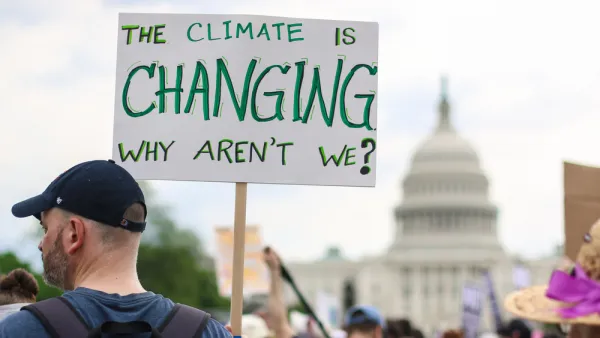
USDOT Releases Climate Strategies Playbook
The USDOT's new Climate Strategies that Work Playbook provides detailed information concerning benefits and implementation requirements for 27 transportation-related emission reduction strategies.
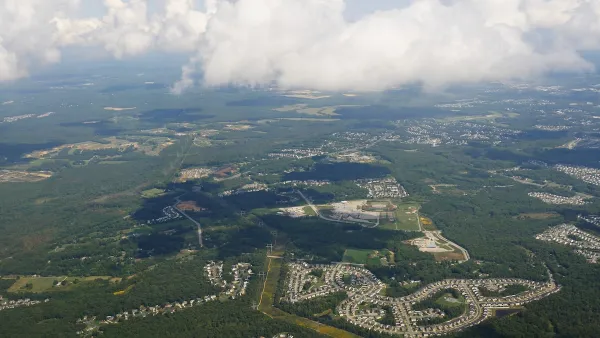
Court Blocks Arlington County Zoning Reform
The county’s zoning reform plan would have promoted ‘missing middle housing’ types of up to six units on lots previously zoned for single-family housing.
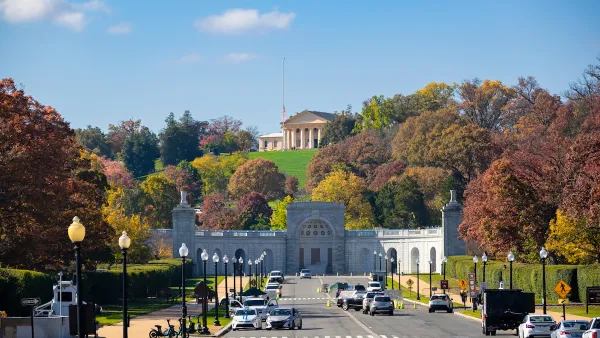
Arlington Updates Crosswalk Laws to Align With State Law, Vision Zero
The county will now require drivers to come to a full stop when encountering pedestrians in a crosswalk.

Amtrak, CN end decades-long dispute with eight-year agreement
The new operating agreement establishes an updated framework for the companies to work together, including processes to resolve disputes.

Judges permit Denver to divert 77,000 acre feet from the Colorado River for reservoir expansion
Overuse and climate change have caused the Colorado River’s water levels to plummet.
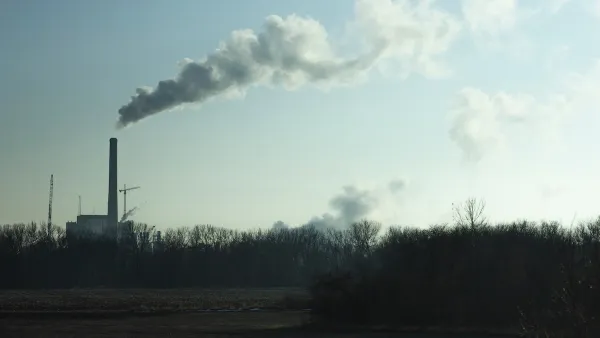
Nation's most wind-powered state turns to coal as data centers increase energy demand
For the first time in decades, Iowa has increased its generation of coal power.

Boston has spent millions making the Green Line more accessible — and there’s no end in sight
While the city has invested millions into expanding and adding platforms to the Green Line to make it more accessible, new train cars set to arrive next year will be too tall for disabled passengers to board without raising the current platforms.

Idaho may see an 18% drop in federal surface transit funding — the largest estimated cut in the US
Transit systems in rural communities are much more reliant on federal funding to provide their services.

How ‘post-disaster gentrification’ alters neighborhoods after natural calamities
After hurricanes, fires or other calamities, the original residents of a community are often replaced by younger, wealthier residents.

FREE Course: Walkable City 1: Why Walkability?
After describing his path towards focusing on walkability as the essence of good planning, Jeff Speck marches through his five principal reasons for making more walkable places.
Reinventing Malls: Planning Alchemy—Turning Gray Fields Into Gold
The course focuses on the opportunities and imperatives that shape reinvention of mall sites.

City of Wisconsin Rapids
Harvard University Graduate School of Design
KFH Group Inc.
The Architects Foundation
University of Cincinnati Online
The Pocatello Development Authority
The Urban Renewal Agency of the City of Pocatello