For the past 7 years, the people behind the TED conference have awarded a yearly $100,000 prize to an individual with "one wish to change the world." This year, they've skipped the individual and are going directly to the idea: The City 2.0.


From the press release:
"The 2012 TED Prize is awarded to .the City 2.0.
The City 2.0 is the city of the future a future in which more than ten billion people on planet Earth must somehow live sustainably.
The City 2.0 is not a sterile utopian dream, but a real-world upgrade tapping into humanity's collective wisdom.
The City 2.0 promotes innovation, education, culture, and economic opportunity.
The City 2.0 reduces the carbon footprint of its occupants, facilitates smaller families, and eases the environmental pressure on the world's rural areas.
The City 2.0 is a place of beauty, wonder, excitement, inclusion, diversity, life.
The City 2.0 is the city that works.
The TED Prize grants its winner $100,000 and 'one wish to change the world.' How will this prize be accepted on behalf of the City 2.0? Through visionary individuals around the world who are advocating on its behalf.
We are listening to them and giving them the opportunity to collectively craft a wish. A wish capable of igniting a massive collaborative project among the members of the global TED community, and indeed all who care about our planet's future. (Individuals or organizations who wish to contribute their ideas to a TED Prize wish on behalf of The City 2.0 should write to [email protected])"
Read the full story: Announcing the 2012 TED Prize Winner – The City 2.0
7 Promising Visions of "The City 2.0"
A conference hosted by TED last week in New York continued the conversation the organization started last year with the awarding of its 2012 prize to The City 2.0. Alissa Walker looks at some of the most promising visions for the future of cities.
The Perils of TEDification
On Places, Simon Sadler explores the magical thinking and many contradictions of the TED Talks.
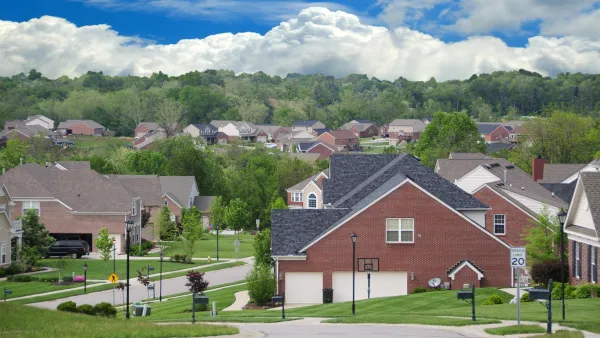
Why Suburban Sprawl is the Worst Idea America Has Ever Had
In a recent "TED Talk", Jeff Speck makes the case for creating a more walkable America based not on design arguments, but rather on the potential to create a more economically resilient, healthier, and environmentally sustainable country.

Planetizen Federal Action Tracker
A weekly monitor of how Trump’s orders and actions are impacting planners and planning in America.

California plans to bury El Niño’s downpour
If the state plays its cards right, it may be able to store a billion acre-feet of El Niño’s water in aquifers.

Desperate measures: Advocates weigh draining Lake Powell to fill Colorado River
Draining the reservoir could reduce evaporation losses by a couple hundred thousand acre-feet.

Mamdani’s pied-à-terre tax survives legal challenge
A panel of judges found that the plaintiffs failed to demonstrate injury as a result of New York City's implementation of the tax.

Eastern Nebraska is running out of electricity
Data centers and electrification are straining eastern Nebraska’s grid, throttling economic development.

Seattle passes record-breaking transit services expansion
Proposition 1 will double the city’s transit tax to add 95,000 more bus trips and preserve 180,000 bus trips annually.

FREE Course: Walkable City 1: Why Walkability?
After describing his path towards focusing on walkability as the essence of good planning, Jeff Speck marches through his five principal reasons for making more walkable places.
Reinventing Malls: Planning Alchemy—Turning Gray Fields Into Gold
The course focuses on the opportunities and imperatives that shape reinvention of mall sites.

City of Rosemead
Rutgers University, Edward J. Bloustein School of Planning and Public Policy
One Hundred Miles
University of Michigan School for Environment and Sustainability (SEAS)
Hunter College, City University of New York (CUNY)
The Architects Foundation
City of Cambridge
Montrose County
The Pocatello Development Authority