Critic Blair Kamin speaks out against Mayor Emmanuel's decision to allow advertising on Chicago's iconic bridges to make up a budget shortfall. Kamin calls the move "the uglification of the City Beautiful."


The Wabash Avenue Bridge, a stately bridge built early in the 20th century, currently features banners advertising Bank of America.
Kamin opines:
"Yes, these are tough times and Chicago is desperate for cash. "We want to find innovative ways to bring new revenues into the city to protect critical city services," said Kathleen Strand, a city spokeswoman.
But the public instinctively understands that marring civic icons in the name of balancing the books is a self-destructive act, one that sacrifices Chicago's matchless architectural identity. As of Monday evening, more than 96 percent of those responding to an online Tribune poll gave the bridge ads a thumbs-down."
Read the full story: New ads on the Wabash Avenue Bridge: Avert your eyes; at least they'll be gone in a month
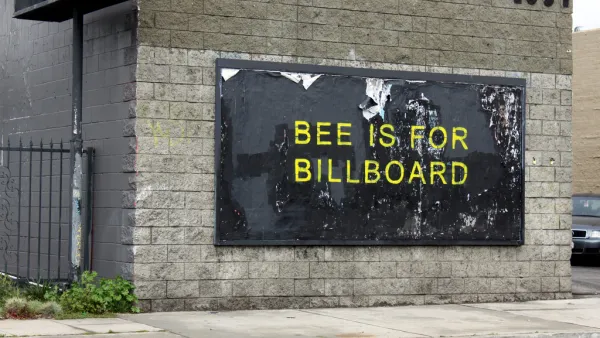
Artists Find Alternate Uses for Billboards in Los Angeles
With a surplus of unsold billboard spaces dotting Los Angeles, artists are using the empty spaces as canvasses for new forms of public art.
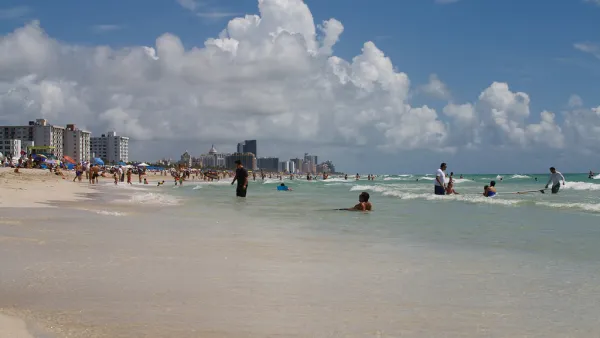
Miami Beach's Floating Billboards: A Nuisance on Water
The picturesque ocean front of Miami Beach is being sullied by digital billboards now floating off shore on boats, outside the reach of the city's authority.
Chicago to Use 'Municipal Marketing' to Help Close Budget Gap, But at What Cost?
Chicago is planning to join the list of cities monetizing their public spaces and facilities by selling ad space on city property. Past efforts by the city to launch so-called “municipal marketing” efforts have been beset by delays and missteps.

Planetizen Federal Action Tracker
A weekly monitor of how Trump’s orders and actions are impacting planners and planning in America.

California plans to bury El Niño’s downpour
If the state plays its cards right, it may be able to store a billion acre-feet of El Niño’s water in aquifers.

Desperate measures: Advocates weigh draining Lake Powell to fill Colorado River
Draining the reservoir could reduce evaporation losses by a couple hundred thousand acre-feet.

Mamdani’s pied-à-terre tax survives legal challenge
A panel of judges found that the plaintiffs failed to demonstrate injury as a result of New York City's implementation of the tax.

Eastern Nebraska is running out of electricity
Data centers and electrification are straining eastern Nebraska’s grid, throttling economic development.

Seattle passes record-breaking transit services expansion
Proposition 1 will double the city’s transit tax to add 95,000 more bus trips and preserve 180,000 bus trips annually.

FREE Course: Walkable City 1: Why Walkability?
After describing his path towards focusing on walkability as the essence of good planning, Jeff Speck marches through his five principal reasons for making more walkable places.
Reinventing Malls: Planning Alchemy—Turning Gray Fields Into Gold
The course focuses on the opportunities and imperatives that shape reinvention of mall sites.

City of Rosemead
Rutgers University, Edward J. Bloustein School of Planning and Public Policy
One Hundred Miles
University of Michigan School for Environment and Sustainability (SEAS)
Hunter College, City University of New York (CUNY)
The Architects Foundation
City of Cambridge
Montrose County
The Pocatello Development Authority