The Milwaukee County Transit System had planned to reduce service due to a reduction in state aid in 2012. According to Jeramey Jannene, "with some last minute creative planning, they were able to avoid many cuts thanks to the use of CMAQ funds."


In Milwaukee, the transit system had proposed a new express system, the Bayshore – Airport Express, that will use Congestion Mitigation and Air Quality (CMAQ) Improvement funds to fund the project instead.
The CMAQ funds, according to Jannene, are "allocated out of a competitive bidding process, and will provide funding to institute 'express service' for two years along a number of key corridors which will replace segments of a number of routes."
Jannene says that the express service "will connect Bayshore, UWM, Downtown, and Bay View with stops roughly every 1/4 of a mile, seven days a week, with headways of 10-15 minutes during the rush hours, and 15-20 minutes during off-peak times."
Read the full story: Introducing the Bayshore – Airport Express Bus Service

Milwaukee transit agency plans 25% service cuts
The MCTS system will have to make a difficult choice between service frequency and coverage.
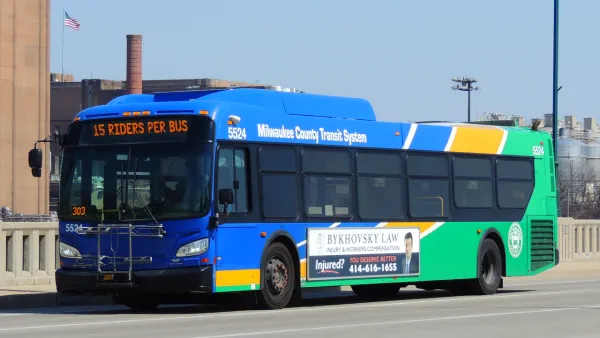
Postponed Milwaukee BRT Project at Least a Decade Away
The county’s transit system won’t pursue a second rapid bus line due to financial constraints.
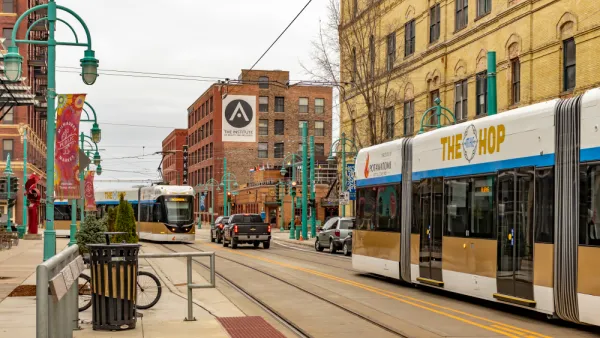
Second Bus Rapid Transit Line Planned for Milwaukee
The Milwaukee County Transit System could be adding a bus rapid transit line to the existing PurpleLine.

Planetizen Federal Action Tracker
A weekly monitor of how Trump’s orders and actions are impacting planners and planning in America.

Eastern Nebraska is running out of electricity
Data centers and electrification are straining eastern Nebraska’s grid, throttling economic development.

Study reveals best places in the U.S. for cycling, walking
New research from Streetlight Data examines bicycle and pedestrian miles per capita in the 100 largest U.S. cities by population.

Federal government nominates new FTA administrator
Mark Aesch is currently the founder and CEO of a transportation management consulting firm.

Developers reveal $10 billion stadium plan as ‘Hail Mary’ to keep Bears in Chicago
The plan would also boast a public park, high- and mid-rise buildings and a youth sports complex.

As Texas embraces carbon storage, a Black community questions the risks
Texas now issues permits for companies to store carbon dioxide underground. East Texas residents fear safety risks, and skeptics doubt the climate benefits.

FREE Course: Walkable City 1: Why Walkability?
After describing his path towards focusing on walkability as the essence of good planning, Jeff Speck marches through his five principal reasons for making more walkable places.
Reinventing Malls: Planning Alchemy—Turning Gray Fields Into Gold
The course focuses on the opportunities and imperatives that shape reinvention of mall sites.

City of Rosemead
Rutgers University, Edward J. Bloustein School of Planning and Public Policy
One Hundred Miles
University of Michigan School for Environment and Sustainability (SEAS)
Hunter College, City University of New York (CUNY)
The Architects Foundation
City of Cambridge
The Pocatello Development Authority
The Urban Renewal Agency of the City of Pocatello