Mukesh Ambani found himself the center of a lot of controversy with the 27-story residence he built last year in Mumbai, overlooking a sea of poverty. Vikas Bajaj reports that now that it is completed, the Ambani's hardly even use it.


Apparently Mr. Ambani and his family still live primarily in a 14-story tower not far away, which they call Sea Wind:
"Members of the city's moneyed class report having attended movie screenings in the theater and eaten dinners in the grand ballroom, served by a staff trained by the luxury Oberoi hotel chain.
Yet, friends of the family say that after the last canapés have been served and the guests have bidden goodbye, the Ambanis often decamp to Sea Wind."
Read the full story: This Luxurious House Is Not a Home

India’s Women-only ‘Pink Parks:’ Safe Refuge or Segregated Enclaves?
Women-only public spaces can provide safety and community, but critics argue they fail to address deeper structural problems.
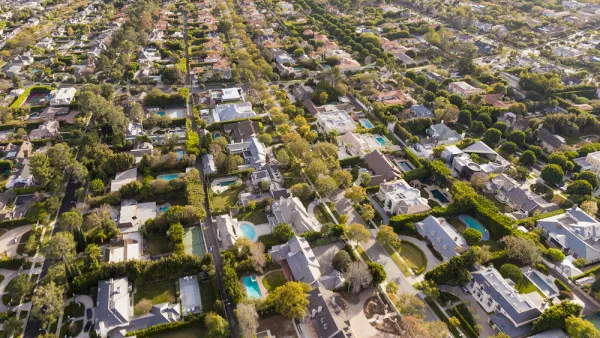
L.A.'s Crackdown on McMansions Hasn't Stopped Them from Going Up
Legislation to stop construction of McMansions is being undermined by a zoning loophole.
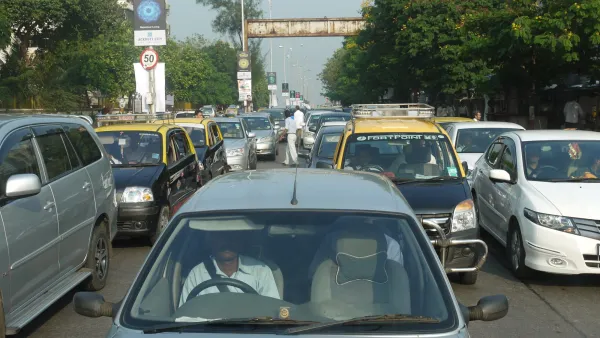
To Curb the Honking, Mumbai’s 'Punishing Signal'
Incessant honking just adds to the chaos on city streets, so Mumbai police put up a clever device to remind drivers that making noise will not ease traffic woes.

Planetizen Federal Action Tracker
A weekly monitor of how Trump’s orders and actions are impacting planners and planning in America.

California plans to bury El Niño’s downpour
If the state plays its cards right, it may be able to store a billion acre-feet of El Niño’s water in aquifers.

Desperate measures: Advocates weigh draining Lake Powell to fill Colorado River
Draining the reservoir could reduce evaporation losses by a couple hundred thousand acre-feet.

Los Angeles just elected an urban planner as its mayor
Transportation analysts are optimistic that Raman will be more aggressive in addressing transit issues than Bass.

Mamdani’s pied-à-terre tax survives legal challenge
A panel of judges found that the plaintiffs failed to demonstrate injury as a result of New York City's implementation of the tax.

Eastern Nebraska is running out of electricity
Data centers and electrification are straining eastern Nebraska’s grid, throttling economic development.

FREE Course: Walkable City 1: Why Walkability?
After describing his path towards focusing on walkability as the essence of good planning, Jeff Speck marches through his five principal reasons for making more walkable places.
Reinventing Malls: Planning Alchemy—Turning Gray Fields Into Gold
The course focuses on the opportunities and imperatives that shape reinvention of mall sites.

City of Rosemead
Rutgers University, Edward J. Bloustein School of Planning and Public Policy
One Hundred Miles
University of Michigan School for Environment and Sustainability (SEAS)
Hunter College, City University of New York (CUNY)
The Architects Foundation
City of Cambridge
Montrose County
The Pocatello Development Authority