Allison Arieff says it is high time that the "dumb box" that makes up the majority of suburban housing be rethought to meet the needs of a new generation, presenting a small handful of homebuilders that are making an effort.


Arieff wonders why home construction doesn't evolve like the technology industry does:
Single-family homes, she writes, "...continue to be built the same way they have for over a century, and usually not as well. Walls and windows are thin, materials cheap, design (and I use the term loosely) not well-considered."
She explains that the root of the problem lies in the the industry (and the lender)'s fear of change:
"...despite (in spite of?) dramatic slowdowns in residential construction, an anticipated surplus of thousands of homes, a market besieged by foreclosures and still-dropping home values. Even though there's increasing demand for more diverse housing - especially smaller, more energy-efficient homes and multifamily units in more walkable communities - too many homebuilders are inexplicably committed to the status quo."
FULL STORY: Shifting the Suburban Paradigm

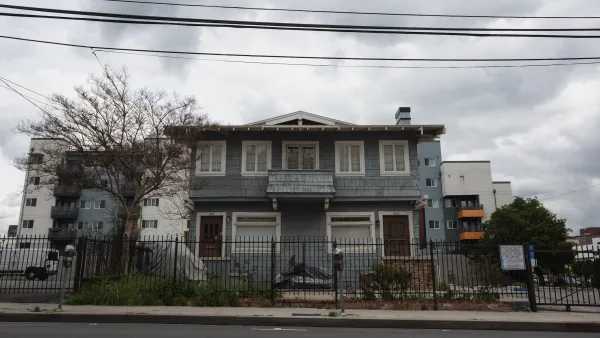
Study: Legalizing single-family home conversions could nearly double LA's new housing
Research shows that making it easier to turn single-family homes into multiple units could unlock tens of thousands of new units per year.
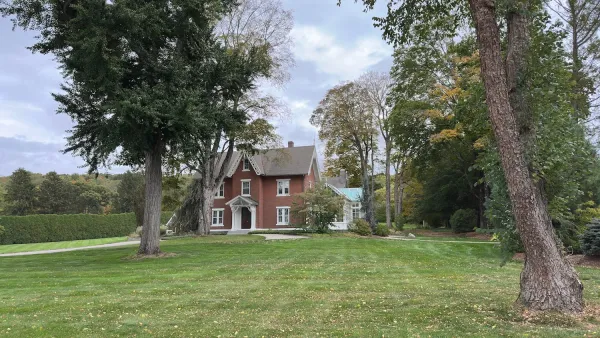
Study: Minimum lot sizes reinforce racial disparities
A Connecticut study found that zoning rules perpetuate residential segregation.
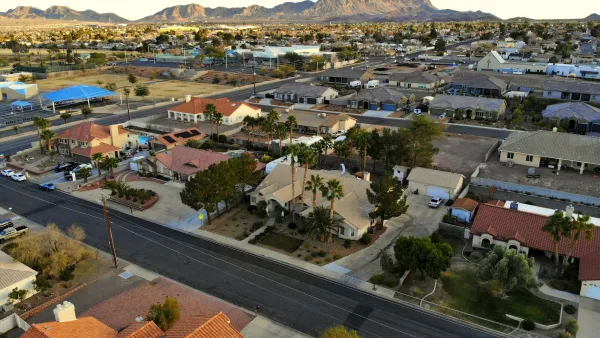
Las Vegas-area development promises over 900 homes below market price
The master-planned Henderson community promises a variety of home types and parks, trails and other amenities.

Planetizen Federal Action Tracker
A weekly monitor of how Trump’s orders and actions are impacting planners and planning in America.

The state-sanctioned urbicide of Austin
People don’t kill cities. Freeways do.

US to reduce Colorado River water deliveries to Mexico
A new Colorado Treaty amendment reduces Mexico’s Colorado River water allocation by 250,000 acre feet.

5 New England states march closer to 800 megawatt wind energy project
Securing federal approval for the project may be complicated under the Trump administration, which has historically been hostile towards domestic wind power.

Baltimore to break ground on $50 million Transit Priority Project
The project will bring faster bus trips, safer streets and better bike connections to Baltimore.

Airbnb launches $250 million 'last-dollar financing' housing accelerator, makes first investment in Austin
The company will put $6.4 million towards affordable housing development in Texas’ capital.

FREE Course: Walkable City 1: Why Walkability?
After describing his path towards focusing on walkability as the essence of good planning, Jeff Speck marches through his five principal reasons for making more walkable places.
Reinventing Malls: Planning Alchemy—Turning Gray Fields Into Gold
The course focuses on the opportunities and imperatives that shape reinvention of mall sites.

Eagle County Government
Harvard University Graduate School of Design
Nashville Planning Department
The Architects Foundation
University of Cincinnati Online
The Pocatello Development Authority
The Urban Renewal Agency of the City of Pocatello
Journal of the American Planning Association