Galina Tachieva of DPZ argues that targeting mortgage interest deductions to benefit infill development and denser living would be an effective way to fight sprawl.


On her new blog, Tachieva, author of the Sprawl Repair Manual, says that reducing the mortgage interest deduction overall (as President Obama has suggested) would be less beneficial to cities than a targeted deduction aimed at those in larger, suburban houses that use more energy and infrastructure:
"The MID could be reduced for all properties except those in locations targeted for sprawl repair and redevelopment. This would create a strong incentive for people to buy and build in places that need infill and densification. If that action proved to be politically unfeasible, the MID could be increased for investments in sprawl repair sites, such as dead malls that could be transformed into mixed-use town centers and failing commercial strip corridors that could be made viable as transit-oriented boulevards."
Read the full story: Reduced or Not, the Mortgage Interest Deduction Can Help Fix Sprawl
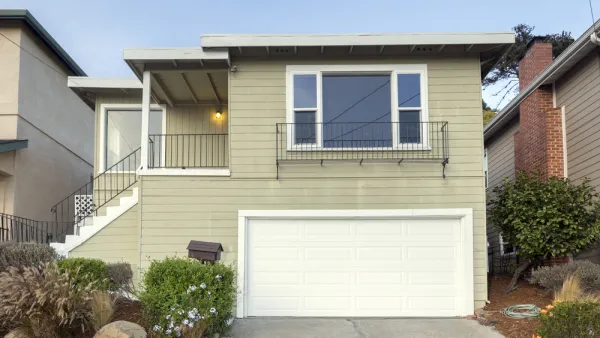
Op-Ed: It's Time for a Weakened Mortgage Interest Deduction To Go
Last year's tax reform bill seriously curtailed the mortgage interest deduction, despite its reputation for untouchability. Perhaps lawmakers should get rid of it entirely.
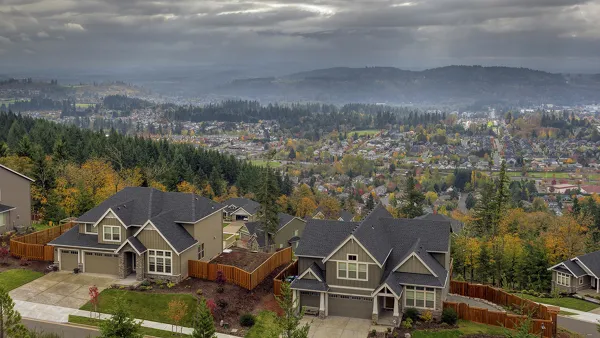
Tax Reform and the Housing Market
Curbed analysis of how local and regional housing markets will react to changes to the country's tax code.
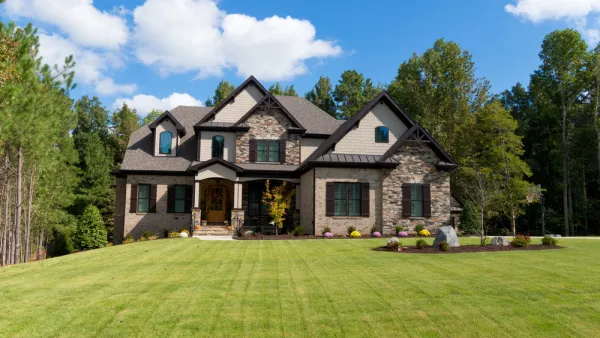
Home Ownership Subsidy Takes a $250,000 Hit in Final Version of Tax Bill
The current mortgage interest deduction is $1 million. The House version of the tax bill called for a $500,000 cap while the Senate left it untouched. They split the difference and capped it at $750,000. Congress is expected to pass H.R. 1 this week

Planetizen Federal Action Tracker
A weekly monitor of how Trump’s orders and actions are impacting planners and planning in America.

Eastern Nebraska is running out of electricity
Data centers and electrification are straining eastern Nebraska’s grid, throttling economic development.

Study reveals best places in the U.S. for cycling, walking
New research from Streetlight Data examines bicycle and pedestrian miles per capita in the 100 largest U.S. cities by population.

DSA members accuse Mamdani of 'abandoning values' over housing redevelopment
New York City's mayor plans to replace about 2,000 units of public housing with private, mixed-income housing.

All sides of BRT debate unhappy with CDOT’s most recent move
The Colorado Department of Transportation is no longer considering center-running bus lanes for Colorado Boulevard.

Massachusetts bogs generate both power, and cranberries
Putting solar panels above farmland is one way Massachusetts is advancing toward its goal of net-zero carbon emissions by 2050.

FREE Course: Walkable City 1: Why Walkability?
After describing his path towards focusing on walkability as the essence of good planning, Jeff Speck marches through his five principal reasons for making more walkable places.
Reinventing Malls: Planning Alchemy—Turning Gray Fields Into Gold
The course focuses on the opportunities and imperatives that shape reinvention of mall sites.

City of Rosemead
Rutgers University, Edward J. Bloustein School of Planning and Public Policy
One Hundred Miles
University of Michigan School for Environment and Sustainability (SEAS)
Hunter College, City University of New York (CUNY)
The Architects Foundation
City of Cambridge
The Pocatello Development Authority
The Urban Renewal Agency of the City of Pocatello