You gave up your large home for a small apartment by the train station, your car for a bike, disposable bags for your canvas one, and of course you recycle everything. Are you making a difference? Not according to this NYT column.


individual sacrifice may make us feel good but does little by itself, states the author, Gernot Wagner, an economist at the Environmental Defense Fund:
"So why bother recycling or riding your bike to the store? Because we all want to do something, anything. Call it "action bias." But, sadly, individual action does not work. It distracts us from the need for collective action, and it doesn't add up to enough. Self-interest, not self-sacrifice, is what induces noticeable change. Only the right economic policies will enable us as individuals to be guided by self-interest and still do the right thing for the planet."
Wagner writes that to reduce greenhouse gas emissions, we need "a regulatory system compels us to pay our fair share to limit pollution accordingly. Limit, of course, is code for 'cap and trade,' the system that helped phase out lead in gasoline in the 1980s, slashed acid rain pollution in the 1990s and is now bringing entire fisheries back from the brink."
Thanks to Loren Spiekerman
Read the full story: Going Green but Getting Nowhere
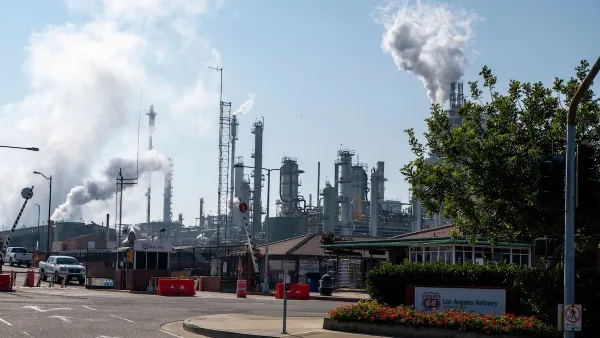
California’s Cap and Trade Program Up in the Air
The state’s carbon trading program is being attacked as ineffective from one side and overly onerous from the other.
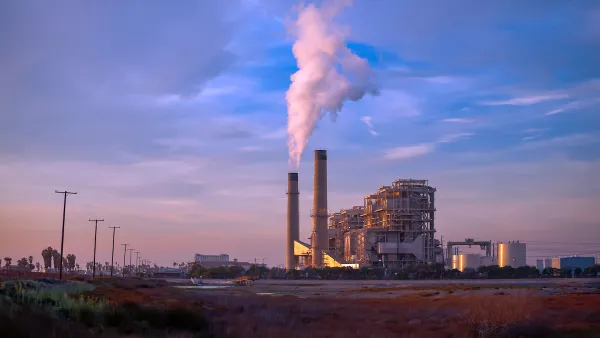
Power Plants: A Win for the EPA
New rules from the US Environmental Protection Agency to regulate greenhouse gas emissions from fossil fuel-fired power plants survived an attempt by 25 Republican-led states to block their implementation while their case is litigated.
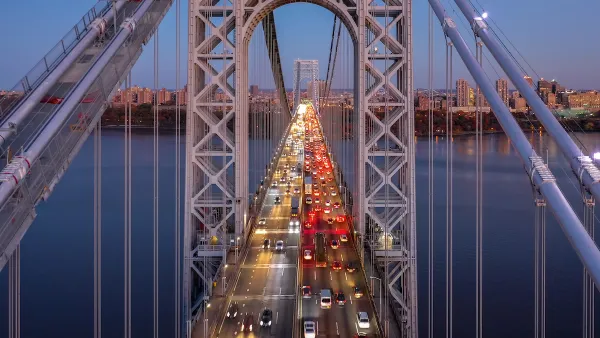
Environmentalists Urge Hochul to Rethink Congestion Pricing
Evergreen Action, the Sierra Club, Earthjustice, Environmental Defense Fund, and the League of Conservation Voters have joined the movement to urge NY Gov. Kathy Hochul to reverse her decision to terminate the New York congestion pricing project.

Washington state to charge fee to drivers with fuel-efficient cars
Revenue from the fee will go towards supporting the state’s highways.

Illinois considers spending $1 billion in taxpayer money on data center
A quantum computing campus and data center are currently under construction in Chicago.

Trump to blast ‘hydrocarbon highway’ through ‘world’s longest art gallery’
Environmental and historic preservation groups are suing to stop the project.

NYC, state sue feds over mixed-immigration-status housing assistance rule
The state’s lawsuit argues that the rule change violates the Administrative Procedure Act.

Michigan to turn neighborhood into virtual power plant
Residents will soon be able to divert their excess energy to the grid in exchange for compensation.

Data center, mining project swarm to long-awaited Alaska railroad line
The state-owned railroad approved final plans for the spur line this week; the project is expected to cost $311 million, mostly funded by the federal government

FREE Course: Walkable City 1: Why Walkability?
After describing his path towards focusing on walkability as the essence of good planning, Jeff Speck marches through his five principal reasons for making more walkable places.
Reinventing Malls: Planning Alchemy—Turning Gray Fields Into Gold
The course focuses on the opportunities and imperatives that shape reinvention of mall sites.

City of Charlotte
City of Rosemead
Rutgers University, Edward J. Bloustein School of Planning and Public Policy
University of Michigan School for Environment and Sustainability (SEAS)
Hunter College, City University of New York (CUNY)
The Architects Foundation
University District Partnership