With a high rate of foreclosure, Cleveland instituted a land bank to rein in rampant vacancies. After two years, the program has made some headway.


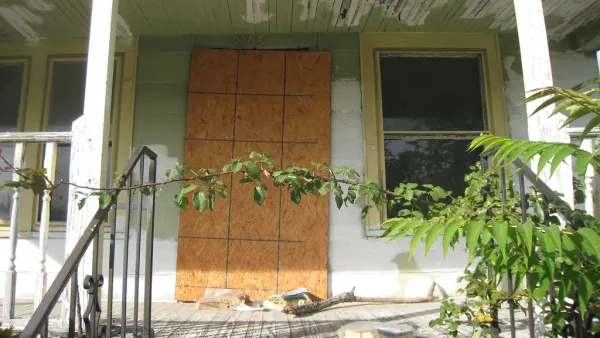
By working with lenders to share the burdens of abandoned and foreclosed homes, the city's land bank has helped to reduce the blight of vacant homes.
"When the land bank started two years ago, Frangos thought the group would have to pay its demolition bill from its own budget. But then the economy worsened and the foreclosures piled up. Lenders stuck with crumbling houses found themselves on the hook in the Cleveland Housing Court for hundreds of thousands of dollars worth of code violations.
The Cuyahoga County Land Bank, a quasi-government corporation, offered lenders a deal: We'll take your worst houses, if you pay to knock them down. This year, Fannie Mae and some of the country's biggest lenders - including Bank of America, Citibank and Wells Fargo - will help pay for half of the land bank's 700 scheduled demolitions.
Lenders pay $3,500 to $7,500 per house. Wells Fargo's Russ Cross says it's a sensible and responsible business plan."
Read the full story: 'Land Bank' Knocks Out Some Foreclosure Problems


Effects of the Foreclosure Crisis Still Felt in Parts of Cleveland
Call it a tale of two housing markets.
Cleveland Still Experiencing Fallout From Great Recession
National economic indicators may look good, but some areas are still clawing their way back from the 2008 recession. Cleveland's Slavic Village, an "epicenter" of the foreclosure crisis, is one of them.
Terms and Concepts for Understanding Land Banks
Clarifying some of the jargon that drives the land bank process in Cuyahoga County, Ohio reveals the importance and scale of neighborhood stabilization in some parts of the country.

Planetizen Federal Action Tracker
A weekly monitor of how Trump’s orders and actions are impacting planners and planning in America.

California plans to bury El Niño’s downpour
If the state plays its cards right, it may be able to store a billion acre-feet of El Niño’s water in aquifers.

Desperate measures: Advocates weigh draining Lake Powell to fill Colorado River
Draining the reservoir could reduce evaporation losses by a couple hundred thousand acre-feet.

Non-stop party: Chicago voters weigh permanent festival grounds
A stable place for bleachers, stages and drainage may streamline the setup and teardown of large events.

Metra may invest $9.1 billion in regional rail
The agency released a draft of a study examining potential ways to offer more frequent train service.

California city breaks ground on transit connector
The project includes three mobility hubs and a pedestrian bridge.

FREE Course: Walkable City 1: Why Walkability?
After describing his path towards focusing on walkability as the essence of good planning, Jeff Speck marches through his five principal reasons for making more walkable places.
Reinventing Malls: Planning Alchemy—Turning Gray Fields Into Gold
The course focuses on the opportunities and imperatives that shape reinvention of mall sites.

City of Rosemead
Rutgers University, Edward J. Bloustein School of Planning and Public Policy
One Hundred Miles
Hunter College, City University of New York (CUNY)
The Architects Foundation
University of Cincinnati Online
City of Cambridge
Montrose County
The Pocatello Development Authority