Rahul Mehrotra talks to The Hindu about sustainable cities, community participation, and infrastructure. The article also has a review of his most recent book "Architecture in India Since 1990."


Mehrotra argues that community consensus is a necessity in conservation.
"So I think, instead of pitching this debate at the emotive level and using nostalgia as the basis for conservation, we must strategise and use it instead as an instrument to modulate, calibrate and influence the speed of change in our urban environments. "
Mehrota explains how infrastructure is important to "close the loop on the abstraction (and non specificity to form) and the site specificity of architecture."
"In fact, infrastructure is the neutral instrument by which different parts of society relate to each other, it's a shared resource that has not been used strategically by planner; rather infrastructure has been reduced to a service, an amenity."
Read the full story: 'We need community consensus...'


The Race Barriers of American Cities
The United States has a long and insidious history of erecting structures to control the movements of African Americans in urban and suburban spaces.
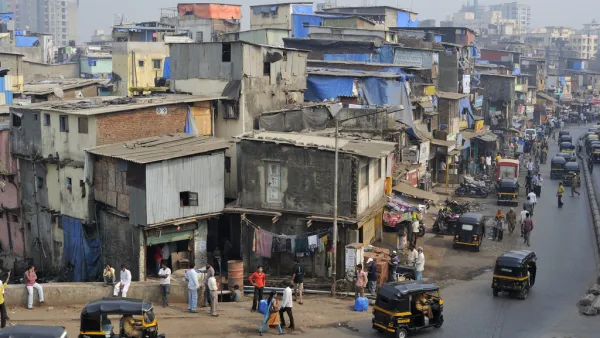
Allowing Higher Density to Fix Slums
Despite its economic dynamism, Mumbai is known for a lack of adequate housing. Citywide increases to maximum Floor Space Indices (i.e., Floor Area Ratios) will increase living space per resident, provided the right redevelopment takes place.
When It Comes to Conservation, the Tables Slowly Turn in the Global North-South Divide
Announced at a recent United Nations summit on biodiversity, India’s pledge of $50 million to assist developing countries with conservation efforts marks a significant shift in the way environmental protection is funded worldwide.

Planetizen Federal Action Tracker
A weekly monitor of how Trump’s orders and actions are impacting planners and planning in America.

Amtrak, CN end decades-long dispute with eight-year agreement
The new operating agreement establishes an updated framework for the companies to work together, including processes to resolve disputes.

Judges permit Denver to divert 77,000 acre feet from the Colorado River for reservoir expansion
Overuse and climate change have caused the Colorado River’s water levels to plummet.

NYC DOT wants faster, more permanent street upgrades
The city is examining ways to build more concrete infrastructure without getting entangled in 'decades-long' projects.

'Something we’ve never seen before:' rising utility rates could strain city finances nationwide
Data centers, climate change and other factors have caused utility rates in the United States to increase by 38% since 2020.

Trump to overrule local leaders, lease millions of acres of America’s Pacific Island territories’ seafloors to mining companies
International law says that the Indigenous people of America’s territories have a right to prior and informed consent regarding projects that impact their countries.

FREE Course: Walkable City 1: Why Walkability?
After describing his path towards focusing on walkability as the essence of good planning, Jeff Speck marches through his five principal reasons for making more walkable places.
Reinventing Malls: Planning Alchemy—Turning Gray Fields Into Gold
The course focuses on the opportunities and imperatives that shape reinvention of mall sites.

Harvard University Graduate School of Design
KFH Group Inc.
Greater Baltimore Committee
The Architects Foundation
University of Cincinnati Online
The Pocatello Development Authority
The Urban Renewal Agency of the City of Pocatello