The Project for Public Spaces says that despite its reputation as a sprawling, planning-free city, Houston is turning the lack of city planning to its advantage by inspiring a bottom-up approach.


PPS' team writes that in Houston today "...[t]he vision for a public place is now defined by stakeholders in the community with leaders and professionals helping to implement this vision. This approach is already paying off-downtown Houston is thriving from hundreds of millions of dollars in new investment and never before have so many come downtown to enjoy the new amenities."
They look at newly revitalized public spaces like Baker Ripley Neighborhood Center, Discovery Green and Market Square Park:
"The core of this vision was to ensure there is something to do in Market Square Park all times of day and evening. It features a very popular Greek outdoor café with dining trellis, water features, artwork, two dog runs, a variety of places to sit, eat and people watch and neighborhood-friendly programming such as movies and live music. The square has become a popular destination for visitors, but more importantly, it has become a beloved gathering place for local residents."
Read the full story: Houston is North America's Placemaking Capital
Making Places in Houston
Houston is leading the way in creating new public spaces. This article from The Project for Public Spaces looks at a few of the city's efforts.

Air taxis to connect Texas airports to business hubs
Archer Aviation says its taxis will turn 90 minute drives into 20 minute flights.
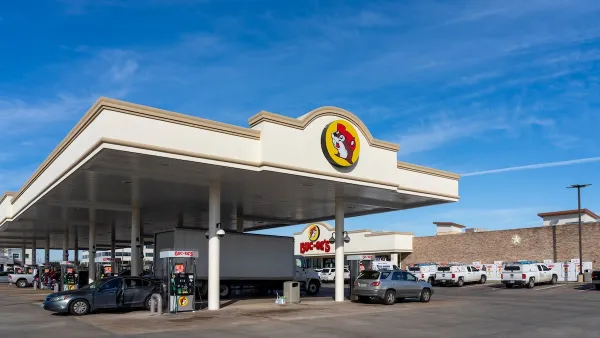
Houston is reining in gas station development
The city has proposed new rules that would limit development in residential areas.

Planetizen Federal Action Tracker
A weekly monitor of how Trump’s orders and actions are impacting planners and planning in America.

California plans to bury El Niño’s downpour
If the state plays its cards right, it may be able to store a billion acre-feet of El Niño’s water in aquifers.

Desperate measures: Advocates weigh draining Lake Powell to fill Colorado River
Draining the reservoir could reduce evaporation losses by a couple hundred thousand acre-feet.

Los Angeles just elected an urban planner as its mayor
Transportation analysts are optimistic that Raman will be more aggressive in addressing transit issues than Bass.

Mamdani’s pied-à-terre tax survives legal challenge
A panel of judges found that the plaintiffs failed to demonstrate injury as a result of New York City's implementation of the tax.

Eastern Nebraska is running out of electricity
Data centers and electrification are straining eastern Nebraska’s grid, throttling economic development.

FREE Course: Walkable City 1: Why Walkability?
After describing his path towards focusing on walkability as the essence of good planning, Jeff Speck marches through his five principal reasons for making more walkable places.
Reinventing Malls: Planning Alchemy—Turning Gray Fields Into Gold
The course focuses on the opportunities and imperatives that shape reinvention of mall sites.

City of Rosemead
Rutgers University, Edward J. Bloustein School of Planning and Public Policy
One Hundred Miles
University of Michigan School for Environment and Sustainability (SEAS)
Hunter College, City University of New York (CUNY)
The Architects Foundation
City of Cambridge
Montrose County
The Pocatello Development Authority