Scheduled to open in two months on the day after the 10th anniversary of the 9/11 attacks, project architect Michael Arad and landscape architect Peter Walker discuss their masterpiece.


"The design, unlike most places in New York, is about emptiness and nothingness. [I]t's an emptiness that's full of meaning, the same way that a moment of silence is filled with intention," explains Mr. Arad in an interview with Sophia Hollander for The Wall Street Journal.
Hollander observes:
"Unlike monuments in battlefields or along the National Mall, this eight-acre site is embedded within one of the country's densest commercial districts. [...] The massive pools, each stretching about a full acre, dominate the site. As you step closer and peer into the void, cascading water mutes even the hammering, blaring and booms of the construction site. [...] Although the names appear to be scattered randomly around the rims of the pools, they have been grouped to reflect relationships among friends, families and colleagues, as requested by families."
The 9/11 Memorial costs $700 million to build with an estimated $60 million annual operating cost.
Read the full story: New Era Set For 9/11 Site
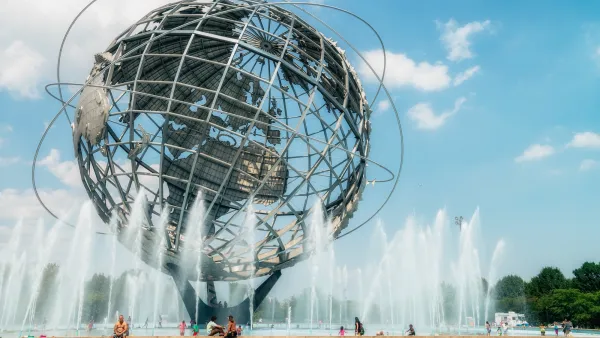
Historic Queens park is getting a $120M upgrade
The borough's largest park will undergo significant upgrades for accessibility, flood mitigation and historic preservation.
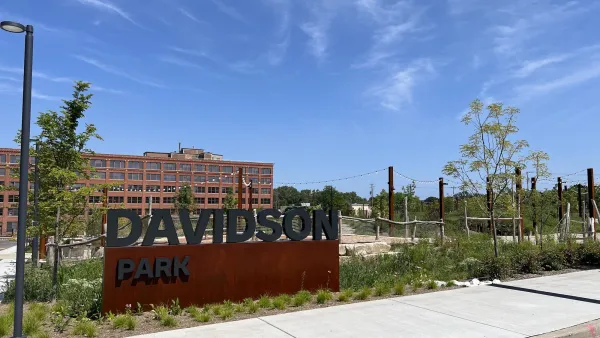
Harley-Davidson turned a Milwaukee parking lot into a green oasis
The park, adjacent to Harley-Davidson headquarters, doubles as stormwater retention infrastructure.
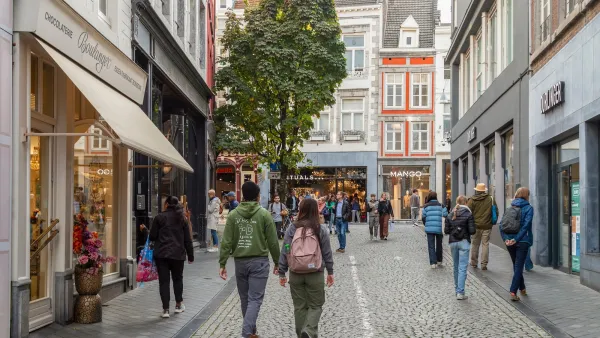
Planning for Love, Part 3: Enhancing human connection through walkability
In the third and final installment of this series, author Hannah Kosoff examines what her research findings say about modern dating and urban form.

Washington state to charge fee to drivers with fuel-efficient cars
Revenue from the fee will go towards supporting the state’s highways.

Illinois considers spending $1 billion in taxpayer money on data center
A quantum computing campus and data center are currently under construction in Chicago.

Trump to blast ‘hydrocarbon highway’ through ‘world’s longest art gallery’
Environmental and historic preservation groups are suing to stop the project.

Boston City Council votes to no longer mandate parking in residential developments
The Boston Zoning Commission still needs to approve the proposal.

Passengers in New York, California lift off in air taxis
Two air taxi companies have received a Special Airworthiness Market Survey Certificate, which allows them to service passengers.

MTA to upgrade subway signals for entire network by 2050
This is the first time New York City has planned to modernize subway signals in the Bronx.

FREE Course: Walkable City 1: Why Walkability?
After describing his path towards focusing on walkability as the essence of good planning, Jeff Speck marches through his five principal reasons for making more walkable places.
Reinventing Malls: Planning Alchemy—Turning Gray Fields Into Gold
The course focuses on the opportunities and imperatives that shape reinvention of mall sites.

City of Charlotte
City of Rosemead
Rutgers University, Edward J. Bloustein School of Planning and Public Policy
University of Michigan School for Environment and Sustainability (SEAS)
Hunter College, City University of New York (CUNY)
The Architects Foundation
University District Partnership