Created by President Obama in response to the BP oil spill last summer, the Gulf Coast Ecosystem Task Force is now working on a project that restores the flow of sediments to wetlands in Texas. Funding from BP helps facilitate the costly process.


Sediments play a crucial role in the ecosystem of the Gulf. Rich with nutrients, they serve as a wildlife habitat to marine animals and birds like pelicans and seagulls. They also form natural barriers that protect people from the elements during hurricane season.
USA Today reports:
"The task force has already said one of the greatest challenges and top priorities for guaranteeing a healthy environment is ensuring sediment from upland waters, such as the Mississippi River, renew their natural flow to replenish wetlands and barrier islands in the Gulf."
"The federal task force includes representatives from all five states that border the Gulf, and is helping determine how to spend the money. Each state will get $100 million. The Department of Interior and the Department of Commerce will each get another $100 million, and the remaining $300 million will be distributed to other projects."
Read the full story: Texas wetland restoration could be model for Gulf
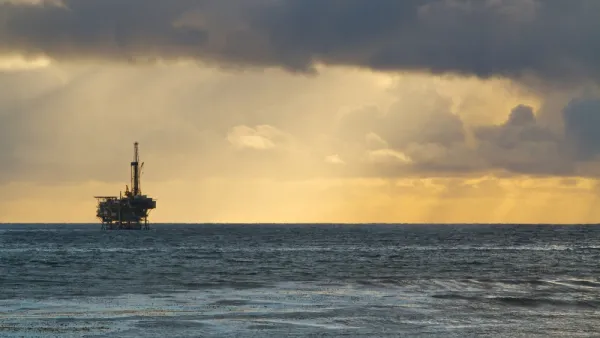
President Trump Signs Executive Order to Reverse Obama's Coastal Drilling Ban
So much for that so-called "permanent" ban that President Obama enacted by President Obama in December to end oil and gas drilling in the Arctic Ocean and off the central-northern Atlantic coast.
U.S. District Court Judge Approves $14.7 Billion Settlement in VW Emissions Scandal
The record deal between Volkswagen, the federal government, California, and consumers directs $5 billion to states to mitigate air pollution. The remainder will be used to compensate consumers who purchased the tampered diesel cars.
Record Environmental Settlement Reached in 2010 BP Gulf Oil Spill
While a judge must approve the historic $18.7 billion settlement reached July 2, the United States and the five Gulf States of Alabama, Florida, Louisiana, Mississippi, and Texas have agreed to the settlement, along with BP.

Planetizen Federal Action Tracker
A weekly monitor of how Trump’s orders and actions are impacting planners and planning in America.

California plans to bury El Niño’s downpour
If the state plays its cards right, it may be able to store a billion acre-feet of El Niño’s water in aquifers.

Desperate measures: Advocates weigh draining Lake Powell to fill Colorado River
Draining the reservoir could reduce evaporation losses by a couple hundred thousand acre-feet.

Mamdani’s pied-à-terre tax survives legal challenge
A panel of judges found that the plaintiffs failed to demonstrate injury as a result of New York City's implementation of the tax.

Eastern Nebraska is running out of electricity
Data centers and electrification are straining eastern Nebraska’s grid, throttling economic development.

Seattle passes record-breaking transit services expansion
Proposition 1 will double the city’s transit tax to add 95,000 more bus trips and preserve 180,000 bus trips annually.

FREE Course: Walkable City 1: Why Walkability?
After describing his path towards focusing on walkability as the essence of good planning, Jeff Speck marches through his five principal reasons for making more walkable places.
Reinventing Malls: Planning Alchemy—Turning Gray Fields Into Gold
The course focuses on the opportunities and imperatives that shape reinvention of mall sites.

City of Rosemead
Rutgers University, Edward J. Bloustein School of Planning and Public Policy
One Hundred Miles
University of Michigan School for Environment and Sustainability (SEAS)
Hunter College, City University of New York (CUNY)
The Architects Foundation
City of Cambridge
Montrose County
The Pocatello Development Authority