The Los Angeles Times calls the Leipert-Pasker residence "the greenest house in L.A." In fact, the only thing that isn't green about this three-story home is its color.


Rainwater cistern? Check. Composting bins? Check. Insulation made of recycled glass? Check. Solar panels, light-reflecting roof, and copious ventilation? Check, check and check.
Tucked inconspicuously in the hills of Mount Washington, a neighborhood located 10 miles northeast of downtown, the house also "has the first permitted gray water system in Los Angeles since California adopted new rules for recycling household waste water as landscape irrigation."
Allan Schaben notes, "Single-family homes in L.A. use an average of 280 gallons of water each day, according to the Department of Water and Power; 151 of those gallons go toward the yard. By using gray water and rain water for their outdoor needs, Pasker and Leipert expect to reduce their home's use of city water by 50%."
Read the full story: The greenest house in L.A.?

Advancing Sustainability in Los Angeles County Schools
The Los Angeles County Office of Education’s Green Schools Symposium brings together educators, students, and experts to advance sustainability in schools through innovative design, climate resilience strategies, and collaborative learning.

Affordable Housing Renovations Halt Mid-Air Amidst DOGE Clawbacks
HUD may rescind over a billion dollars earmarked for green building upgrades.
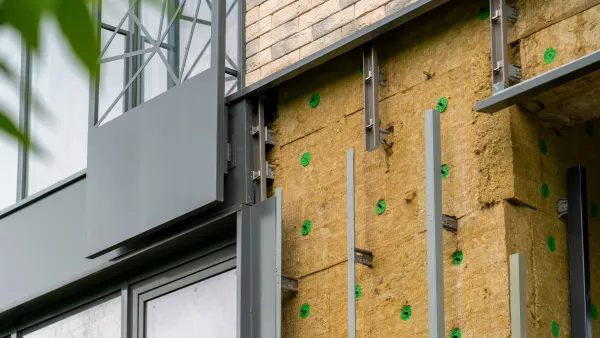
‘Passive House’ Standard Gaining Ground in Multifamily Housing
Developers in Chicago and around the country are taking notice of a design standard that encourages energy efficiency and sustainable materials.

Planetizen Federal Action Tracker
A weekly monitor of how Trump’s orders and actions are impacting planners and planning in America.

California plans to bury El Niño’s downpour
If the state plays its cards right, it may be able to store a billion acre-feet of El Niño’s water in aquifers.

Desperate measures: Advocates weigh draining Lake Powell to fill Colorado River
Draining the reservoir could reduce evaporation losses by a couple hundred thousand acre-feet.

Los Angeles just elected an urban planner as its mayor
Transportation analysts are optimistic that Raman will be more aggressive in addressing transit issues than Bass.

Mamdani’s pied-à-terre tax survives legal challenge
A panel of judges found that the plaintiffs failed to demonstrate injury as a result of New York City's implementation of the tax.

Eastern Nebraska is running out of electricity
Data centers and electrification are straining eastern Nebraska’s grid, throttling economic development.

FREE Course: Walkable City 1: Why Walkability?
After describing his path towards focusing on walkability as the essence of good planning, Jeff Speck marches through his five principal reasons for making more walkable places.
Reinventing Malls: Planning Alchemy—Turning Gray Fields Into Gold
The course focuses on the opportunities and imperatives that shape reinvention of mall sites.

City of Rosemead
Rutgers University, Edward J. Bloustein School of Planning and Public Policy
One Hundred Miles
University of Michigan School for Environment and Sustainability (SEAS)
Hunter College, City University of New York (CUNY)
The Architects Foundation
City of Cambridge
Montrose County
The Pocatello Development Authority