Hannibal Square in Winter Park, Florida has a long history as an African-American community, dating back to the 19th century. Today, a community land trust, a redevelopment agency and other groups are approaching the community with different goals.


Associate Professor Julian Chambliss explains the complex and fascinating history of Hannibal Square, which was founded as a workforce housing for African-Americans in the 1880s:
"Hannibal Square became the center of a striving community and black agency played a vital role in the town's incorporation," writes Chambliss.
Today, the groups in charge of helping Hannibal Square have different approaches and endgames:
"Developers continue to push for changes to city codes to allow for business development, even as residents hope to maintain the neighborhood's residential character."
Read the full story: Remaking Place and Asserting Space: The Land Trust Experience in Winter Park, Florida

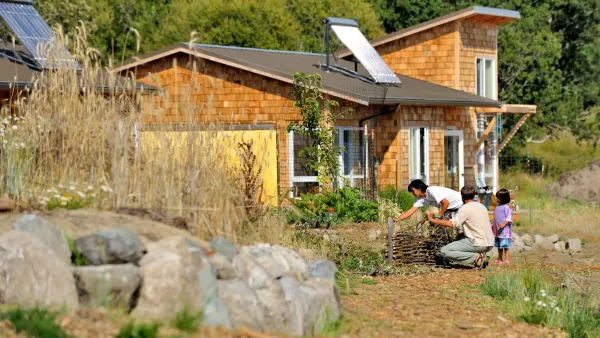
Community land trusts could be the secret to more co-op housing. Just ask Canada.
In Canada, more than half of all housing on community land trusts is cooperative housing. In the U.S., that number is less than 2%. Why?
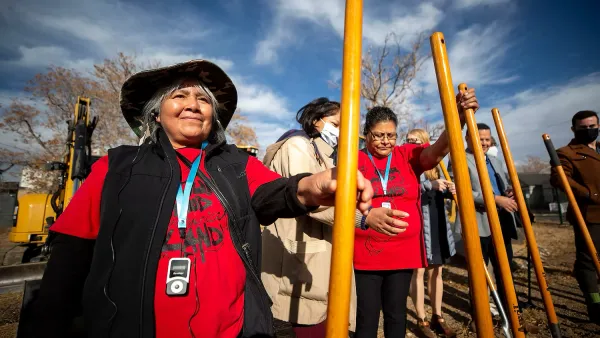
Denver Land Trust Fights Displacement Whether It Owns the Land or Not
Tierra Colectiva, a community land trust in the Denver neighborhoods of Globeville and Elyria-Swansea, combines community organizing, traditional CLT development, and more unusual roles in a large affordable housing development.

Maui's Miraculous Feat: Staving off ‘Disaster Capitalism’ in the Wake of Wildfire
Sometimes disasters open a space for bigger and faster positive change. In Lahaina, Hawai'i, after the devastating fires in 2023, community leaders built on preexisting relationships to approach housing and land in new ways.

Planetizen Federal Action Tracker
A weekly monitor of how Trump’s orders and actions are impacting planners and planning in America.

‘Going backwards:’ Baltimore mayor, students rally against state's transit funding plan
Maryland's proposed six-year plan provides no funding for Baltimore’s BMORE bus program and reduces its road maintenance funding.

Detroit to transform waterfront with $2.2 billion investment
Developers will convert about 18 acres of unused parking lot space into civic spaces.

LA to transform part of water treatment facility into new park
By rebuilding some of the Los Angeles-Glendale Water Reclamation Plant’s infrastructure, the city will free up 18,000 square feet to create a new green space for the public.

San Antonio approves $1.1 billion transit agenda
The agency has also begun construction of its Via Rapid Green line, which will service passengers from the San Antonio International Airport.

Guerilla urbanists’ DIY benches joined by sanctioned seats in Chicago
The group behind the original homemade benches said they will continue installing them across bench-less bus stops in Chicago.

FREE Course: Walkable City 1: Why Walkability?
After describing his path towards focusing on walkability as the essence of good planning, Jeff Speck marches through his five principal reasons for making more walkable places.
Reinventing Malls: Planning Alchemy—Turning Gray Fields Into Gold
The course focuses on the opportunities and imperatives that shape reinvention of mall sites.

One Hundred Miles
County of Mendocino
planning NEXT
The Architects Foundation
University of Cincinnati Online
Montrose County
Northern Illinois Transit Authority (NITA)
The Pocatello Development Authority