A new report from Transportation for America says that more than half of pedestrian fatalities happen on arterial roads that lack ped-friendly design - and therefore are preventable.


Car accidents have killed 47,700 pedestrians and injured 688,000 in the last decade, according to a new report from Transportation for America.
"The majority of deaths occur on roadways that encourage speeding but do not provide the sidewalks, crosswalks, signals and other protections for people who are walking," says the press release from T4America. "Most of these roads were built using federal transportation funds. The report comes as the federal transportation bill is being debated in Washington DC and calls to eliminate programs that can promote safer, more walkable streets have increased."
Tanya Snyder of Streetsblog observes:
"Does the disproportionate vulnerability of senior citizens explain Florida's abysmal rankings on pedestrian safety?"
Thanks to Tanya Snyder
Read the full story: Dangerous By Design: How the U.S. Builds Roads That Kill Pedestrians
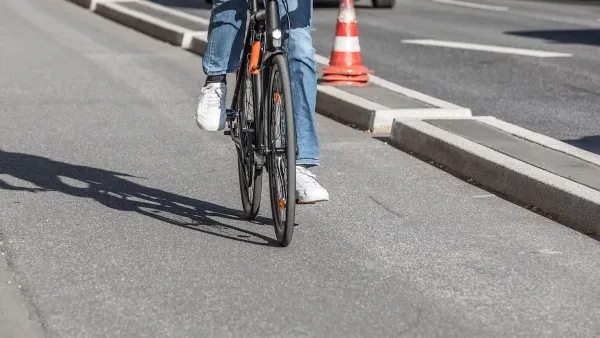
Southeast LA Road Safety Advocates Call for Improved Infrastructure
Streets in southeastern Los Angeles County have a severe lack of protected bike lanes and traffic safety measures, leading to high numbers of fatalities in a community where many residents depend on walking and biking for daily needs.
20 Safest and Most Dangerous US Cities for Pedestrians
Pedestrian safety is a vital component to a walkable city. Which large cities in the United States have a leg up, and which are trailing behind?
The Vicious Cycle at the Heart of Pedestrian Safety
When people feel unsafe, they walk less; with fewer pedestrians, walking becomes less safe.

Planetizen Federal Action Tracker
A weekly monitor of how Trump’s orders and actions are impacting planners and planning in America.

California plans to bury El Niño’s downpour
If the state plays its cards right, it may be able to store a billion acre-feet of El Niño’s water in aquifers.

Desperate measures: Advocates weigh draining Lake Powell to fill Colorado River
Draining the reservoir could reduce evaporation losses by a couple hundred thousand acre-feet.

Los Angeles just elected an urban planner as its mayor
Transportation analysts are optimistic that Raman will be more aggressive in addressing transit issues than Bass.

Mamdani’s pied-à-terre tax survives legal challenge
A panel of judges found that the plaintiffs failed to demonstrate injury as a result of New York City's implementation of the tax.

Eastern Nebraska is running out of electricity
Data centers and electrification are straining eastern Nebraska’s grid, throttling economic development.

FREE Course: Walkable City 1: Why Walkability?
After describing his path towards focusing on walkability as the essence of good planning, Jeff Speck marches through his five principal reasons for making more walkable places.
Reinventing Malls: Planning Alchemy—Turning Gray Fields Into Gold
The course focuses on the opportunities and imperatives that shape reinvention of mall sites.

City of Rosemead
Rutgers University, Edward J. Bloustein School of Planning and Public Policy
One Hundred Miles
University of Michigan School for Environment and Sustainability (SEAS)
Hunter College, City University of New York (CUNY)
The Architects Foundation
City of Cambridge
Montrose County
The Pocatello Development Authority