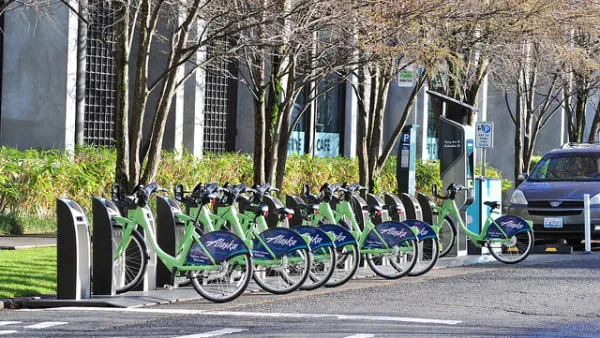
The bike sharing system that's been operating in Washington D.C. has seen success in its early months, and an expansion is planned.


The bike sharing system has already taken hold of some of the city's commuters, and the coming of warmer weather is expected to increase use.
"With the arrival of spring, more bike docking stations are opening in the District and Arlington, and last week, an additional 25 locations were proposed.
The Capital Bikeshare program now knows its own rush hours - coinciding, not surprisingly, with everybody else's rush hour. At its peak, bikes are rapidly snapped up from docking stations in neighborhoods dense with younger people - Capitol Hill, Dupont Circle, Columbia Heights and the U Street corridor.
Trucks from Alta Bicycle Share, the contractor that runs the program, buzz around to the downtown office buildings where the bikes end up, collecting them and rushing them back to neighborhoods for the next wave of commuters."
Read the full story: Spring brings growth of regional public bicycle program Capital Bikeshare

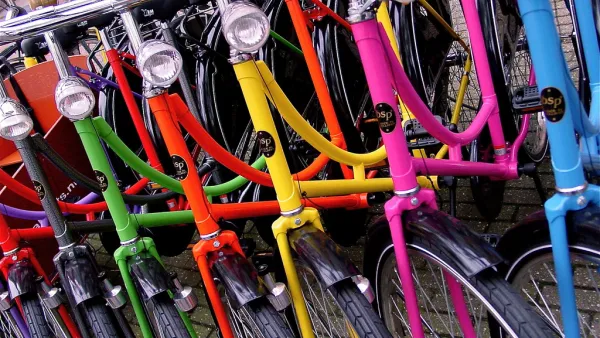
Different Spokes for Different Folks
Bike sharing and rental systems are becoming more inclusive, considering the needs of those with disabilities and children. And systems are expanding based different uses people have for different types of bicycles.
Why Bikeshare Doesn't Appeal to Low-Income Commuters
While bikeshare garners a lot of attention from the white and wealthy, it is a less obvious choice for low-income communities. Difficulties include weather, time constraints, and overall demand for non-auto modes.
America's Best Bike Cities
With gas prices at an all time high, bike riding has never looked better. Shermans Travel identifies the top cities to bike through, noting a bounty of amenities to save on costs for the urban biker.

Planetizen Federal Action Tracker
A weekly monitor of how Trump’s orders and actions are impacting planners and planning in America.

Amtrak, CN end decades-long dispute with eight-year agreement
The new operating agreement establishes an updated framework for the companies to work together, including processes to resolve disputes.

Judges permit Denver to divert 77,000 acre feet from the Colorado River for reservoir expansion
Overuse and climate change have caused the Colorado River’s water levels to plummet.

NYC DOT wants faster, more permanent street upgrades
The city is examining ways to build more concrete infrastructure without getting entangled in 'decades-long' projects.

'Something we’ve never seen before:' rising utility rates could strain city finances nationwide
Data centers, climate change and other factors have caused utility rates in the United States to increase by 38% since 2020.

Trump to overrule local leaders, lease millions of acres of America’s Pacific Island territories’ seafloors to mining companies
International law says that the Indigenous people of America’s territories have a right to prior and informed consent regarding projects that impact their countries.

FREE Course: Walkable City 1: Why Walkability?
After describing his path towards focusing on walkability as the essence of good planning, Jeff Speck marches through his five principal reasons for making more walkable places.
Reinventing Malls: Planning Alchemy—Turning Gray Fields Into Gold
The course focuses on the opportunities and imperatives that shape reinvention of mall sites.

Harvard University Graduate School of Design
KFH Group Inc.
Greater Baltimore Committee
The Architects Foundation
University of Cincinnati Online
The Pocatello Development Authority
The Urban Renewal Agency of the City of Pocatello