The debate over urbanism often pits suburbs against urban areas. But the real debate is about walkable areas versus car-dependent ones, according to Christopher Leinberger.


Writing for The New Republic, Leinberger argues that auto-dependence is what sets places apart, and that even suburban areas can be walkable in the sort of "urban" way this debate has been framed in the past.
"Core cities are comprised of pedestrian-oriented urban places, how Jerry Seinfeld lived, but they also include auto-centric suburban places, like the San Fernando Valley in the city of Los Angeles or the Palisades in the District of Columbia. Likewise, the suburbs of those core cities include classic subdivisions and McMansions, like the home of Tony Soprano, but they also include booming places like Old Town Pasadena, Reston Town Center near Dulles Airport outside D.C., and revitalized Jersey City and Hoboken, NJ, on the other side of the Hudson River from Manhattan.
The issue is where are walkable urban places being built, and they are being built in both central cities and the suburbs surrounding them."
Read the full story: Cities Versus Suburbs Is the Wrong Debate
Study: Cities Gaining Post-Recession Economic Clout
As the dust settles from the Great Recession—evidence is growing to support the growing relevance of urban areas in the overall economic picture of the United States.
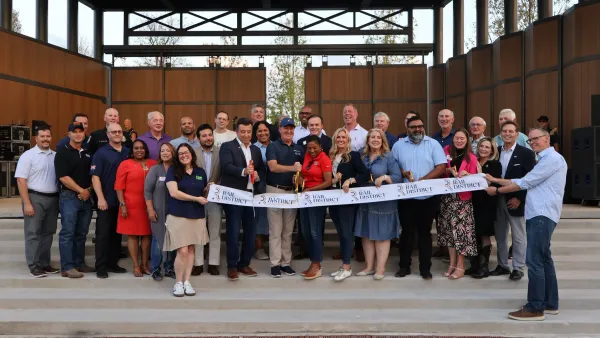
Dallas suburbs are turning their downtowns into small towns
Four Texas towns are embracing walkability and density in their downtowns.
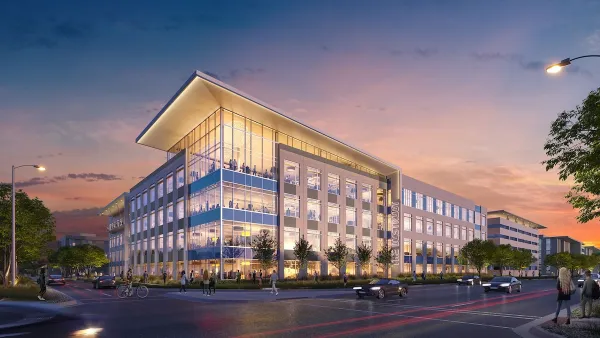
Texas’ $1 billion ‘live-work-play destination’ sees progress
When complete, the project’s plaza will house up to 14 restaurants and lifestyle brands in six buildings.

Planetizen Federal Action Tracker
A weekly monitor of how Trump’s orders and actions are impacting planners and planning in America.

California plans to bury El Niño’s downpour
If the state plays its cards right, it may be able to store a billion acre-feet of El Niño’s water in aquifers.

Desperate measures: Advocates weigh draining Lake Powell to fill Colorado River
Draining the reservoir could reduce evaporation losses by a couple hundred thousand acre-feet.

In Texas, data centers are swallowing promised parkland
Residents who moved to Taylor, Texas for a rural community now have to contend with three data centers in their backyard.

How a Chicago-sized wind farm beat the odds and powered on
The project spanned five presidential administrations and a standoff with a U.S. military base.

MTA gives itself 30 days to transform pit into basketball court
The site has been under construction since 2022; the city originally estimated it would finish the court in 2024.

FREE Course: Walkable City 1: Why Walkability?
After describing his path towards focusing on walkability as the essence of good planning, Jeff Speck marches through his five principal reasons for making more walkable places.
Reinventing Malls: Planning Alchemy—Turning Gray Fields Into Gold
The course focuses on the opportunities and imperatives that shape reinvention of mall sites.

City of Rosemead
Rutgers University, Edward J. Bloustein School of Planning and Public Policy
One Hundred Miles
Hunter College, City University of New York (CUNY)
The Architects Foundation
University of Cincinnati Online
City of Cambridge
Montrose County
The Pocatello Development Authority