Cities across the country are re-utilizing brownfield sites as solar farms.


The contaminated sites would often cost too much to clean up for other reuse, so more and more cities are opting to allow solar power installations.
"In Chicago, Dave Graham, who works on the city's brownfield program, said the City Solar project just "fell into our laps." He was called into a meeting in the mayor's office with representatives from Exelon and SunPower, and found they wanted to create a massive solar farm on a derelict brownfield site. Actually, massive is an understatement for this project: it's the largest urban solar plant in the U.S. Its 32,000 photo voltaic (PV) panels provide 10 MW of energy, enough for 1,500 local homes. In addition, GPS tracking systems help tilt the panels, ensuring the most efficient use of solar energy.
Heavily contaminated sites can cost up to $150,000 per acre to clean up. The West Pullman site for City Solar, which 'has a variety of issues,' would have cost $20 million alone to clean up, 'something no one in the city wanted to invest in.'"
Read the full story: Cities Use Brownfields to Go Solar

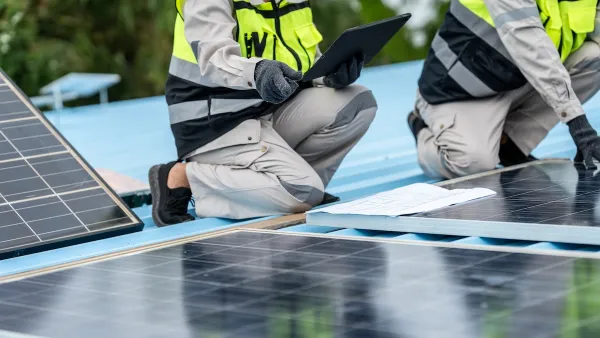
Trump administration unlawfully slashed $7 billion in clean energy grants, judge rules
The Environmental Protection Agency ended the Solar For All program, which provided the grants, after President Donald Trump’s inauguration.
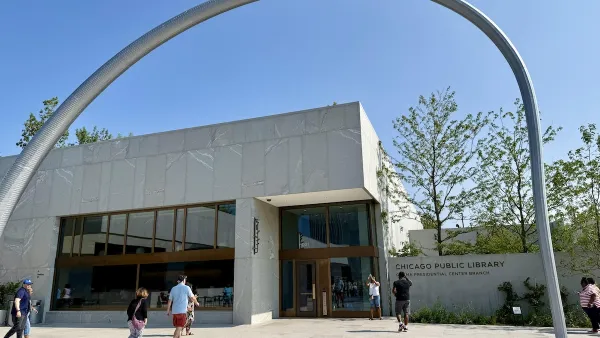
South Chicago development proposal would 'upzone' neighborhoods to increase density
The South Chicago Land Use Framework plan also aims to promote pedestrian and transit-oriented developments.
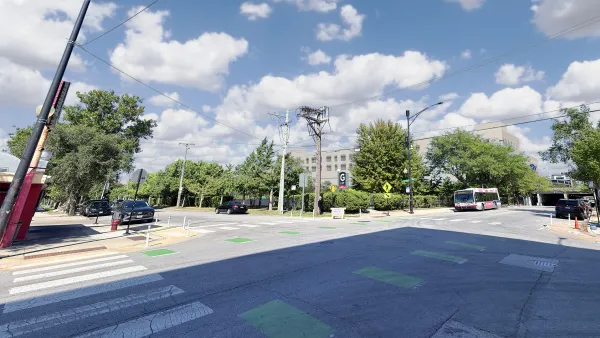
A ‘shady’ deal: Chicagoans rally against planned Amtrak maintenance facility
The $900 million facility would allow Amtrak to maintain entire trains in one building, which the company says will reduce delays.

Amtrak, CN end decades-long dispute with eight-year agreement
The new operating agreement establishes an updated framework for the companies to work together, including processes to resolve disputes.

Northwest rail fans eager for Sept. 30 debut of Amtrak’s Airo fleet
Get ready for that new train smell and more seats. But they won’t go faster or run more frequently on the Cascades route in Washington and Oregon.

Judges permit Denver to divert 77,000 acre feet from the Colorado River for reservoir expansion
Overuse and climate change have caused the Colorado River’s water levels to plummet.

NYC to turn city-owned property into thousands of homes
The city has scheduled a public hearing regarding the development for October.

Buses travel at 5mph along this route in NYC. The Bronx's first-ever busway looks to change that
Prior to the busway, buses on the Bx36 route traveled as slowly as 5 miles per hour.

Pittsburg launches 'EZ permits,' aims for one-day turnaround for low-risk permits
The pilot ‘fast lane’ for permits is part of a bundle of modernization efforts for Pittsburg’s permitting process.

FREE Course: Walkable City 1: Why Walkability?
After describing his path towards focusing on walkability as the essence of good planning, Jeff Speck marches through his five principal reasons for making more walkable places.
Reinventing Malls: Planning Alchemy—Turning Gray Fields Into Gold
The course focuses on the opportunities and imperatives that shape reinvention of mall sites.

City of Thousand Oaks
City of Wisconsin Rapids
Harvard University Graduate School of Design
The Architects Foundation
University of Cincinnati Online
The Pocatello Development Authority
The Urban Renewal Agency of the City of Pocatello