Facing energy shortages, the city of Tokyo, Japan, has been forced to cut down its energy usage, which is changing the bustling and brightly lit city's character.


This story looks at how the energy shortage is affecting the nightlife in the hip neighborhood of Shibuya.
"Because of the power shortage, giant electronic billboards that normally make evenings in Shibuya as bright as day have all been turned off.
Hidetomo Takahashi, an office worker, scans the crowd, trying to find a friend.
'Usually Shibuya is so bright you can see everyone's face even if they're far away,' he says in Japanese. 'But today it's so dark, it's difficult to see people approaching you.'"
Read the full story: Tokyo Sees Its Lights Go Dim, And Lifestyles Change
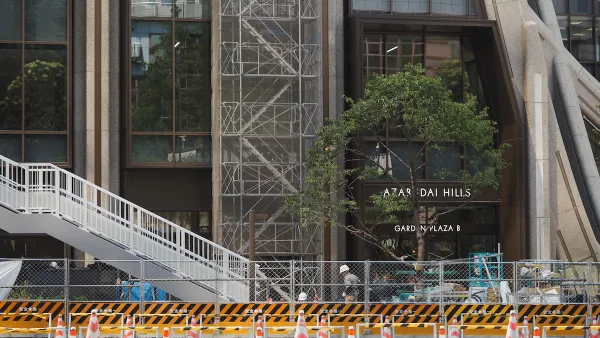
A New Tallest Skyscraper for Japan
The Toranomon-Azabudai reaches 330 meters into the sky, far lower than international standards but taller by 30 meters than the previous tallest building in Japan.
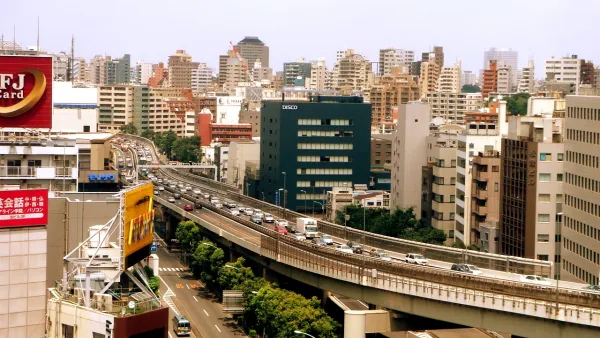
Tokyo Expressway to Become a Linear Park
A major expressway in Ginza will be converted to a park similar to New York City's High Line.
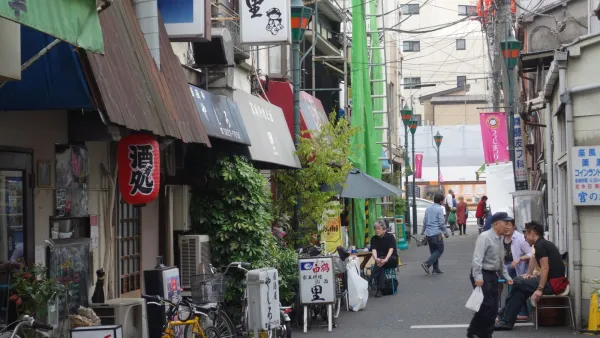
A Different Kind of Density: Lessons From Asian Megacities
As the pandemic has made clear, a healthy, prosperous future will depend on the development of the kinds of density that encourage strong social infrastructure.

Planetizen Federal Action Tracker
A weekly monitor of how Trump’s orders and actions are impacting planners and planning in America.

California plans to bury El Niño’s downpour
If the state plays its cards right, it may be able to store a billion acre-feet of El Niño’s water in aquifers.

Desperate measures: Advocates weigh draining Lake Powell to fill Colorado River
Draining the reservoir could reduce evaporation losses by a couple hundred thousand acre-feet.

Los Angeles just elected an urban planner as its mayor
Transportation analysts are optimistic that Raman will be more aggressive in addressing transit issues than Bass.

Mamdani’s pied-à-terre tax survives legal challenge
A panel of judges found that the plaintiffs failed to demonstrate injury as a result of New York City's implementation of the tax.

Eastern Nebraska is running out of electricity
Data centers and electrification are straining eastern Nebraska’s grid, throttling economic development.

FREE Course: Walkable City 1: Why Walkability?
After describing his path towards focusing on walkability as the essence of good planning, Jeff Speck marches through his five principal reasons for making more walkable places.
Reinventing Malls: Planning Alchemy—Turning Gray Fields Into Gold
The course focuses on the opportunities and imperatives that shape reinvention of mall sites.

City of Rosemead
Rutgers University, Edward J. Bloustein School of Planning and Public Policy
One Hundred Miles
University of Michigan School for Environment and Sustainability (SEAS)
Hunter College, City University of New York (CUNY)
The Architects Foundation
City of Cambridge
Montrose County
The Pocatello Development Authority