Randy Salzman says that Australian cities like Perth and Melbourne have found "the key to moving individual transportation behavior away from the convenience of the single-occupancy vehicle."


Education appears to have had a significant effect in Australia, through a program called TravelSmart:
"Each TravelSmart project is different, but in general, the individualized educational programs provide whatever information and emotional support - like personal bicycle doctors or bus drivers to explain the schedule - to help any member of any marketed household change driving behavior on any trip, not just the commute trip. Printed materials are delivered by bicycle as TravelSmart practitioners practice what they preach.
Other psychological concepts, like 'reciprocity,' 'creating community' and 'bypassing adversaries,' ensure that TravelSmart is only working with citizens willing to change while reassuring them of the societal value of their transportation behavioral change."
Read the full story: Australians Have Learned to Drive Less


How the ‘Big Beautiful Bill’ Impacts Transportation
Five ways the bill negatively impacts U.S. transportation policy.
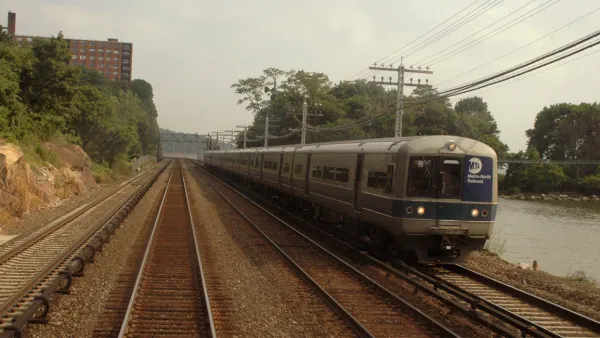
Presidential Transportation Innovations
A detailed list of each U.S. president’s contributions to transportation.
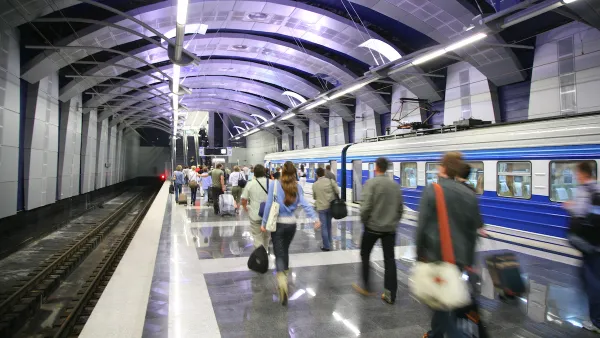
Freedom to Move: Investing in Transportation Choices for a Clean, Prosperous, and Just Future
This Union of Concerned Scientists study examines why and how to improve resource-efficient travel options to achieve diverse goals. It estimates that more efficient transport could save up to $201 billion in energy and $128 billion in health costs.

Planetizen Federal Action Tracker
A weekly monitor of how Trump’s orders and actions are impacting planners and planning in America.

Amtrak, CN end decades-long dispute with eight-year agreement
The new operating agreement establishes an updated framework for the companies to work together, including processes to resolve disputes.
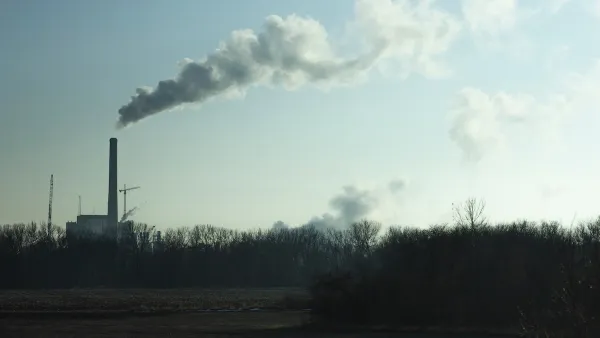
Nation's most wind-powered state turns to coal as data centers increase energy demand
For the first time in decades, Iowa has increased its generation of coal power.

Alabama scores up to $2.5 billion federal loan for largest infrastructure project in state’s history
The Mobile River Bridge and Bayway Project aims to ease congestion at Alabama’s worst bottleneck.

Trump is considering data centers on 6 states' public land — some state officials say they had no idea
If the administration approves the proposed projects, data center and data center-related developments will cover 17,600 acres of public land.

Despite court ruling, Trump is keeping nearly all wind projects in the US on hold
At least 110 wind energy projects have not heard from the government since a federal judge ruled that the Trump administration's freeze on wind turbine clearances was likely illegal.

FREE Course: Walkable City 1: Why Walkability?
After describing his path towards focusing on walkability as the essence of good planning, Jeff Speck marches through his five principal reasons for making more walkable places.
Reinventing Malls: Planning Alchemy—Turning Gray Fields Into Gold
The course focuses on the opportunities and imperatives that shape reinvention of mall sites.

KFH Group Inc.
Greater Baltimore Committee
Eagle County Government
The Architects Foundation
University of Cincinnati Online
The Pocatello Development Authority
The Urban Renewal Agency of the City of Pocatello