Urban Omnibus takes of tour of Queens' Jackson Heights neighborhood with author Suketu Mehta, exploring the vibrant urban culture that has permeated the neighborhood even before Mehta's family moved in in 1977.


Mehta says that when he arrived, it was a tough neighborhood with fewer Asians:
"At the time that we came here, most of the South Asians in this neighborhood were Indians, and most of them Gujarati. Now, it's a much more diverse mix of South Asians: Bangladeshis, Nepalis, Tibetans, Bhutanese. The Indians started coming here in large numbers after the 1965 Immigration Act."
"There's something about the diversity of these streets that is attractive to people from all over, like a piano player or a software engineer raised in Kansas, for example. Increasingly, creative people will want to live in the kind of city where they have a choice between pupusas and parathas. Diversity isn't just a nice thing to have, it is actively essential to attract the kind of people that create wealth."
Read the full story: A Walk Through Jackson Heights with Suketu Mehta
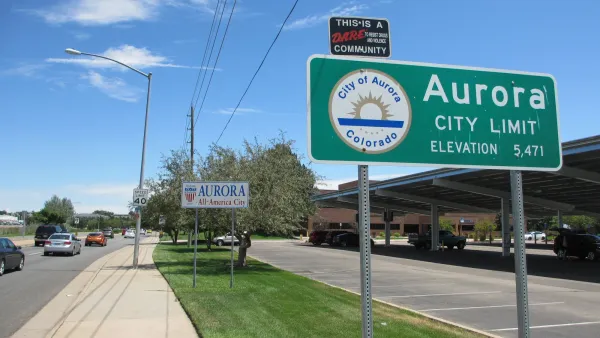
Mobile Social Services Address Gaps in Suburban Colorado
In the Denver suburb of Aurora, nonprofits are using 'mobile public spaces' to reach refugees settling in the autocentric community.
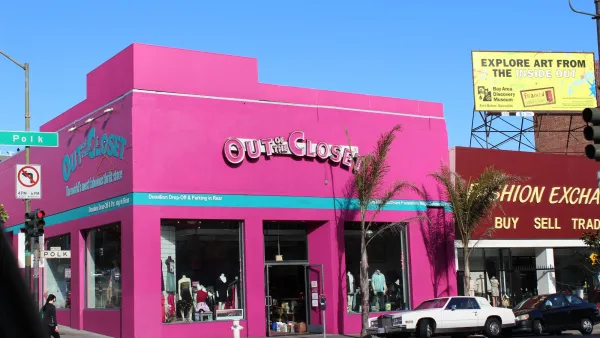
Thrift stores, public libraries and genderless bathrooms: How public amenities become trans infrastructure
Amenities like ample public transit, affordable retail and non-gendered bathroom spaces can make cities more safe and welcoming for transgender residents — and everyone else.
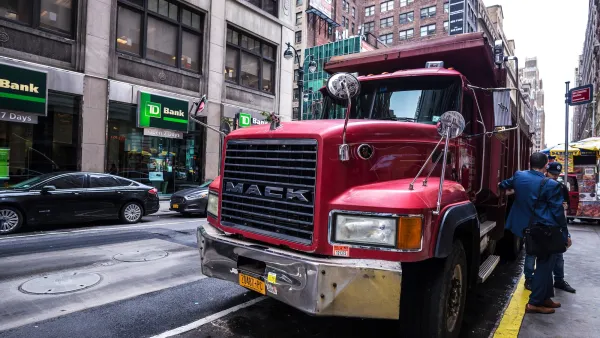
DOT withholds $73M from New York over immigrant trucking licenses
The Trump administration is requiring states to revoke the CDLs of non-domiciled drivers without proof of citizenship or risk losing federal funds.

Planetizen Federal Action Tracker
A weekly monitor of how Trump’s orders and actions are impacting planners and planning in America.

California plans to bury El Niño’s downpour
If the state plays its cards right, it may be able to store a billion acre-feet of El Niño’s water in aquifers.

Desperate measures: Advocates weigh draining Lake Powell to fill Colorado River
Draining the reservoir could reduce evaporation losses by a couple hundred thousand acre-feet.

Los Angeles just elected an urban planner as its mayor
Transportation analysts are optimistic that Raman will be more aggressive in addressing transit issues than Bass.

Mamdani’s pied-à-terre tax survives legal challenge
A panel of judges found that the plaintiffs failed to demonstrate injury as a result of New York City's implementation of the tax.

Eastern Nebraska is running out of electricity
Data centers and electrification are straining eastern Nebraska’s grid, throttling economic development.

FREE Course: Walkable City 1: Why Walkability?
After describing his path towards focusing on walkability as the essence of good planning, Jeff Speck marches through his five principal reasons for making more walkable places.
Reinventing Malls: Planning Alchemy—Turning Gray Fields Into Gold
The course focuses on the opportunities and imperatives that shape reinvention of mall sites.

City of Rosemead
Rutgers University, Edward J. Bloustein School of Planning and Public Policy
One Hundred Miles
University of Michigan School for Environment and Sustainability (SEAS)
Hunter College, City University of New York (CUNY)
The Architects Foundation
City of Cambridge
Montrose County
The Pocatello Development Authority