Pennsylvania Governor Ed Rendell has been one of the loudest voices championing the importance of infrastructure investment in recent years. In this interview, he talks about where things are heading and what work remains.


Journalist Matt Dellinger talks with Rendell about the future of transportation and infrastructure now that he's leaving office.
"Dellinger: It does seems like the funding part of things is what's holding up the re-authorization bill. Earlier we interviewed former Secretary Mary Peters, who of course under Bush was championing things like tolling interstates and privatization-
Rendell: I'm for both of those. I think we need to put every arrow in our quiver, and tolling interstates is a must. The federal government's got to remove the ban on tolling interstates and give the states the capacity to do that. I'll give you a perfect example. We're spending 90 million dollars a year to repair I-80. We had planned to toll it and up our spending to $200 million a year, which it really needs. It's a free passageway from the Atlantic Coast to the Midwest and we're just not going to be able to keep up. So tolling interstates is one way, is one arrow in the quiver.
Privatization and getting private dollars, through an infrastructure bank, invested into infrastructure, is another way."
Read the full story: Governor Rendell on Transportation’s Future, and His Own

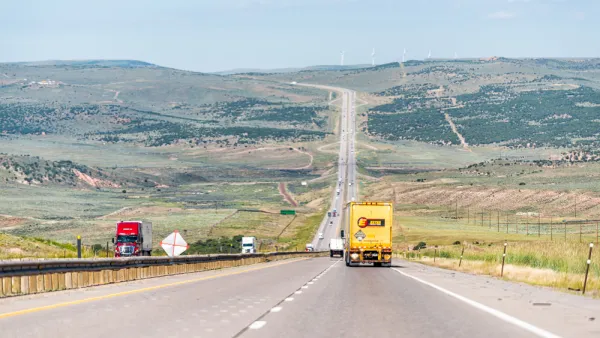
Wyoming Legislation Would Add Tolls to Interstate 80
A new bill would grant the Wyoming Transportation Commission the authority to impose tolls on all lanes of over 400 miles of I-80 to fund infrastructure needs on the roadway.
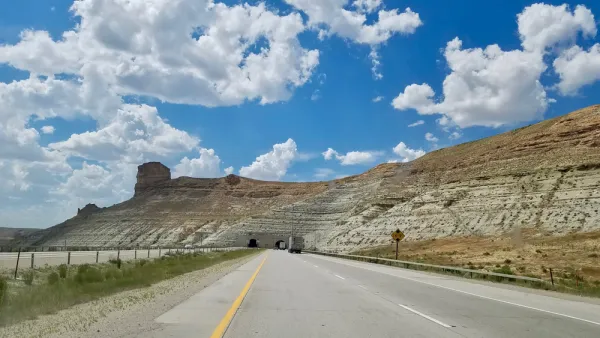
High Cost of Maintenance Prompts Wyoming Legislators to Consider Tolling I-80
Over the objections of the oil and trucking industries, an interim committee voted to allow the Wyoming legislature to determine whether to toll all lanes on Interstate 80 due to a shortfall in the state transportation budget.
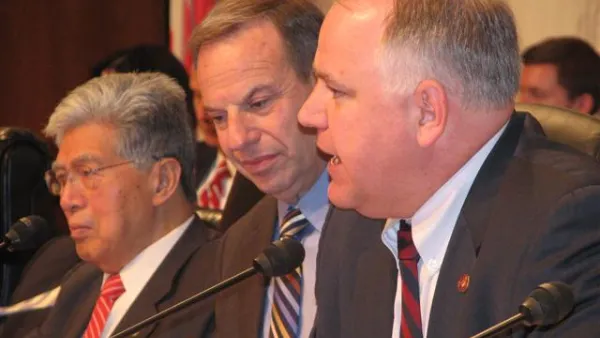
Minnesota Gubernatorial Candidate Campaigned on Increasing the Gas Tax and Wins
Democratic candidate Tim Walz was not shy about his intention to hike the gas tax to pay for improvements for roads and public transit, and he was predictably slammed by his Republican opponent. Similar scenarios played out in Wisconsin and Michigan.

Planetizen Federal Action Tracker
A weekly monitor of how Trump’s orders and actions are impacting planners and planning in America.

Amtrak, CN end decades-long dispute with eight-year agreement
The new operating agreement establishes an updated framework for the companies to work together, including processes to resolve disputes.

Judges permit Denver to divert 77,000 acre feet from the Colorado River for reservoir expansion
Overuse and climate change have caused the Colorado River’s water levels to plummet.

Boston has spent millions making the Green Line more accessible — and there’s no end in sight
While the city has invested millions into expanding and adding platforms to the Green Line to make it more accessible, new train cars set to arrive next year will be too tall for disabled passengers to board without raising the current platforms.

Idaho may see an 18% drop in federal surface transit funding — the largest estimated cut in the US
Transit systems in rural communities are much more reliant on federal funding to provide their services.

How ‘post-disaster gentrification’ alters neighborhoods after natural calamities
After hurricanes, fires or other calamities, the original residents of a community are often replaced by younger, wealthier residents.

FREE Course: Walkable City 1: Why Walkability?
After describing his path towards focusing on walkability as the essence of good planning, Jeff Speck marches through his five principal reasons for making more walkable places.
Reinventing Malls: Planning Alchemy—Turning Gray Fields Into Gold
The course focuses on the opportunities and imperatives that shape reinvention of mall sites.

Harvard University Graduate School of Design
KFH Group Inc.
Greater Baltimore Committee
The Architects Foundation
University of Cincinnati Online
The Pocatello Development Authority
The Urban Renewal Agency of the City of Pocatello