Bill Fulton looks at Wendell Cox's new study linking regulation to high home prices and concludes that it is based on self-fulfilling assumptions.


In his new analysis of 11 American metropolitan areas, Cox does extensive quantitative analysis to prove that all difference in home price is due to regulation. But it's not too surprising that he reaches that conclusion, considering that his analysis assumes that any difference must be due to regulation.
The list of other things that could account for this difference is long indeed, but Cox doesn't even give lip service to any of them. Instead of acknowledging the complexity of the situation, Cox lumps all public policy into the same category of intrusive regulation and then ascribes all variation in home price to that regulation.
Unfortunately, Cox's stuff is the Fox News – or MSNBC, if you prefer – of land use research. One point of view always wins out. The possibility that another point of view may have merit is simply never entertained. Instead of moving toward greater understanding about land use policy and how to use it, we are pushed deeper into our own separate world views – and further away from a useful policy debate.
Thanks to Bill Fulton
Read the full story: Wendell Cox's Voodoo Economics

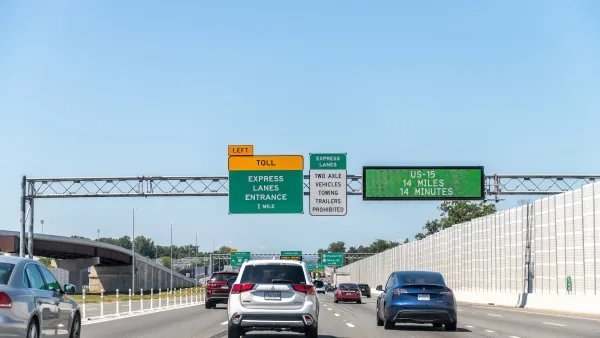
Congestion Costing Reality Check, Part 2: A congestion costing critique
There are good reasons to be skeptical of highway industry claims that traffic congestion is a growing problem. Their analysis is often incomplete and biased. Let’s pull back the curtain on some major congestion cost studies.
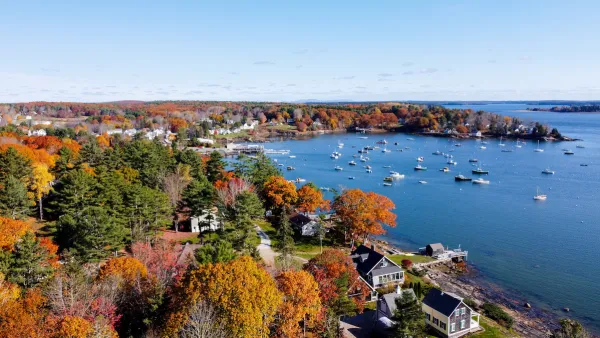
Maine Law Promotes Smart Growth
New state legislation encourages cities to plan around ‘smart growth’ principles to preserve farmland and open space, and use infill development to build more housing.

A Better Understanding of Smart Growth Benefits
Smart Growth creates compact, multimodal communities where residents consume less land, drive less, and rely more on non-auto modes. Planners have important stories to tell about the benefits of Smart Growth.

Planetizen Federal Action Tracker
A weekly monitor of how Trump’s orders and actions are impacting planners and planning in America.

Northwest rail fans eager for Sept. 30 debut of Amtrak’s Airo fleet
Get ready for that new train smell and more seats. But they won’t go faster or run more frequently on the Cascades route in Washington and Oregon.

Judges permit Denver to divert 77,000 acre feet from the Colorado River for reservoir expansion
Overuse and climate change have caused the Colorado River’s water levels to plummet.

Massive tunnel-boring machine breaks ground on Gateway Project
The Trump administration revoked funding for the project in October 2025, and then restored it earlier this year.

Airo trainsets begin service on Amtrak Cascades route
The trains feature panoramic windows, complementary wifi and over 300 seats per train set.

As El Niño approaches, Newsom vetos bill aimed at protecting California levees from flooding
Gov. Gavin Newsom said the state’s allocated $170 million was enough funding; State experts estimate it will cost $3.3 billion to repair the California Delta's levees.

FREE Course: Walkable City 1: Why Walkability?
After describing his path towards focusing on walkability as the essence of good planning, Jeff Speck marches through his five principal reasons for making more walkable places.
Reinventing Malls: Planning Alchemy—Turning Gray Fields Into Gold
The course focuses on the opportunities and imperatives that shape reinvention of mall sites.

City of Thousand Oaks
City of Wisconsin Rapids
Harvard University Graduate School of Design
The Architects Foundation
University of Cincinnati Online
The Pocatello Development Authority
The Urban Renewal Agency of the City of Pocatello