A new report sheds major doubt on some of the emerging Chinese cities' abilities to grow in a sustainable manner.


Some will fare well in the future, according to the report, but many will have hard times growing in a sustainable pattern if environmental and land use rules aren't changed, according to the Urban China Institute.
"The institute examined data between 2004 and 2008 from 112 cities to assess their progress toward sustainable development according to 18 criteria, such as access to safe water, waste recycling and efficiency in using resources.
China's cities have made strides, especially in providing basic needs such as healthcare and education. But they are still well behind the developed world in areas where the tradeoffs between income and environment are starker.
The report described the cleanliness of China's environment as woefully behind the West's. Air pollution and sulphur dioxide emissions are far from meeting World Health Organization norms."
Read the full story: Sustainable growth formula eludes many China cities

Newsom kills bill requiring polluting factories near schools to undergo environmental review
In his veto letter, Newsom wrote that protecting communities and strengthening manufacturing “were not mutually exclusive.”
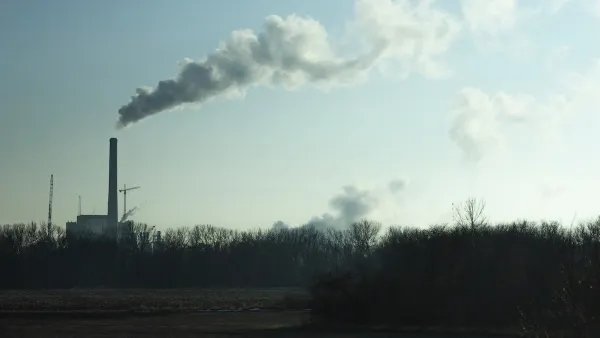
Nation's most wind-powered state turns to coal as data centers increase energy demand
For the first time in decades, Iowa has increased its generation of coal power.
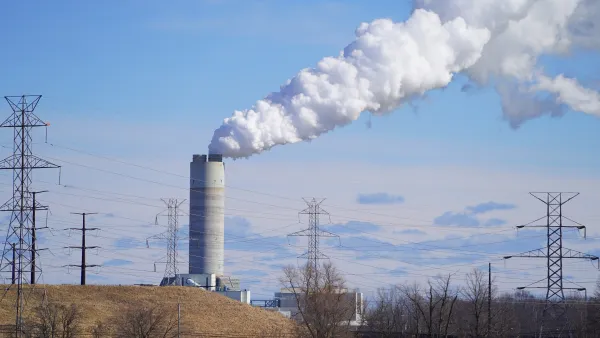
EPA erases limits on planet-warming pollution from power plants
Under Monday’s plan, power plants would still have some limits on how much mercury, arsenic and other contaminants they can emit.

Planetizen Federal Action Tracker
A weekly monitor of how Trump’s orders and actions are impacting planners and planning in America.

California plans to bury El Niño’s downpour
If the state plays its cards right, it may be able to store a billion acre-feet of El Niño’s water in aquifers.

Desperate measures: Advocates weigh draining Lake Powell to fill Colorado River
Draining the reservoir could reduce evaporation losses by a couple hundred thousand acre-feet.

In Texas, data centers are swallowing promised parkland
Residents who moved to Taylor, Texas for a rural community now have to contend with three data centers in their backyard.

How a Chicago-sized wind farm beat the odds and powered on
The project spanned five presidential administrations and a standoff with a U.S. military base.

MTA gives itself 30 days to transform pit into basketball court
The site has been under construction since 2022; the city originally estimated it would finish the court in 2024.

FREE Course: Walkable City 1: Why Walkability?
After describing his path towards focusing on walkability as the essence of good planning, Jeff Speck marches through his five principal reasons for making more walkable places.
Reinventing Malls: Planning Alchemy—Turning Gray Fields Into Gold
The course focuses on the opportunities and imperatives that shape reinvention of mall sites.

City of Rosemead
Rutgers University, Edward J. Bloustein School of Planning and Public Policy
One Hundred Miles
Hunter College, City University of New York (CUNY)
The Architects Foundation
University of Cincinnati Online
City of Cambridge
Montrose County
The Pocatello Development Authority