This piece from The New York Times offers a first hand look at life in a modern day mining ghost town from someone who is steadily buying up empty buildings.


The town itself remains nameless, but writer Antonya Nelson delves into its uniquely hermetic populous, and the process of buying land in the area.
"The woman from whom we bought our first parcels was not on speaking terms with at least six of her neighbors. The man who offered us some other lots thought a strong selling point was the fact that from a particular hillside, we could "pick off" the folks below. You have to imagine him mimicking the action of aiming a rifle to get the full effect.
An old Colorado mining town at 9,400 feet, it is a place that produced plenty of silver and other shiny booty back in the day, and even more toxic residue (it was a Superfund site not that long ago). It is isolated and incorporated, yet without a single business. "None of your business" might be the town motto."
Read the full story: Living in a Ghost Town
The Globe's Eeriest Ghost Towns
Apparently ghost towns aren't only found in America's Old West and at former nuclear test sites. Lifestyle website Thrillist has collected seven of the world's creepiest ghost towns.
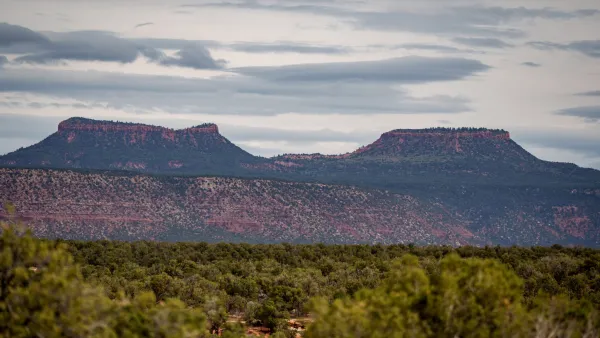
Patagonia, environmental groups revive old legal fights against new cuts to Utah monuments
White House says Trump ‘rightsized’ Bears Ears.
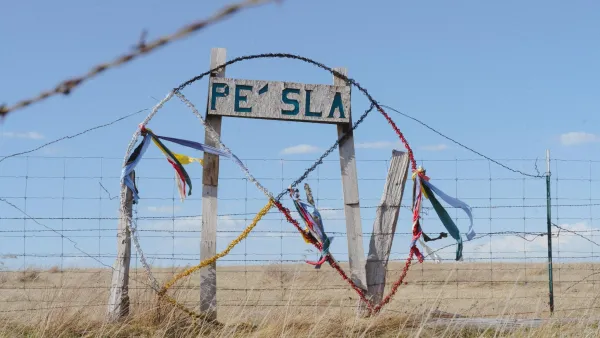
South Dakota tribes drove a mining company off sacred land in one week
Land disputes between tribes and the federal government often take much longer to resolve.

Washington state to charge fee to drivers with fuel-efficient cars
Revenue from the fee will go towards supporting the state’s highways.

Illinois considers spending $1 billion in taxpayer money on data center
A quantum computing campus and data center are currently under construction in Chicago.

Trump to blast ‘hydrocarbon highway’ through ‘world’s longest art gallery’
Environmental and historic preservation groups are suing to stop the project.

NYC, state sue feds over mixed-immigration-status housing assistance rule
The state’s lawsuit argues that the rule change violates the Administrative Procedure Act.

Michigan to turn neighborhood into virtual power plant
Residents will soon be able to divert their excess energy to the grid in exchange for compensation.

Data center, mining project swarm to long-awaited Alaska railroad line
The state-owned railroad approved final plans for the spur line this week; the project is expected to cost $311 million, mostly funded by the federal government

FREE Course: Walkable City 1: Why Walkability?
After describing his path towards focusing on walkability as the essence of good planning, Jeff Speck marches through his five principal reasons for making more walkable places.
Reinventing Malls: Planning Alchemy—Turning Gray Fields Into Gold
The course focuses on the opportunities and imperatives that shape reinvention of mall sites.

City of Charlotte
City of Rosemead
Rutgers University, Edward J. Bloustein School of Planning and Public Policy
University of Michigan School for Environment and Sustainability (SEAS)
Hunter College, City University of New York (CUNY)
The Architects Foundation
University District Partnership