A mere 4% of rush hour commuters in Saskatoon, Saskatchewan use public transit, and car-pooling is "non-existent", according to reporter David Hutton. But with traffic at a standstill, transportation planners are changing tack.


"The city's development model has prioritized construction of roads for private vehicles over other modes of transportation," writes Hutton.
"Building interchanges has always been thought of as a basic civic right in most cities, while transit and other modes have been viewed as a service from which costs must be recovered."
Transportation officials are tossing out the last transportation plan from 1991 and replacing it with new ideas:
"This means developing a plan for pedestrians, installing more cycling paths, considering dedicated bus lanes, park and ride bus services, high-occupancy vehicle lanes and plotting out corridors for rapid bus transit bus routes and an eventual move to light-rail transit, a billion-dollar proposition that Mayor Don Atchison has said is critical to plan ahead for."
Read the full story: At a crossroads: Can a solution to Saskatoon's overloaded roadways be found?

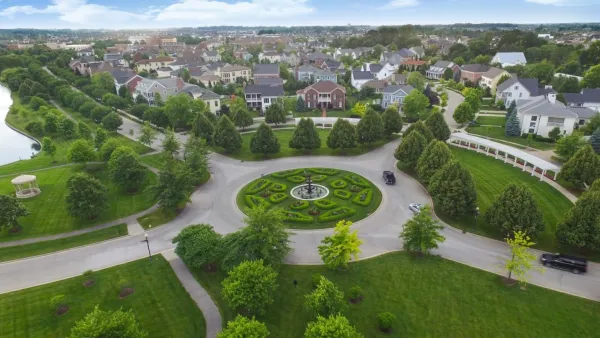
America's 'roundabout city' is in … Indiana?
Carmel, Indiana has built over 150 roundabouts as part of a broader mobility and development strategy.
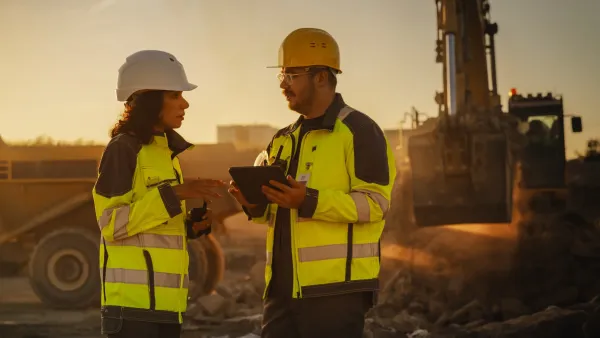
My provocative proposal: Want a roadway safety movement? Ditch the engineers.
A PE license has long been a requirement for most roadway safety jobs. It’s time to pave the way for movement-making professionals.
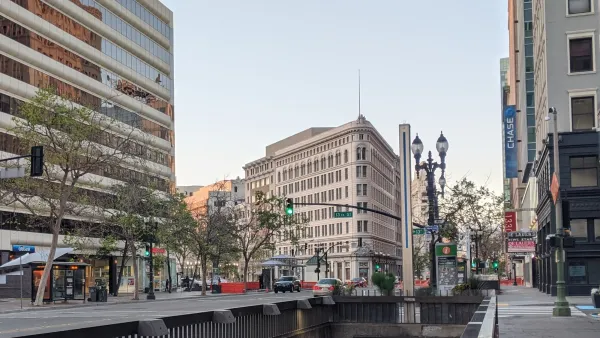
Oakland Drafts First Revision of General Plan Since 1998
The public has until April 23 to comment on the sweeping plan that addresses land use, transportation, and infrastructure.

Planetizen Federal Action Tracker
A weekly monitor of how Trump’s orders and actions are impacting planners and planning in America.

Amtrak, CN end decades-long dispute with eight-year agreement
The new operating agreement establishes an updated framework for the companies to work together, including processes to resolve disputes.

Judges permit Denver to divert 77,000 acre feet from the Colorado River for reservoir expansion
Overuse and climate change have caused the Colorado River’s water levels to plummet.

NYC DOT wants faster, more permanent street upgrades
The city is examining ways to build more concrete infrastructure without getting entangled in 'decades-long' projects.

'Something we’ve never seen before:' rising utility rates could strain city finances nationwide
Data centers, climate change and other factors have caused utility rates in the United States to increase by 38% since 2020.

Trump to overrule local leaders, lease millions of acres of America’s Pacific Island territories’ seafloors to mining companies
International law says that the Indigenous people of America’s territories have a right to prior and informed consent regarding projects that impact their countries.

FREE Course: Walkable City 1: Why Walkability?
After describing his path towards focusing on walkability as the essence of good planning, Jeff Speck marches through his five principal reasons for making more walkable places.
Reinventing Malls: Planning Alchemy—Turning Gray Fields Into Gold
The course focuses on the opportunities and imperatives that shape reinvention of mall sites.

Harvard University Graduate School of Design
KFH Group Inc.
Greater Baltimore Committee
The Architects Foundation
University of Cincinnati Online
The Pocatello Development Authority
The Urban Renewal Agency of the City of Pocatello