New York has a filthy history, says Robin Nagle, the New York City Department of Sanitation's anthropologist-in-residence. The muck of early Manhattan was much worse than you even suspected.


In this interview by Sarah Schmidt, Nagle explains how bad it actually was:
"Going back 100, 150 years, American cities were disgusting -- and New York City was notorious as the filthiest and stinkiest. We were a laughingstock. The rumor goes that sailors could smell the city six miles out to sea."
Corruption was the real problem, because the street cleaning funds were being embezzled by politicians.
Nagles says that the garbage was so deep that "...the streets were layered in this sludge of manure, rotting vegetables, ash, broken up furniture, debris of all kind."
Read the full story: Digging Into New York City’s Trashy History
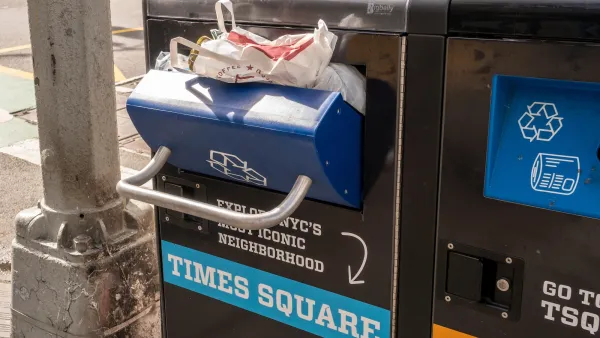
Why is Public Sanitation so Hard?
U.S. cities struggle to keep streets and sidewalks clean. Some are turning to high-tech trash cans to help.
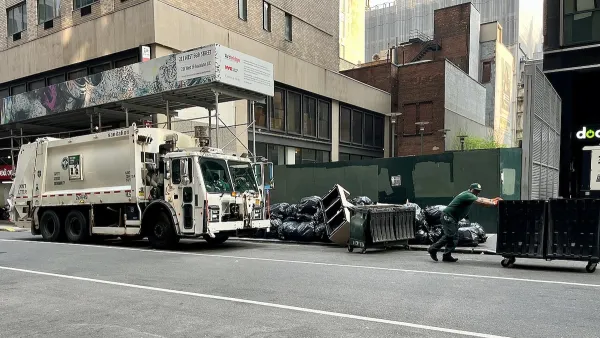
Parked Cars Hamper NYC Trash Containerization Effort
Sanitation workers must manually collect bags from containers blocked by parked cars, slowing a process that is meant to be safer and more efficient.
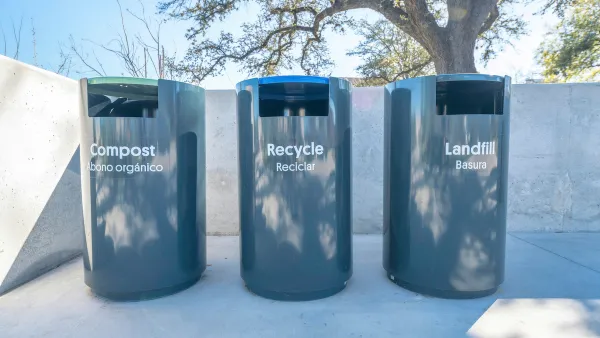
Austin Reveals New Zero Waste Plan
The city aims to eliminate the majority of landfill waste by 2040.

Planetizen Federal Action Tracker
A weekly monitor of how Trump’s orders and actions are impacting planners and planning in America.

California plans to bury El Niño’s downpour
If the state plays its cards right, it may be able to store a billion acre-feet of El Niño’s water in aquifers.

Desperate measures: Advocates weigh draining Lake Powell to fill Colorado River
Draining the reservoir could reduce evaporation losses by a couple hundred thousand acre-feet.

Mamdani’s pied-à-terre tax survives legal challenge
A panel of judges found that the plaintiffs failed to demonstrate injury as a result of New York City's implementation of the tax.

Eastern Nebraska is running out of electricity
Data centers and electrification are straining eastern Nebraska’s grid, throttling economic development.

Seattle passes record-breaking transit services expansion
Proposition 1 will double the city’s transit tax to add 95,000 more bus trips and preserve 180,000 bus trips annually.

FREE Course: Walkable City 1: Why Walkability?
After describing his path towards focusing on walkability as the essence of good planning, Jeff Speck marches through his five principal reasons for making more walkable places.
Reinventing Malls: Planning Alchemy—Turning Gray Fields Into Gold
The course focuses on the opportunities and imperatives that shape reinvention of mall sites.

City of Rosemead
Rutgers University, Edward J. Bloustein School of Planning and Public Policy
One Hundred Miles
University of Michigan School for Environment and Sustainability (SEAS)
Hunter College, City University of New York (CUNY)
The Architects Foundation
City of Cambridge
Montrose County
The Pocatello Development Authority