A collaboration between five different neighborhood-focused federal efforts seeks to aid and inspire neighborhood revitalization.


Next American City takes a look at the new program.
"A new White House Office of Urban Affairs initiative-perhaps its first?-was launched last week that seeks to tackle the problems of concentrated urban poverty. It's called the Neighborhood Revitalization Initiative, and it combines the efforts of the Departments of Housing and Urban Development, Education, Justice, Health and Human Services, and even the Treasury. The Neighborhood Revitalization Initiative brings with it a lot of institutional memories, and because of this, it shouldn't have the unintended consequences so many late 20th century federal programs had: the flee to suburbia subsidized by the FHA and the Highway Act; the vertical concentration of poverty and isolation caused by HUD's urban renewal projects.
The press release tells us that the Initiative is designed to be interdisciplinary, coordinated, place-based, data- and results-driven, and flexible. Compare that with the heavy-handed destruction that passed for urban revitalization just a few decades ago. It's clear that the Neighborhood Revitalization Initiative comes from a group of people who have learned about their institutions' past failures."
Read the full story: Obama Administration Rolls Out the Neighborhood Revitalization Initiative
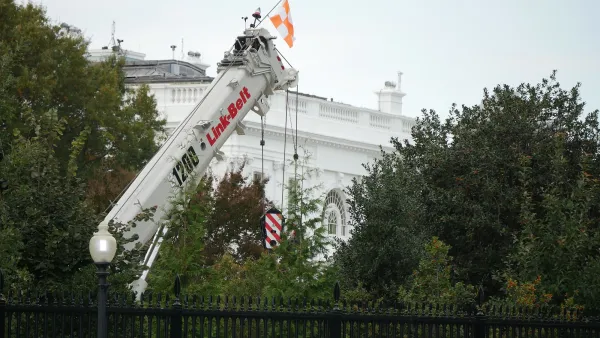
White House Ballroom Details Revealed Ahead of January 15 Legal Hearing
The ballroom project must receive approval from the National Capital Planning Commission to move forward.

Trump Says White House Ballroom Exempt from Permitting, Zoning Rules
The President reportedly told teams working on the ballroom that the project doesn’t have to comply with regulations.

Capital Bikeshare Reinstalls White House Station
The station on the White House grounds has been reinstated as part of Capital Bikeshare's push to expand the network by dozens of new stations by the end of the year.

Washington state to charge fee to drivers with fuel-efficient cars
Revenue from the fee will go towards supporting the state’s highways.

Illinois considers spending $1 billion in taxpayer money on data center
A quantum computing campus and data center are currently under construction in Chicago.

Trump to blast ‘hydrocarbon highway’ through ‘world’s longest art gallery’
Environmental and historic preservation groups are suing to stop the project.

NYC, state sue feds over mixed-immigration-status housing assistance rule
The state’s lawsuit argues that the rule change violates the Administrative Procedure Act.

Michigan to turn neighborhood into virtual power plant
Residents will soon be able to divert their excess energy to the grid in exchange for compensation.

Data center, mining project swarm to long-awaited Alaska railroad line
The state-owned railroad approved final plans for the spur line this week; the project is expected to cost $311 million, mostly funded by the federal government

FREE Course: Walkable City 1: Why Walkability?
After describing his path towards focusing on walkability as the essence of good planning, Jeff Speck marches through his five principal reasons for making more walkable places.
Reinventing Malls: Planning Alchemy—Turning Gray Fields Into Gold
The course focuses on the opportunities and imperatives that shape reinvention of mall sites.

City of Charlotte
City of Rosemead
Rutgers University, Edward J. Bloustein School of Planning and Public Policy
University of Michigan School for Environment and Sustainability (SEAS)
Hunter College, City University of New York (CUNY)
The Architects Foundation
University District Partnership