While other parts of the country see economic improvement, Las Vegas continues to experience the deepest crisis of its modern history. Is its leisure-based economy to blame?


Adam Nagourney finds that Las Vegas' dependency on the gambling, tourism and construction industries--sectors that have been slow to rebound from the recession -- has created a severe and protracted downturn. The city's unemployment rate is currently 14.7%, and the state of Nevada has led the country in residential foreclosures for nearly two years straight.
Nagourney suggests Las Vegas' difficulties may be part of a fundamental shift in consumer spending rather than a temporary slump:
'Economists say people are less likely to gamble as freely as they have in the past, particularly baby boomers, who may now be rattled about their retirement years. In one sign of this, while there were more people coming to Las Vegas in recent months, gambling receipts have remained stagnant.'
Read the full story: Las Vegas Faces Its Deepest Slide Since the 1940s
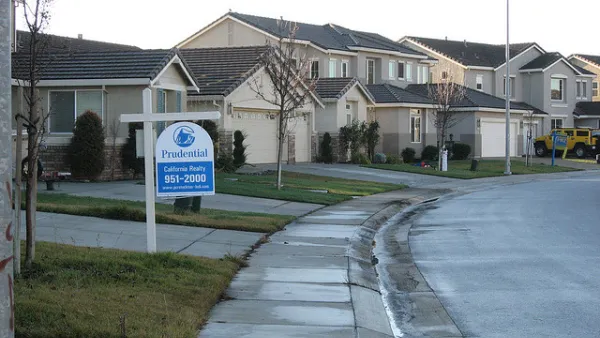
Distressed Suburbs Struggle to Recover From Decade-Old Recession
Located primarily in the western states, some suburbs were hit hard by the 2008 recession and still haven't recovered. Many have seen an influx of low-income residents and upticks in crime.
Learning from the Las Vegas Recovery
The recovery of Las Vegas, hit hard by the Great Recession, resembles the recovery of the rest of the country—uneven and innovative.
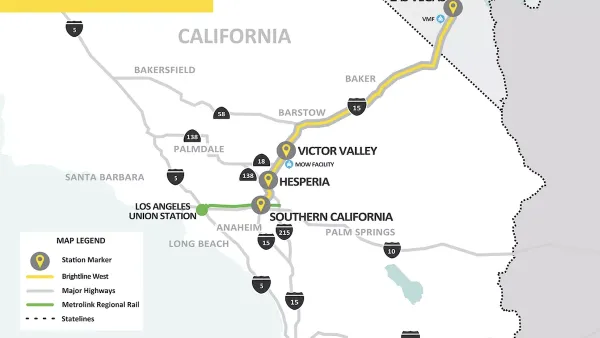
Brightline West’s future may rely on $6 billion federal loan
The company has until Nov. 2 to make a $400 million equity investment into its proposed high-speed rail line.

Planetizen Federal Action Tracker
A weekly monitor of how Trump’s orders and actions are impacting planners and planning in America.

California plans to bury El Niño’s downpour
If the state plays its cards right, it may be able to store a billion acre-feet of El Niño’s water in aquifers.

Desperate measures: Advocates weigh draining Lake Powell to fill Colorado River
Draining the reservoir could reduce evaporation losses by a couple hundred thousand acre-feet.

US buildings threatened, destroyed by fires set to triple by 2060
Researchers found a high fire risk for socioeconomically vulnerable neighborhoods in the American West.

LA residents may be allowed to paint their own crosswalks
Councilwoman Katy Yaroslavsky put out a motion instructing the Los Angeles Department of Public Transportation to study the feasibility of allowing volunteers to paint crosswalks.

Dallas moves to overhaul its zoning code
The city's zoning reform will allow more multi-family and mixed-use developments.

FREE Course: Walkable City 1: Why Walkability?
After describing his path towards focusing on walkability as the essence of good planning, Jeff Speck marches through his five principal reasons for making more walkable places.
Reinventing Malls: Planning Alchemy—Turning Gray Fields Into Gold
The course focuses on the opportunities and imperatives that shape reinvention of mall sites.

City of Rosemead
Rutgers University, Edward J. Bloustein School of Planning and Public Policy
One Hundred Miles
Hunter College, City University of New York (CUNY)
The Architects Foundation
University of Cincinnati Online
City of Cambridge
Montrose County
The Pocatello Development Authority