A $776 million monorail system planned in the Brazilian city of Manaus to ease transportation issue when it hosts the 2014 World Cup has been suspended.


Financing and planning irregularities have been cited as major concerns, and have prompted officials to postpone the awarding of contracts to construct the project. Delays could cause the project to not finish in time for the 2014 World Cup.
"Manaus' municipal planning and economic development department has said it will not make changes to the project.
The 20km monorail, aimed at helping prepare Manaus to host the 2014 World Cup, will incorporate existing terminals in the eastern and downtown districts. It will have capacity to transport around 200,000 passengers each day. "
Read the full story: Manaus' US$776mn monorail suspended over financing, irregularities
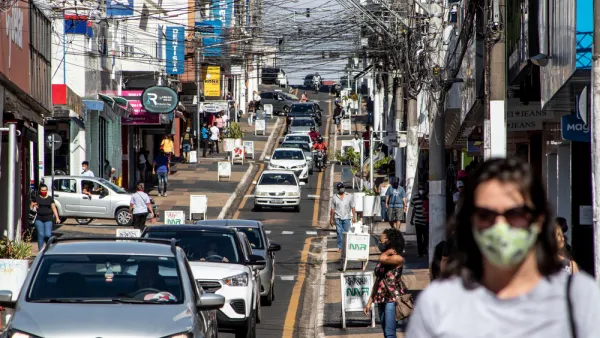
The World's Worst COVID Outbreak
Brazil has surpassed the U.S. and led the world in the daily average of COVID-19 deaths and coronavirus infections during the last week. Experts point to a coronavirus variant and the lack of a federal strategy, leaving states without assistance.
Brazil's World Cup Legacy Falls Short of its Billing
Evidence is building up that the Brazil's extravagant spending on the World Cup soccer championships last year won’t have the last positive impacts promised by government officials. Next up for Brazil: the Olympics.
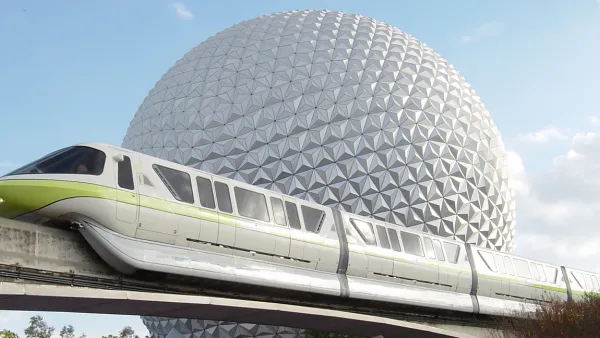
Monorails Might Have a Future After All
For those of you who thought the recent shuttering of Sydney's monorail symbolized the general decline of the once-futuristic transit mode–think again! Sao Paulo is set to open a new 17-mile line, the first segment of a monorail-based transit system.

Planetizen Federal Action Tracker
A weekly monitor of how Trump’s orders and actions are impacting planners and planning in America.

California plans to bury El Niño’s downpour
If the state plays its cards right, it may be able to store a billion acre-feet of El Niño’s water in aquifers.

Desperate measures: Advocates weigh draining Lake Powell to fill Colorado River
Draining the reservoir could reduce evaporation losses by a couple hundred thousand acre-feet.

Mamdani’s pied-à-terre tax survives legal challenge
A panel of judges found that the plaintiffs failed to demonstrate injury as a result of New York City's implementation of the tax.

Eastern Nebraska is running out of electricity
Data centers and electrification are straining eastern Nebraska’s grid, throttling economic development.

Seattle passes record-breaking transit services expansion
Proposition 1 will double the city’s transit tax to add 95,000 more bus trips and preserve 180,000 bus trips annually.

FREE Course: Walkable City 1: Why Walkability?
After describing his path towards focusing on walkability as the essence of good planning, Jeff Speck marches through his five principal reasons for making more walkable places.
Reinventing Malls: Planning Alchemy—Turning Gray Fields Into Gold
The course focuses on the opportunities and imperatives that shape reinvention of mall sites.

City of Rosemead
Rutgers University, Edward J. Bloustein School of Planning and Public Policy
One Hundred Miles
University of Michigan School for Environment and Sustainability (SEAS)
Hunter College, City University of New York (CUNY)
The Architects Foundation
City of Cambridge
Montrose County
The Pocatello Development Authority