As Amtrak seeks to create and expand high-speed passenger train operations in the United States, the company on Thursday named Philadelphia rail expert Albrecht "Al" Engel to head its new high-speed rail department.


The move appointment comes as the Obama administration intensifies its efforts to create true high speed rail connections across the country with trains moving at speeds in excess of 155mph.
"The administration this year gave $8 billion in stimulus funds to jump-start high-speed rail projects on 13 corridors in 31 states. It has promised $5 billion more over the next five years. Congressional advocates of high-speed rails are seeking $50 million over the next six years," explains Paul Nussbaum.
"Amtrak, whose fastest Acela Express trains currently reach 150 m.p.h. for brief stretches on the Northeast Corridor, expects to release soon of a study outlining its own vision for true high-speed travel on the Washington-to-Boston corridor."
"Al has considerable expertise, is a dedicated proponent for public transportation, and shares our conviction that Amtrak plays a vital, leading, and necessary role in expanding and operating high-speed rail service across the country," Amtrak president Joseph Boardman said in a statement Friday.
Read the full story: Philadelphia Rail Expert Named Head Of Amtrak's High Speed Rail Unit
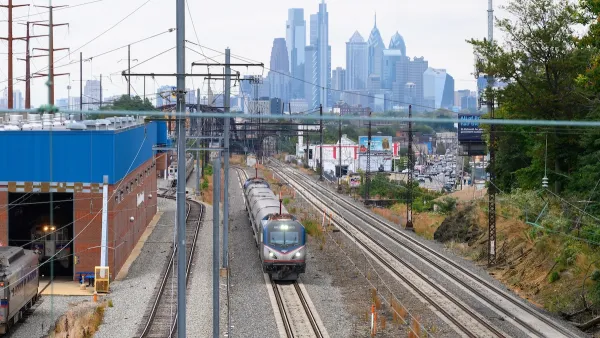
Loss of SEPTA Funding Could Kill Amtrak’s Fifth Busiest Line
The Philadelphia transit agency’s funding challenges could eliminate its contributions to Amtrak’s Keystone Service linking Philly and NYC.
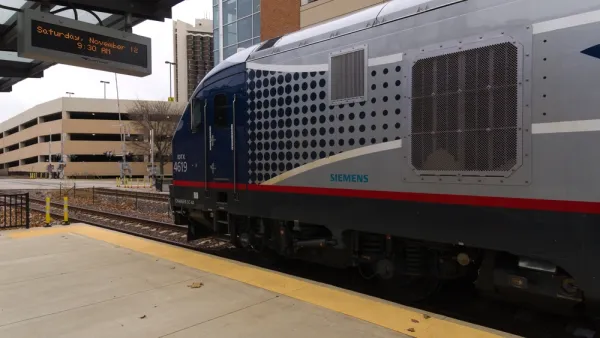
Chicago-St. Louis Corridor Trains Cleared for 110-mph Speeds
Amtrak has final federal approval for train speeds of 110 miles per hour between Joliet and Alton, culminating almost ten years of planning and investing.
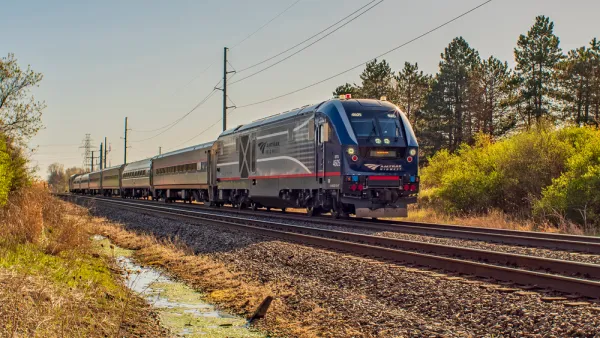
Amtrak Hits New Top Speeds Between St. Louis and Chicago
A project that won funding from federal stimulus programs during the Obama administration is finally paying off on the Amtrak route between Chicago and St. Louis.

Desperate measures: Advocates weigh draining Lake Powell to fill Colorado River
Draining the reservoir could reduce evaporation losses by a couple hundred thousand acre-feet.

Eastern Nebraska is running out of electricity
Data centers and electrification are straining eastern Nebraska’s grid, throttling economic development.

Malls are becoming the midtowns of the future
Mall and office park redevelopments are a generational opportunity to create new nodes of urbanity.

NYC breaks ground on anti-flooding infrastructure project
New York City's new system will reduce stormwater flows to local sewers by 90%.

One Kentucky town’s secret to affordable housing
The Smoketown Community Land Trust has already built seven affordable homes for community members.

Houston gains petal-shaped cooling infrastructure to make streets more ‘delightful’
The city has installed the pavilions along 15 blocks in Houston.

FREE Course: Walkable City 1: Why Walkability?
After describing his path towards focusing on walkability as the essence of good planning, Jeff Speck marches through his five principal reasons for making more walkable places.
Reinventing Malls: Planning Alchemy—Turning Gray Fields Into Gold
The course focuses on the opportunities and imperatives that shape reinvention of mall sites.

City of Rosemead
Rutgers University, Edward J. Bloustein School of Planning and Public Policy
One Hundred Miles
University of Michigan School for Environment and Sustainability (SEAS)
Hunter College, City University of New York (CUNY)
The Architects Foundation
City of Cambridge
Montrose County
The Pocatello Development Authority