The city of Indianapolis is using its hosting duties for the 2012 Super Bowl to rework one of its main streets into a new public space.


The Architect's Newspaper looks at the plans to redesign the street and cut down the amount of auto traffic it carries.
"Currently four lanes with two parking lanes, Georgia Street will be reconfigured into two driving lanes with some parking and a large center median with plantings, kiosks, and street furniture. Beyond the average boulevard reconfiguration, the new streetscape will include innovative sustainability, climate control, and programming features.
A wide boardwalk will run down the center covering a deep rainwater collection channel that will allow water to percolate into the ground rather than being shunted into the sewer system. Overhead, a cantenary system will support a system of adjustable shades that will help mitigate hot Indianapolis summers. Supported by poles that also serve as lampposts, the system will also be used for themed events and can be animated with special event lighting and projectors. 'Lighting can really change the experience of a space. It can bring the scale down to the level of the pedestrian,' said Bill Browne, principal of Ratio Architects, the project's designers."
Read the full story: Super Street for the Super Bowl

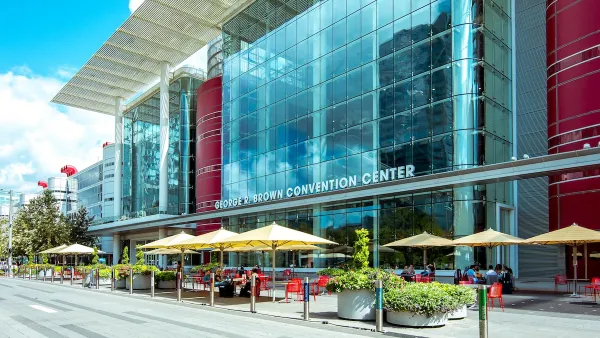
Houston 'Abandons' Street for Convention Center Expansion
The city plans to eliminate multiple blocks of public streets as part of an expansion project that some residents say didn’t take into account local connectivity.
How Street Configuration Impacts Equity
With urban pollution and traffic violence disproportionately affecting communities of color, better management of public space and streets could improve equity in cities.
Examining the Super Bowl's Balance Sheet
The day after the big game, Diana Lind, with the help of a Planet Money Podcast, delves into the economic ramifications of hosting a super bowl, and wonders whether Indianapolis might not turn out to be the night's biggest loser.

Planetizen Federal Action Tracker
A weekly monitor of how Trump’s orders and actions are impacting planners and planning in America.

California plans to bury El Niño’s downpour
If the state plays its cards right, it may be able to store a billion acre-feet of El Niño’s water in aquifers.

Chicago breaks ground on $3 billion megadevelopment
The new neighborhood, titled Foundry Park, will one day host 3,700 residences.

California High-Speed Rail Authority CEO resigns after $600,000 scandal
Under Ian Choudri, the authority used taxpayer dollars to fund first class flights and trips to nightclubs.

Want to study the Missouri River? Soon, you may need unanimous approval from 10 states
Legislation would require 10 governors’ permission to study or build projects moving water outside the basin.

Desperate measures: Advocates weigh draining Lake Powell to fill Colorado River
Draining the reservoir could reduce evaporation losses by a couple hundred thousand acre-feet.

FREE Course: Walkable City 1: Why Walkability?
After describing his path towards focusing on walkability as the essence of good planning, Jeff Speck marches through his five principal reasons for making more walkable places.
Reinventing Malls: Planning Alchemy—Turning Gray Fields Into Gold
The course focuses on the opportunities and imperatives that shape reinvention of mall sites.

City of Rosemead
Rutgers University, Edward J. Bloustein School of Planning and Public Policy
One Hundred Miles
Hunter College, City University of New York (CUNY)
The Architects Foundation
University of Cincinnati Online
City of Cambridge
Montrose County
The Pocatello Development Authority