As Super Bowl week comes to a close, Emily Badger reports on the host city's efforts to use the event as a catalyst for substantive change throughout the city.


As Badger reports, despite the recession, Indianapolis has taken a much more expansive approach to leveraging its role as host of the Super Bowl than most former host cities.
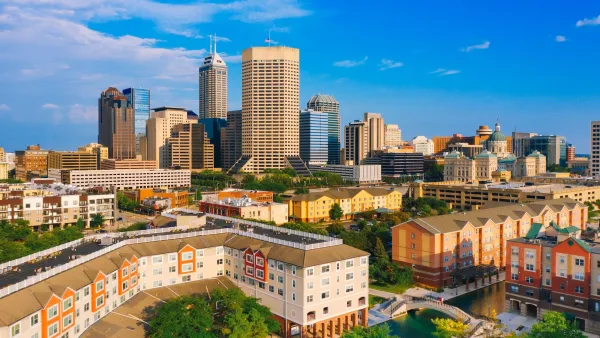
"Thanks at least in part to the Super Bowl, people in Indianapolis will wake up to the football off-season next week with a newly expanded convention center, a new central civic space, a newly revitalized low-income neighborhood, even a new downtown skyline."
And not all of the development associate with the Super Bowl is located in close proximity to the event. "Indianapolis took that million-dollar Youth Education Town investment from the NFL and used it to help leverage the revitalization of the entire Near Eastside neighborhood. In all, nearly $150 million is being invested into the area, a high-crime, high-foreclosure community marked by cottage-style worker homes for residents who would have in the past gone to factory jobs that no longer exist."
Read the full story: Indy's Super Bowl Building Boom

Examining the Super Bowl's Balance Sheet
The day after the big game, Diana Lind, with the help of a Planet Money Podcast, delves into the economic ramifications of hosting a super bowl, and wonders whether Indianapolis might not turn out to be the night's biggest loser.
Indianapolis Plans Street Redesign Ahead of Super Bowl Hosting
The city of Indianapolis is using its hosting duties for the 2012 Super Bowl to rework one of its main streets into a new public space.
Indianapolis rents grew by 30% since 2020
The metro area has a shortage of roughly 137,000 affordable homes for the lowest-income households.

Planetizen Federal Action Tracker
A weekly monitor of how Trump’s orders and actions are impacting planners and planning in America.

California plans to bury El Niño’s downpour
If the state plays its cards right, it may be able to store a billion acre-feet of El Niño’s water in aquifers.

Chicago breaks ground on $3 billion megadevelopment
The new neighborhood, titled Foundry Park, will one day host 3,700 residences.

California High-Speed Rail Authority CEO resigns after $600,000 scandal
Under Ian Choudri, the authority used taxpayer dollars to fund first class flights and trips to nightclubs.

Want to study the Missouri River? Soon, you may need unanimous approval from 10 states
Legislation would require 10 governors’ permission to study or build projects moving water outside the basin.

Desperate measures: Advocates weigh draining Lake Powell to fill Colorado River
Draining the reservoir could reduce evaporation losses by a couple hundred thousand acre-feet.

FREE Course: Walkable City 1: Why Walkability?
After describing his path towards focusing on walkability as the essence of good planning, Jeff Speck marches through his five principal reasons for making more walkable places.
Reinventing Malls: Planning Alchemy—Turning Gray Fields Into Gold
The course focuses on the opportunities and imperatives that shape reinvention of mall sites.

City of Rosemead
Rutgers University, Edward J. Bloustein School of Planning and Public Policy
One Hundred Miles
Hunter College, City University of New York (CUNY)
The Architects Foundation
University of Cincinnati Online
City of Cambridge
Montrose County
The Pocatello Development Authority