Joshua Hammer describes his visit to the financially straitened emirate where he found "deserted highways, empty hotel rooms, miles of unsold residential and office space."


Although the Dubai still has considerable resources, companies engaged in international trade and an evolved tourism sector, the financial crisis still has a stultifying hold on the city. It is likely that the collapse of its real estate industry has cost Dubai in the region of "25 percent of its economic activity."
Hammer neatly explains how the real estate boom was kept going by a "Dickensian labor system that was bound at some point to self- destruct. At the height of the boom, tens of thousands of Southeast Asian laborers, banned by Dubai's labor laws from forming unions, were put to work for eighty hours a week to build the Dubai fantasy and obliged to live in squalid residential camps in the desert."
The outlook is no better. Most analysts "believe that it will take five years for building to begin anew in Dubai, and they question whether the city can retain its allure meanwhile."
If Dubai's "formula of tax-free economic zones and mass tourism doesn't work," a long-time resident explains, "people who have been emulating it throughout the Middle East will say, ‘What the hell do we do now?' There are a lot of angry young people out there, and the whole region will go up in smoke in ten years if they can't find employment for them."
Read the full story: Goodbye to Dubai

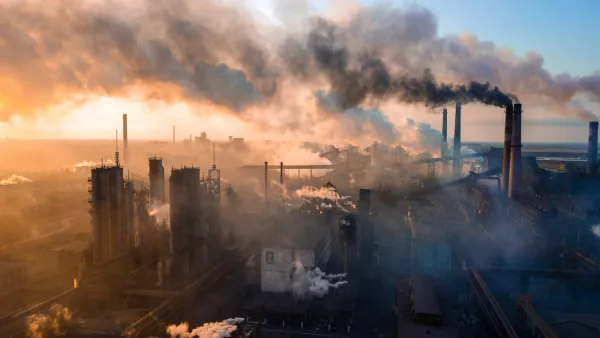
COP28: Will Developed Nations Reduce Emissions?
Tensions between developed and developing nations surfaced over emissions and energy, with the former focused on reducing fossil fuels and the latter pointing to unrealized emissions reductions from the nations most responsible for global warming.
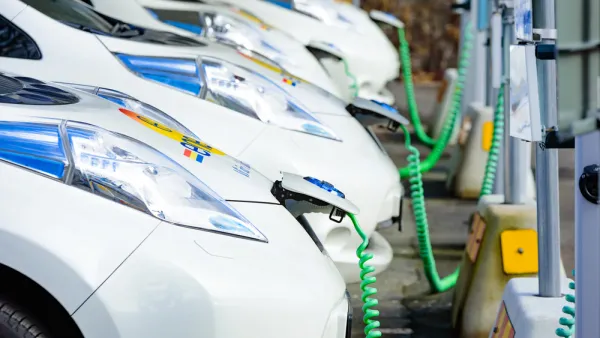
Dubai to Offer Free Parking and Charging to Electric Car Drivers
A city famous for its oil money is implementing generous incentives for electric cars.

World's First Passenger Drone Readies for Takeoff in Dubai
This summer, commuters may have another option for moving around Dubai as a pilotless drone is prepared to shuttle passengers around the city.

Planetizen Federal Action Tracker
A weekly monitor of how Trump’s orders and actions are impacting planners and planning in America.

Chicago breaks ground on $3 billion megadevelopment
The new neighborhood, titled Foundry Park, will one day host 3,700 residences.

This MA town is drowning in its own sewage — and residents like it that way
Susan Murcott, a waste water expert, said if Carlisle didn't address their leaking sewage, the problem could turn “deadly.”

Amtrak cuts ribbon on Seattle Airo maintenance facility
The $250 million, nearly 100,000-square-foot building can house an entire Cascades Airo trainset.

To power data centers, Google seeks autonomous control of thousands of homes’ electricity
The tech company has signed a deal to indirectly pay Mid-Atlantic residents to reduce their power demand when the grid is strained.

From robotaxis to robotrains: LA, DC weigh driverless transit
If approved, the projects will take years to implement and face financial and technical hurdles.

FREE Course: Walkable City 1: Why Walkability?
After describing his path towards focusing on walkability as the essence of good planning, Jeff Speck marches through his five principal reasons for making more walkable places.
Reinventing Malls: Planning Alchemy—Turning Gray Fields Into Gold
The course focuses on the opportunities and imperatives that shape reinvention of mall sites.

City of Rosemead
Rutgers University, Edward J. Bloustein School of Planning and Public Policy
One Hundred Miles
The Architects Foundation
University of Cincinnati Online
Montrose County
The Pocatello Development Authority
The Urban Renewal Agency of the City of Pocatello